



Creating Career Path...

Finding Further Careers...

Coastal Engineer

View this career for different education levels:

A Coastal Engineer in the UK plays a crucial role in protecting our coastline and managing coastal environments. This involves designing, analysing, and implementing solutions to a range of challenges, including coastal erosion, flooding, and the impact of climate change. You would typically work on projects such as designing sea defences like seawalls, breakwaters, and flood barriers, or developing strategies for beach management and dune restoration. The role often requires a strong understanding of fluid mechanics, wave theory, sediment transport, and geotechnical engineering. You'll likely use sophisticated modelling software to predict coastal processes and assess the effectiveness of proposed interventions. Beyond technical design, Coastal Engineers are also involved in environmental impact assessments, project management, and collaborating with local authorities, environmental agencies, and stakeholders to ensure sustainable and effective coastal management solutions. Working as a Coastal Engineer means you could be involved in various stages of a project, from initial feasibility studies and data collection to detailed design, construction supervision, and post-implementation monitoring. You might spend time in the office conducting analysis and preparing reports, or out on site collecting data, inspecting coastal structures, and overseeing construction. The job demands analytical thinking, problem-solving skills, and a commitment to environmental stewardship. Many roles involve interdisciplinary teamwork, collaborating with marine biologists, environmental scientists, urban planners, and other engineers. It's a field that offers both intellectual challenge and the satisfaction of contributing to the resilience and sustainability of the UK's valuable coastal areas.

Coastal Engineer

Flag Media

Please select a reason for flagging this content.

📊 Statistics

Average Salary Range

For an experienced Coastal Engineer in the UK, salaries typically range from 35,000 to 60,000 per annum, though senior or principal roles can command upwards of 70,000 to 90,000 depending on experience, company, and location.

Entry Level Salary

Graduates entering the field can expect starting salaries usually between 24,000 and 28,000 per annum, often increasing rapidly with professional development and chartership.

Job Market Demand

The demand for Coastal Engineers in the UK is generally stable with good prospects, driven by increasing concerns about climate change, sea level rise, and coastal erosion. There is a consistent need for expertise in both public sector bodies (e.g., Environment Agency) and private consultancies.

🚀 Careers in this path

Flag Media

Please select a reason for flagging this content.

Coastal Modeller

Utilises advanced software and mathematical models to simulate coastal processes like wave action, sediment transport, and sea level rise. This helps predict future coastal changes and evaluate the effectiveness of various coastal protection strategies for planning and risk assessment.

Flag Media

Please select a reason for flagging this content.

Marine Data Analyst

Collects, processes, and interprets large datasets from coastal and marine environments, including bathymetry, current speeds, water quality, and weather patterns. They use this data to inform coastal engineering designs, environmental impact assessments, and marine resource management decisions.

Flag Media

Please select a reason for flagging this content.

Dredging and Reclamation Engineer

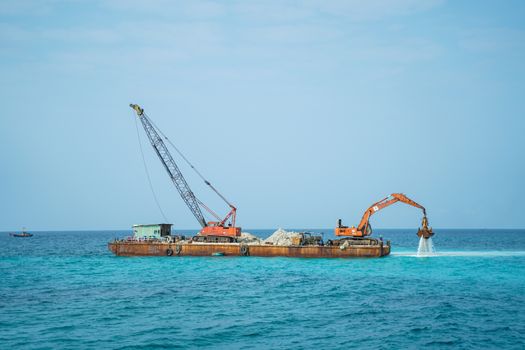
Specialises in the design and management of projects involving the removal of sediment (dredging) from seabeds or waterways, and the creation of new land from reclaimed areas. This is crucial for port development, navigation channels, and coastal infrastructure projects.

Educational Foundations

A-Levels or Equivalent

To pursue a degree in engineering, you will typically need strong A-Level grades, particularly in STEM subjects. Mathematics and Physics are usually essential.

Most UK universities require A-Levels in Mathematics and Physics for entry into an Engineering degree. Chemistry or Further Mathematics can also be beneficial, depending on the specific course. Vocational qualifications like BTECs in relevant engineering fields might also be accepted by some universities, often alongside an A-Level in Mathematics. Ensure you check the specific entry requirements for your desired university courses well in advance.

Undergraduate Degree

Obtain a Bachelor's degree in Civil Engineering, Ocean Engineering, or a related field such as Environmental Engineering with a specialism in water or marine aspects.

A BEng or MEng (Master of Engineering, which is an integrated undergraduate and postgraduate degree) in Civil Engineering is a common route, often with modules focused on hydraulics, fluid mechanics, or structural engineering. Some universities offer more specialised degrees like Ocean Engineering or Marine Technology. Look for programmes accredited by the Engineering Council, as this is crucial for professional registration later on. An MEng is often preferred as it meets the academic requirements for Chartered Engineer status.

Specialised Modules and Projects

During your degree, focus on modules related to fluid mechanics, hydraulics, coastal processes, geotechnics, and environmental engineering. Undertake projects relevant to coastal issues.

Actively choose optional modules that delve into topics such as wave mechanics, tidal dynamics, coastal erosion, flood defence design, and port engineering. For your final year project or dissertation, try to select a topic directly relevant to coastal engineering. This demonstrates your interest and builds a foundational understanding of the challenges and solutions in the field, making you a more attractive candidate for graduate roles.

Gaining Experience

Summer Internships and Placements

Seek out summer internships or year-long placements with engineering consultancies, environmental agencies, or construction companies involved in coastal projects.

Practical experience is invaluable. Companies like HR Wallingford, Royal HaskoningDHV, and Atkins often offer placements. Government bodies such as the Environment Agency or local councils also have teams working on coastal management. These opportunities allow you to apply theoretical knowledge, understand industry practices, network with professionals, and gain insight into the day-to-day work of a coastal engineer. Many graduate schemes recruit directly from their placement students.

Graduate Schemes and Entry-Level Roles

Apply for graduate engineering schemes or entry-level positions specifically in coastal, maritime, or water engineering.

Many large engineering consultancies and contractors offer structured graduate programmes designed to develop your skills and lead to professional qualification. These schemes often involve rotations through different departments or projects, providing broad exposure. When applying, highlight any relevant modules, projects, or work experience from your degree. Be prepared for technical interviews and possibly assessment centres. Networking during your degree can also lead to direct entry-level opportunities.

Professional Development and Mentorship

Actively participate in training, seek mentorship, and engage with professional engineering institutions.

Once in an entry-level role, focus on accumulating relevant experience for chartership. Work with a mentor, often provided by your employer, who is already a Chartered Engineer. Document your professional development through a structured training agreement, typically aligned with the requirements of the Institution of Civil Engineers (ICE) or the Institution of Mechanical Engineers (IMechE). Attend workshops, seminars, and conferences to stay updated with industry best practices and technological advancements.

Professional Qualification

Chartered Engineer (CEng) Status

Work towards achieving Chartered Engineer (CEng) status with the Engineering Council, typically through the Institution of Civil Engineers (ICE).

Chartered Engineer status is a hallmark of professional competence and commitment in the UK. It demonstrates that you have achieved a high level of expertise and responsibility. The process involves submitting a detailed report of your professional development, undergoing a professional review interview, and demonstrating competence across various attributes, including technical knowledge, leadership, and professional commitment. This typically takes 4-5 years post-graduation with an MEng, or longer if you have a BEng and then complete a relevant Masters degree.

Continuing Professional Development (CPD)

Maintain your professional competence through ongoing learning, training, and development throughout your career.

CPD is a continuous requirement for all professional engineers. It involves keeping your skills and knowledge up-to-date with the latest industry standards, technologies, and regulations. This can include attending short courses, workshops, webinars, reading technical publications, mentoring junior colleagues, or pursuing further academic qualifications. Documenting your CPD is essential for maintaining your CEng status and for career progression, ensuring you remain an expert in your field.

Specialisation and Leadership

As your career progresses, you can specialise further in areas like wave modelling, coastal defence design, port infrastructure, or climate change adaptation, and take on leadership roles.

With experience and chartership, you can move into more senior roles such as Principal Coastal Engineer, Project Manager, or Technical Director. You might lead significant projects, manage teams, or even contribute to policy development. Further specialisation could involve advanced numerical modelling, sustainable coastal solutions, or renewable energy infrastructure in the marine environment. This stage involves strategic thinking and mentoring the next generation of engineers.

🎬 Useful Videos

🎯 View Apprenticeships

Explore relevant apprenticeships that can help you kickstart your career in Coastal Engineer. Apprenticeships offer hands-on experience and training while earning a wage.

Career Progressions

This page showcases various career options and the pathways to reach them. Each career listed here shares transferable skills and knowledge, making it easier for individuals to transition between them.

Your current career is highlighted to help you see how it fits into the broader landscape of potential career choices. By clicking on any career, you can learn more about it, including the training and education required to pursue it.

Remember, progressing in your career often involves further learning and training. This page provides insights into future career options as well as those that can lead up to your current one.

These career progression decisions are informed by comparing the skills and knowledge needed for different occupations, along with data on how people move between them. Explore the possibilities and discover the exciting journey ahead in your career!

Sample Qualifications

A Coastal Engineer is a specialised branch of civil engineering, focusing on the design and construction of coastal structures, flood defences, and managing coastal erosion. The 'Civil engineer' title is the broadest and most appropriate fit among the given options, encompassing the foundational principles required for this specialisation.

How to become

You can get into this job through:

  • a university course
  • a college course
  • an apprenticeship
  • working towards this role

University

You can do a foundation degree, higher national diploma or degree in civil engineering.

Many universities specialise in particular areas of civil engineering, like:

  • transport engineering
  • environmental engineering
  • coastal and maritime engineering

You can search for accredited courses through the Institution of Civil Engineers. Some courses include a work placement, which can be useful for making industry contacts to help you find work after university.

You can also do further study for a postgraduate master's qualification in civil engineering, if you've got a degree in a related subject like maths, science or geology.

Entry requirements

You'll usually need:

  • 2 or 3 A levels, or equivalent, including maths and a science for a degree
  • a degree in a relevant subject for postgraduate study

More Information

College

You could take a course at college, which might help you to get work as a trainee civil engineer, or to apply for further study at university.

Subjects include:

  • civil engineering
  • maths, physics or geography
  • construction and the built environment

Entry requirements

Entry requirements for these courses vary.

More Information

Apprenticeship

You can apply to do a Civil Engineer Level 6 Degree Apprenticeship with an engineering or construction company.

This takes around 5 years to complete.

Entry requirements

You'll usually need:

  • 4 or 5 GCSEs at grades 9 to 4 (A* to C) and A levels, or equivalent, for a higher or degree apprenticeship

More Information

Work

You could work as a civil engineering technician and study on the job for a degree or apprenticeship.

You'll usually need 5 GCSEs at grades 9 to 4 (A* to C), or equivalent, including English, maths and science. Employers may also look for 1 or 2 A levels, or equivalent qualifications.

More Information

Professional and industry bodies

You can join the Institution of Civil Engineers (ICE) for professional development opportunities and to make industry contacts.

Further information

You can learn more about how to become a civil engineer from the Institution of Civil Engineers (ICE).

Interested in More Career Paths?

Explore other careers or use our AI to discover personalised paths based on your interests.

Stay connected

Join our newsletter to stay up to date on features and releases

Address
Developing Experts Limited
Exchange Street Buildings
35-37 Exchange Street
Norwich
NR2 1DP
UK

Phone
01603 273515

Email
[email protected]

Copyright 2026 Developing Experts, All rights reserved.
