





Creating Career Path...

Finding Further Careers...

Judge

View this career for different education levels:

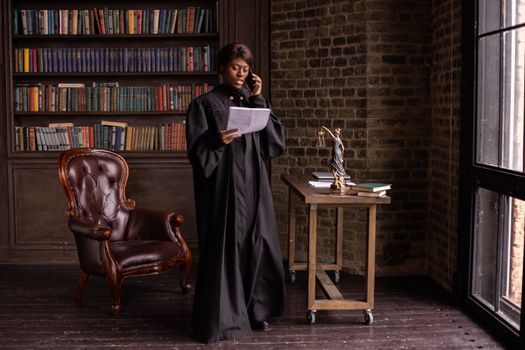
A judge is like the referee in a court case. Their main job is to make sure that trials are fair and that the law is followed correctly. They listen to all the evidence, from witnesses and lawyers, and then make decisions. In some cases, a judge will decide if someone is guilty or innocent, especially in cases where there isnt a jury. They also decide on punishments, like fines or prison sentences, if someone has broken the law. Judges need to be very good at listening, thinking clearly, and understanding complex information to make fair and just decisions. Being a judge is a very important and responsible job. You need to be impartial, which means not taking sides, and make sure everyone gets a fair hearing. Judges also have to explain their decisions clearly so everyone understands why they have come to a particular conclusion. It often involves working in different types of courts, from local magistrates courts dealing with everyday crimes to higher courts handling very serious cases. Judges are a crucial part of the justice system, helping to maintain law and order in the country.

Judge

Flag Media

Please select a reason for flagging this content.

📊 Statistics

Average Salary

The starting salary for a District Judge in the UK can be around £117,000 per year. For more senior judges, like High Court Judges, it can be over £190,000 per year.

Number of Judges

There are roughly 3,500 judges in England and Wales across different court levels, from magistrates to Supreme Court justices.

Time to Become a Judge

Most judges have been lawyers for at least 7-10 years before they become a judge, so it takes many years of study and experience.

🚀 Careers in this path

Flag Media

Please select a reason for flagging this content.

Judge's Clerk

Imagine working closely with a judge, helping them organise court papers and research legal information for cases. You would learn a lot about how the law works and what a judge does every day.

Flag Media

Please select a reason for flagging this content.

Legal Researcher

This role involves finding and understanding laws and previous court decisions to help lawyers and judges prepare for cases. You would be like a detective, but for legal facts, using books and computers.

Flag Media

Please select a reason for flagging this content.

Court Reporter

As a court reporter, you would be responsible for accurately writing down everything that is said in court. This is very important because these notes become the official record of the trial.

Build a Strong Foundation

Excel in School

Focus on your schoolwork, especially subjects that help with critical thinking and communication like English, History, and Maths. Getting good grades is really important.

To become a judge, you need a strong academic background. Excelling in school, particularly in subjects that develop your analytical and communication skills, will set you up for success. Aim for top grades in your GCSEs and A-levels, as these will be essential for getting into a good university to study law. Participating in debates or public speaking can also be very helpful.

Develop Key Skills

Practise being a good listener, thinking logically, and explaining your ideas clearly. These skills are super important for a judge.

Beyond academic subjects, you should actively develop skills such as critical thinking, problem-solving, active listening, and persuasive communication. Joining a debating society, school council, or taking part in mock trials can provide excellent opportunities to hone these abilities. Learning to analyse information, form reasoned arguments, and present them effectively will be invaluable throughout your legal career.

Explore the Legal World

Find out what being a judge or lawyer is really like. Read books, watch documentaries, or even try to visit a local court with your family.

Learning about the legal profession early on can help you decide if it's the right path for you. You could read books about famous legal cases, watch legal dramas or documentaries, and if possible, attend an open day at a local court with an adult. Many courts allow public access to watch certain hearings, which can give you a first-hand look at how the justice system operates. Speaking to lawyers or judges you might know can also offer valuable insights.

University and Early Legal Career

Study Law at University

After school, you'll need to go to university and get a degree in Law (an LLB). This usually takes three years.

The first major step after school is to gain a qualifying law degree (LLB) from a recognised university in the UK. This degree provides you with the foundational knowledge of English law. You'll study a range of subjects like criminal law, contract law, constitutional law, and more. Strong A-level results are typically required for entry into good law programmes. Some universities also offer joint honours degrees, combining law with another subject, but ensure it's a qualifying law degree for professional purposes.

Become a Practising Lawyer

After your degree, you'll need to train to become a barrister or solicitor. This involves more study and hands-on experience.

Once you have your law degree, you'll need to complete further professional training to become either a barrister or a solicitor. For barristers, this involves the Bar Practice Course (BPC) followed by a 'pupillage' (a year of supervised work experience). For solicitors, it involves the Solicitors Qualifying Examination (SQE) and two years of qualifying work experience (QWE). Most judges are appointed from the ranks of experienced barristers or solicitors, so this step is crucial for gaining practical legal experience.

Gain Experience and Specialise

Work as a lawyer for many years, building up your knowledge and experience in different types of law. Some judges specialise in certain areas like family law or criminal law.

To be considered for a judicial role, you typically need to have significant experience as a practising barrister or solicitor – often at least 5-7 years, but usually much more. During this time, you'll handle many cases, develop your legal expertise, and gain a deep understanding of court procedures and legal principles. Many aspiring judges choose to specialise in a particular area of law, such as criminal, family, commercial, or property law, as this builds focused expertise that can be valuable in specific judicial roles.

Becoming a Judge

Apply for Judicial Roles

After years of experience, you can apply to become a judge. This involves a special application process and interviews.

The Judicial Appointments Commission (JAC) handles applications for most judicial roles in England and Wales. When you feel ready and have sufficient legal experience, you can apply for available positions. The application process is rigorous and typically involves detailed application forms, online tests, interviews, and sometimes role-play exercises. They look for candidates who demonstrate strong legal knowledge, excellent communication skills, sound judgment, integrity, and the ability to manage a courtroom effectively.

Start with Part-Time or Tribunal Roles

Many judges start with part-time roles, like a Deputy District Judge or a Tribunal Judge, to get a feel for the job.

It's common for aspiring judges to begin with part-time or fee-paid judicial roles, such as a Deputy District Judge, Recorder, or a Judge of a First-tier Tribunal. These roles allow you to gain direct experience of sitting in judgment, managing cases, and making decisions, often whilst still maintaining your practice as a barrister or solicitor. This experience is invaluable and often a stepping stone to full-time judicial appointments. It allows you to develop the specific skills required for judicial office in a supported environment.

Continue Professional Development

Judges keep learning throughout their careers to stay up-to-date with laws and legal practices.

Even after becoming a judge, your learning journey doesn't stop. The law is constantly evolving, so judges are expected to engage in ongoing professional development. This includes attending judicial training courses, seminars, and conferences to keep their legal knowledge current, develop their judicial skills, and understand changes in legislation or legal practice. Continuous learning ensures judges can continue to make fair and informed decisions and uphold the high standards of the judiciary.

🎬 Useful Videos

🎯 View Apprenticeships

Explore relevant apprenticeships that can help you kickstart your career in Judge. Apprenticeships offer hands-on experience and training while earning a wage.

Career Progressions

This page showcases various career options and the pathways to reach them. Each career listed here shares transferable skills and knowledge, making it easier for individuals to transition between them.

Your current career is highlighted to help you see how it fits into the broader landscape of potential career choices. By clicking on any career, you can learn more about it, including the training and education required to pursue it.

Remember, progressing in your career often involves further learning and training. This page provides insights into future career options as well as those that can lead up to your current one.

These career progression decisions are informed by comparing the skills and knowledge needed for different occupations, along with data on how people move between them. Explore the possibilities and discover the exciting journey ahead in your career!

Sample Qualifications

How to become

You can get into this job through an official appointment.

Volunteering

You can get valuable experience and insights into the work of a judge through the Judicial Work Shadowing Scheme. This may help if you later apply for selection to become a judge.

You normally have to be a qualified legal professional, with at least 7 years' experience in law-related work to join the scheme.

If you have been on the Judicial Work Shadowing Scheme, you can apply for a place on the Judicial Outreach Mentoring Scheme. This scheme is open to legal professionals and applications are encouraged from people who are currently under-represented in the judiciary. For example:

  • women
  • ethnic minorities
  • lawyers with a state school education

Other Routes

Judges are appointed by the Judicial Appointments Commission. You’ll need to apply to them to be considered for selection.

To apply, you must:

  • be a qualified solicitor, barrister or chartered legal executive
  • have worked as a legal professional for between 5 and 7 years, depending on the type of judge you want to be
  • meet nationality requirements

Common starting roles include district, recorder and tribunal judges. For certain other judicial roles, you can apply if you’re an experienced legal academic, or trademark or patent attorney.

You must successfully complete several application stages to get through to shortlisting by the Commission. You’ll then be invited to attend an assessment and selection day, which will include interviews.

More Information

Career tips

If you're appointed as a full-time judge, you cannot return to legal practice.

Part-time judges, usually found in the lower courts, for example a tribunal or district judge, are paid a fee for each court session and are expected to sit for at least 15 sessions a year. Fee-paid judges can continue to practise law, providing there is no conflict of interest.

Further information

You can find out more about how to become a judge from:

Interested in More Career Paths?

Explore other careers or use our AI to discover personalised paths based on your interests.

Stay connected

Join our newsletter to stay up to date on features and releases

Address
Developing Experts Limited
Exchange Street Buildings
35-37 Exchange Street
Norwich
NR2 1DP
UK

Phone
01603 273515

Email
[email protected]

Copyright 2026 Developing Experts, All rights reserved.