




Creating Career Path...

Finding Further Careers...

Judge

View this career for different education levels:

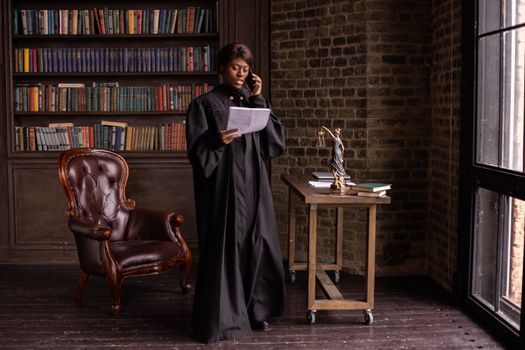
A Judge in the UK presides over legal proceedings in courts, interprets and applies the law, and makes rulings on cases. This demanding role involves ensuring fairness and due process, listening to arguments from barristers and solicitors, examining evidence, and ultimately delivering judgments or sentences. Judges are responsible for managing courtroom procedure, guiding juries on points of law, and maintaining order. Their decisions have profound impacts on individuals' lives and society, requiring impartiality, strong analytical skills, and a deep understanding of legal principles. The work can range from hearing civil disputes and family matters to presiding over serious criminal trials. It is a highly respected and intellectually challenging career that forms the backbone of the British justice system.

Judge

Flag Media

Please select a reason for flagging this content.

📊 Statistics

Salary Range for Judges

Salaries for judges in the UK vary significantly based on their level and court. For example, a District Judge might earn around 119,000 to 135,000 pounds per year, while a High Court Judge's salary can be upwards of 190,000 pounds. Circuit Judges typically fall in the 160,000 to 180,000 pound range. These figures are reviewed annually by the Senior Salaries Review Body.

Path to Becoming a Judge

The vast majority of judges in the UK are appointed from the ranks of experienced barristers or solicitors. Candidates typically need at least 5-7 years of post-qualification experience for many judicial roles, with more senior roles requiring substantial experience, often 10+ years. The average age for appointment to the judiciary is usually in the late 40s or 50s.

Judicial Appointments

The Judicial Appointments Commission (JAC) handles the selection process for most judicial roles in England and Wales. In 2022-2023, the JAC received over 6,000 applications across various judicial exercises, leading to hundreds of appointments. The demand for judicial roles remains consistent, reflecting the ongoing need for experienced legal professionals.

🚀 Careers in this path

Flag Media

Please select a reason for flagging this content.

Barrister

A Barrister specialises in court advocacy, providing legal advice and representing clients in court. They often work as self-employed practitioners, receiving cases from solicitors and focusing on a particular area of law, such as criminal, family, or commercial law.

Flag Media

Please select a reason for flagging this content.

Solicitor

A Solicitor provides legal advice and assistance to clients, ranging from individuals to large organisations. Their work is often office-based, involving drafting legal documents, negotiating, advising on transactions, and preparing cases for court. Specialisms include corporate, property, and family law.

Flag Media

Please select a reason for flagging this content.

Legal Executive

A Legal Executive is a qualified lawyer who specialises in a particular area of law, often with a focus on practical application rather than theoretical study. They handle a wide range of legal work, similar to solicitors, and can work in law firms, in-house legal departments, or local government.

Foundation in Law

Complete an Undergraduate Law Degree (LLB)

Gain a solid understanding of UK legal principles and systems by completing a qualifying law degree.

A Bachelor of Laws (LLB) is the most common entry point. Aim for a 2:1 or higher from a reputable university, as academic excellence is highly valued in the legal profession. Modules typically include Public Law, Contract Law, Criminal Law, and Tort Law, providing a foundational understanding of the legal landscape. If your undergraduate degree is in another subject, you'll need to complete a Graduate Diploma in Law (GDL) or a Master of Arts in Law (MA Law) to convert your degree.

Undertake Legal Professional Training

Choose between becoming a Solicitor or a Barrister, each with distinct training requirements.

For Solicitors, this traditionally involved the Legal Practice Course (LPC) followed by a two-year Training Contract. However, the new Solicitors Qualifying Examination (SQE) route is now the primary path, requiring SQE1 and SQE2 exams, plus two years of Qualifying Work Experience (QWE). For Barristers, you'll complete the Bar Practice Course (BPC) (formerly BPTC) and then undertake a year-long pupillage with a set of chambers. Both paths are highly competitive and require significant dedication.

Secure a Training Contract or Pupillage

Gain practical, on-the-job experience under the supervision of experienced legal professionals.

A training contract for solicitors involves rotating through different departments of a law firm, gaining exposure to various areas of law and developing practical legal skills. Pupillage for barristers involves shadowing a pupil supervisor, observing court proceedings, drafting legal documents, and eventually taking on small cases under supervision. Both are crucial for developing the professional competencies required to practise law and are highly sought after positions.

Professional Practice & Specialisation

Practise as a Solicitor or Barrister

Build a substantial career, gaining extensive experience and a strong reputation in your chosen legal field.

You'll need many years of successful practice, typically at least 5-10 years post-qualification, before you can even consider judicial roles. Specialise in an area of law where you can develop deep expertise and a strong understanding of legal principles and courtroom procedure. For solicitors, this might be commercial litigation, family law, or criminal defence. For barristers, it means developing a strong advocacy practice in areas like crime, family, or civil law. This period is vital for honing your analytical, advocacy, and decision-making skills.

Develop Relevant Judicial Qualities

Actively cultivate the attributes essential for judicial office, such as impartiality and sound judgment.

Judges need excellent analytical skills, the ability to absorb and process vast amounts of information, and the capacity to make reasoned decisions under pressure. Integrity, impartiality, and a commitment to justice are paramount. Develop strong communication skills, both written and oral, as you will be required to explain complex legal issues clearly and concisely. Actively seek out opportunities to develop these skills, such as pro bono work, mentoring junior colleagues, or taking on leadership roles within your firm or chambers.

Gain Experience in Tribunals or as a Recorder

Seek opportunities for part-time judicial roles or appointments to gain direct experience in judicial decision-making.

Many aspiring judges start by sitting as fee-paid judges in tribunals (e.g., Social Security or Immigration and Asylum Tribunals) or by becoming Recorders. A Recorder is a part-time judge who sits in the Crown Court or County Court, hearing a variety of cases. These roles provide invaluable experience in presiding over hearings, managing courtrooms, applying the law, and making judgments. They are often a prerequisite for full-time judicial appointments and allow you to test your suitability for judicial work.

Judicial Appointment

Apply Through the Judicial Appointments Commission (JAC)

Submit a rigorous application demonstrating your qualifications, experience, and suitability for judicial office.

The Judicial Appointments Commission (JAC) is responsible for selecting candidates for judicial roles in England and Wales. The application process is highly competitive and involves a detailed application form, references, and often written tests and interviews. You'll need to demonstrate your legal knowledge, intellectual capacity, personal integrity, and commitment to public service. The JAC publishes detailed guidance on eligibility and selection criteria for each competition, so thorough preparation is essential.

Undergo Interview and Selection Process

Participate in assessments designed to evaluate your judicial aptitude, judgment, and communication skills.

The JAC's selection process typically includes an initial sift based on the application, followed by qualifying tests and a competency-based interview. The interview will assess your ability to apply legal principles, make fair decisions, manage a courtroom, and deal with challenging situations. You may also be asked to participate in role-play exercises or provide written answers to legal problems. Success relies on demonstrating strong legal acumen, impartiality, excellent judgment, and clear communication.

Receive Appointment and Training

Upon successful selection, receive your judicial appointment and complete mandatory judicial training.

If successful, you will be appointed to a specific judicial role, such as District Judge, Circuit Judge, or High Court Judge, depending on your experience and the competition you applied for. All new judges undergo comprehensive training provided by the Judicial College, which covers areas like judicial ethics, case management, sentencing guidelines, and practical courtroom skills. This training ensures you are fully prepared to undertake the responsibilities and duties of your judicial office.

🎬 Useful Videos

🎯 View Apprenticeships

Explore relevant apprenticeships that can help you kickstart your career in Judge. Apprenticeships offer hands-on experience and training while earning a wage.

Career Progressions

This page showcases various career options and the pathways to reach them. Each career listed here shares transferable skills and knowledge, making it easier for individuals to transition between them.

Your current career is highlighted to help you see how it fits into the broader landscape of potential career choices. By clicking on any career, you can learn more about it, including the training and education required to pursue it.

Remember, progressing in your career often involves further learning and training. This page provides insights into future career options as well as those that can lead up to your current one.

These career progression decisions are informed by comparing the skills and knowledge needed for different occupations, along with data on how people move between them. Explore the possibilities and discover the exciting journey ahead in your career!

Sample Qualifications

How to become

You can get into this job through an official appointment.

Volunteering

You can get valuable experience and insights into the work of a judge through the Judicial Work Shadowing Scheme. This may help if you later apply for selection to become a judge.

You normally have to be a qualified legal professional, with at least 7 years' experience in law-related work to join the scheme.

If you have been on the Judicial Work Shadowing Scheme, you can apply for a place on the Judicial Outreach Mentoring Scheme. This scheme is open to legal professionals and applications are encouraged from people who are currently under-represented in the judiciary. For example:

  • women
  • ethnic minorities
  • lawyers with a state school education

Other Routes

Judges are appointed by the Judicial Appointments Commission. You’ll need to apply to them to be considered for selection.

To apply, you must:

  • be a qualified solicitor, barrister or chartered legal executive
  • have worked as a legal professional for between 5 and 7 years, depending on the type of judge you want to be
  • meet nationality requirements

Common starting roles include district, recorder and tribunal judges. For certain other judicial roles, you can apply if you’re an experienced legal academic, or trademark or patent attorney.

You must successfully complete several application stages to get through to shortlisting by the Commission. You’ll then be invited to attend an assessment and selection day, which will include interviews.

More Information

Career tips

If you're appointed as a full-time judge, you cannot return to legal practice.

Part-time judges, usually found in the lower courts, for example a tribunal or district judge, are paid a fee for each court session and are expected to sit for at least 15 sessions a year. Fee-paid judges can continue to practise law, providing there is no conflict of interest.

Further information

You can find out more about how to become a judge from:

Interested in More Career Paths?

Explore other careers or use our AI to discover personalised paths based on your interests.

Stay connected

Join our newsletter to stay up to date on features and releases

Address
Developing Experts Limited
Exchange Street Buildings
35-37 Exchange Street
Norwich
NR2 1DP
UK

Phone
01603 273515

Email
[email protected]

Copyright 2026 Developing Experts, All rights reserved.