
You may be able to start as a teaching assistant, learning mentor or volunteer in an educational setting and take on pastoral responsibilities as you gain experience. You could then apply for pastoral jobs as they become available.
Imagine floating in space, looking back at our beautiful Earth! An astronaut is someone who travels to space, often living and working on the International Space Station. They do exciting science experiments, fix things on the spacecraft, and sometimes even go for spacewalks outside! It's a job for super brave and smart people who love science, maths, and exploring. They need to be very fit and healthy, and excellent at working as part of a team, because everything they do is with other astronauts. They learn how to fly different vehicles, fix complex machines, and even how to be doctors in space. They might also share what they learn with people back on Earth, inspiring lots of children like you! To become an astronaut, you usually need to have studied science, maths, or engineering at university and have lots of experience in those fields, perhaps as a pilot, a doctor, or a scientist. It takes many years of hard work and training, but it's an incredible adventure. They live in tiny spaces, eat special space food, and get to see sunrises and sunsets many times a day from space. It is a very special job that helps us learn more about our universe and our planet.

The UK has had a few amazing astronauts like Helen Sharman and Tim Peake. Becoming an astronaut is very rare and special, with only a small number of people ever getting to go to space from the UK.
Astronauts spend many years training before they can go to space, often between 2 and 5 years learning lots of different skills.
Astronauts working for big space agencies like ESA (European Space Agency) might earn a salary that starts from around 60,000 pounds a year and can go up to over 80,000 pounds a year, especially once they have more experience.
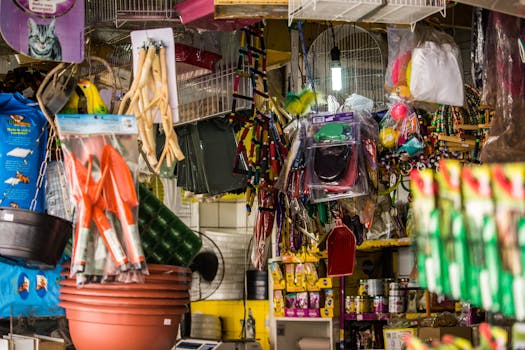
You could help look after all the lovely animals in a pet shop, making sure they have food, water, and clean homes, just like a bigger zoo.
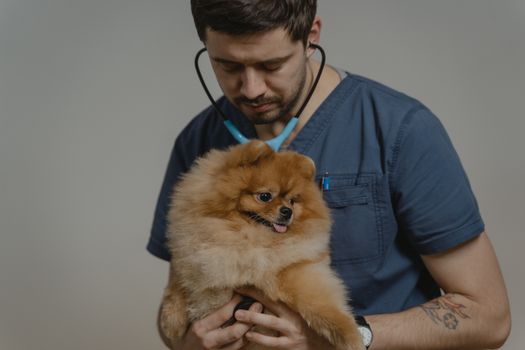
You could help a vet look after small pets like hamsters, guinea pigs, or even little kittens and puppies, making sure they get better when they're poorly.

You could take dogs for fun walks in the park and look after other pets like cats or rabbits when their owners are away, making sure they're happy and fed.
Start by reading lots of books about different animals. Learn about what they eat, where they live, and what makes them special.
There are many fantastic books at your local library or bookshop about animals, from tiny hamsters to big elephants. Look for books with colourful pictures and fun facts. You could even read stories where animals are the main characters to understand their different behaviours.
Watch TV shows and documentaries about animals. You can see how real vets work and learn about animal behaviour and health.
There are many amazing nature programmes on TV and online that show animals in their natural homes and sometimes even show vets helping them. Programmes like 'Blue Planet' or 'Planet Earth' are great for learning about wildlife, and there are specific shows about vets and their work too. Ask a grown-up to help you find suitable programmes.
If you can, visit a farm, a pet shop, or a zoo to see different animals up close and learn how they are cared for.
Seeing animals in real life can be very exciting! When you visit a farm, you can see cows, sheep, and chickens. At a zoo, you might see bigger, more exotic animals. Pay attention to how the animals move, what they eat, and how the people who look after them keep them safe and healthy. Remember to always be gentle and follow the rules.
If you have a pet at home, help your family look after them. This could be feeding them, playing with them, or helping to keep their space clean.
Helping with your own pet is a brilliant way to learn responsibility and understand what animals need. Make sure they always have fresh water, help with their feeding times, and spend time playing with them gently. Learning to understand your pet's body language will also be very helpful as a future vet.
Always remember to be very gentle and kind to all animals you meet. They can get scared easily, so soft voices and slow movements are best.
Animals can feel shy or worried, just like people. Approaching them slowly and quietly, and letting them sniff your hand first, can help them feel safe. Never shout or make sudden movements around animals. Showing them kindness and patience is a very important quality for a vet.
Start thinking about what makes animals healthy, like good food and exercise. You can even learn about washing hands to stop germs from spreading.
Just like humans, animals need good food and plenty of exercise to stay healthy. Learning about healthy diets for different animals and understanding why they need to play or run around is a great start. Also, practising good hygiene, like washing your hands after touching animals, is important for both you and the animals you care for.
When you go to school, try your best in science classes. Science helps you understand how bodies work, both human and animal.
Science is super important for vets! It helps you learn about living things, how their bodies work, and why they get sick. Pay close attention in biology lessons when you're older, as it will teach you about animal anatomy and how medicines work. Learning about plants and the environment is also a part of science that helps vets understand the world animals live in.
Vets need to write down lots of important notes about the animals they help. Practise writing neatly and clearly.
Vets keep careful records for every animal they see, noting down their symptoms, the treatments given, and advice for the owners. Being able to write clearly means other vets or nurses can easily understand your notes. Practise writing stories or keeping a diary now to improve your writing skills and make them easy for others to read.
Always be curious and ask lots of questions about animals and how things work. This helps you learn even more!
Asking questions is one of the best ways to learn! If you don't understand something about animals, or how a vet helps them, don't be shy – ask a grown-up, a teacher, or even a vet if you get the chance. The more questions you ask, the more you will discover and the better prepared you'll be for a career helping animals.

These clever people design and build the rockets, spacecraft, and satellites that astronauts use to go into space. They make sure everything is safe and works perfectly.

Pilots fly aeroplanes and helicopters. Many astronauts start their careers as pilots because they learn lots about flying and controlling complex machines.
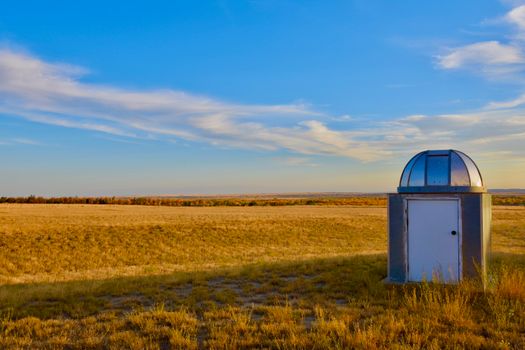
Space scientists study planets, stars, and galaxies. They might work with astronauts to plan experiments that can be done in space to learn more about the universe.
Explore relevant apprenticeships that can help you kickstart your career in Standardised career name. Apprenticeships offer hands-on experience and training while earning a wage.
This page showcases various career options and the pathways to reach them. Each career listed here shares transferable skills and knowledge, making it easier for individuals to transition between them.
Your current career is highlighted to help you see how it fits into the broader landscape of potential career choices. By clicking on any career, you can learn more about it, including the training and education required to pursue it.
Remember, progressing in your career often involves further learning and training. This page provides insights into future career options as well as those that can lead up to your current one.
These career progression decisions are informed by comparing the skills and knowledge needed for different occupations, along with data on how people move between them. Explore the possibilities and discover the exciting journey ahead in your career!
A Standardised Career Name, if it refers to a role offering emotional, spiritual, or practical support within a community, school, or healthcare setting, aligns most closely with a Pastoral Care Worker. This role focuses on holistic well-being rather than direct personal care or administrative social work.
You can get into this job through:
You may be able to start as a teaching assistant, learning mentor or volunteer in an educational setting and take on pastoral responsibilities as you gain experience. You could then apply for pastoral jobs as they become available.
You can get experience of working with children, families and young people, which will help when you apply for jobs. Examples include volunteering in schools, mentoring and youth work.
You can look for opportunities through organisations like:
You can apply directly for jobs if you have experience of working with children and young people, for example in:
Employers will expect you to have some GCSEs, or equivalent qualifications, including English and maths.
Pastoral care workers are normally employed term-time only. A working week can vary from a few hours up to full time.
Advertised pay rates are often listed as full-time equivalent (FTE) or pro rata. Actual pay will depend on the number of hours you work.
You can find job opportunities with your local council and Teaching Vacancies.
Explore other careers or use our AI to discover personalised paths based on your interests.
Address
Developing Experts Limited
Exchange Street Buildings
35-37 Exchange Street
Norwich
NR2 1DP
UK
Phone
01603 273515
Email
[email protected]
Copyright 2026 Developing Experts, All rights reserved.

Unlock expert-designed lessons, resources, and assessments tailored for educators. No credit card required.
Claim Your Free Trial →We use cookies to enhance your browsing experience and analyze our traffic. Learn more.
