Creating Career Path...

Finding Further Careers...

Religious Historian

View this career for different education levels:

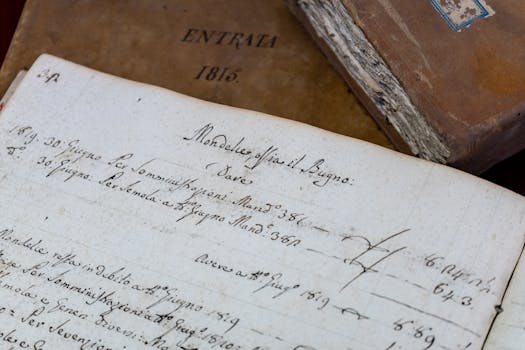
A Religious Historian in the UK is an academic and researcher who specialises in the study of religions through a historical lens. This involves investigating the origins, evolution, practices, beliefs, and impact of religious traditions and movements across different periods and cultures. They delve into primary sources such as ancient texts, archival documents, archaeological finds, and cultural artefacts to reconstruct and interpret the past. Their work often involves extensive reading, critical analysis, and writing, culminating in publications like journal articles and books, and presenting their findings at conferences. Many Religious Historians are employed by universities, where they not only conduct research but also teach undergraduate and postgraduate students, designing and delivering modules on various aspects of religious history. They play a crucial role in deepening our understanding of human societies and cultural development by exploring the profound influence of religion. Beyond academia, the skills developed as a Religious Historian are highly transferable. While the primary career path often lies within universities or research institutions, some may find roles in heritage organisations, museums, archives, or even in policy analysis where a deep understanding of cultural and historical contexts, particularly concerning religious diversity, is valuable. The role requires meticulous attention to detail, strong analytical capabilities, excellent written and verbal communication skills, and a profound curiosity about human civilisation and belief systems. It's a career that combines intellectual rigour with a passion for uncovering and interpreting the complexities of the past.

Religious Historian

Flag Media

Please select a reason for flagging this content.

📊 Statistics

Typical Starting Salary (Researcher)

For entry-level research roles or early career academic positions (e.g., teaching associate, research assistant), salaries can range from around 28,000 GBP to 35,000 GBP per year, depending on the institution and specific role.

Experienced Salary (Senior Academic)

Experienced Religious Historians in senior academic roles (e.g., Senior Lecturer, Professor) can expect salaries upwards of 50,000 GBP to 80,000+ GBP per year, with variations based on research output, teaching load, and university prestige.

Number of Academic Positions

While precise figures for 'Religious Historian' are difficult to isolate, the academic job market in Humanities across the UK is highly competitive. There are typically a limited number of permanent lecturing and research positions advertised each year, often attracting many qualified applicants.

🚀 Careers in this path

Flag Media

Please select a reason for flagging this content.

Archivist specialising in Religious Collections

Preserve and manage historical documents, manuscripts, and artefacts related to various religions. You'd be responsible for cataloguing, conserving, and making these collections accessible for research and public engagement within libraries, museums, or religious institutions.

Flag Media

Please select a reason for flagging this content.

Museum Curator of Religious Art and Artefacts

Research, acquire, exhibit, and interpret collections of religious art, objects, and historical items for a museum. This role involves developing exhibitions, writing interpretive labels, and educating the public about the historical and cultural significance of these pieces.

Flag Media

Please select a reason for flagging this content.

Academic Researcher in Religious Studies

Conduct in-depth research into specific aspects of religious history, theology, or sociology, often within a university setting. This could involve teaching undergraduate students, publishing articles, and contributing to scholarly discourse in your chosen area of specialisation.

Build Your Foundational Knowledge

Pursue a Relevant Undergraduate Degree

Obtain a Bachelor's degree in History, Religious Studies, Theology, or a related humanities subject.

Focus on developing strong research, critical thinking, and writing skills. Look for modules that specifically cover historical methodology, ancient languages (e.g., Latin, Greek, Hebrew, Arabic) if relevant to your chosen religious focus, and specific periods or regions of religious history. Participating in seminars and independent study projects can also be highly beneficial.

Develop Language Proficiency

Acquire proficiency in relevant ancient or modern languages crucial for primary source research.

Depending on your area of interest (e.g., early Christianity, medieval Islam, ancient Judaism), language skills are paramount. This might include Latin, ancient Greek, classical Hebrew, Arabic, Sanskrit, or others. Start learning these early, perhaps as part of your degree, through university language centres, or independent study. Many universities offer specialist courses for historical language acquisition.

Gain Research Experience

Actively seek opportunities to conduct historical research, even at an undergraduate level.

This could involve writing an extensive dissertation or thesis as part of your degree, assisting a professor with their research, or participating in a university-funded research project. Focus on learning how to locate, analyse, and interpret primary and secondary sources, as well as how to construct a well-supported historical argument. Presenting your work at undergraduate conferences or publishing in student journals is also valuable.

Specialise and Advance Your Studies

Complete a Master's Degree

Undertake a Master's (MA or MPhil) in History, Religious Studies, or a more specialised field of religious history.

This postgraduate degree allows you to deepen your knowledge in a specific area, develop more sophisticated research skills, and often involves writing a significant research thesis. It's a crucial stepping stone for PhD applications and demonstrates your commitment to academic research. Choose a programme with strong faculty in your area of interest.

Pursue a Doctoral Degree (PhD)

Embark on a Doctor of Philosophy (PhD) programme, which is essential for most academic positions.

A PhD involves extensive original research, culminating in a dissertation that makes a new contribution to the field of religious history. This period is dedicated to becoming an expert in your chosen niche, conducting fieldwork if necessary, and networking with other scholars. You'll typically teach at a university level during your PhD, gaining valuable pedagogical experience. Securing funding for your PhD, often through scholarships or studentships, is a key consideration.

Publish and Present Your Work

Begin establishing a publication record and present your research at academic conferences.

During your PhD and post-doc, aim to publish articles in peer-reviewed academic journals, contribute chapters to edited volumes, and present papers at national and international conferences. This is vital for disseminating your research, gaining feedback, and building your academic profile. It demonstrates your ability to contribute to scholarly discourse and is crucial for securing academic positions.

Establish Your Professional Career

Secure Postdoctoral Research Fellowships

Apply for postdoctoral positions to continue your research and develop your academic profile after your PhD.

Postdoctoral fellowships provide funded opportunities to refine your dissertation into a book, start new research projects, and gain further teaching experience. They are highly competitive but offer a vital bridge between completing your PhD and securing a permanent academic role. These fellowships allow you to broaden your network and work at different institutions.

Apply for University Lectureships

Seek permanent or temporary lectureship and teaching roles at universities.

These positions combine teaching, research, and administrative duties. You'll be responsible for designing and delivering courses, supervising students, conducting your own research, and contributing to the academic community. Building a strong teaching portfolio, along with your research output, is essential for these applications. Be prepared for a competitive job market and potentially relocating for opportunities.

Engage in Continuous Scholarship and Professional Development

Remain active in research, writing, and professional organisations throughout your career.

The field of religious history is constantly evolving. Continuous engagement means staying updated with new scholarship, participating in academic societies, reviewing books and articles, and continually developing new research projects. Mentoring junior scholars and engaging in public outreach activities can also be rewarding aspects of a long-term career as a religious historian, enhancing both your own impact and the public understanding of your field.

🎬 Useful Videos

🎯 View Apprenticeships

Explore relevant apprenticeships that can help you kickstart your career in Religious Historian. Apprenticeships offer hands-on experience and training while earning a wage.

Career Progressions

No career progressions found for Religious Historian

Sample Qualifications

While a 'Religious Historian' studies religious history and may not directly lead a congregation, in the absence of a more specific academic or historical role, 'Religious leader' is the closest fit as it pertains to professional engagement with religion, often requiring deep theological or historical knowledge.

How to become

You can get into this job through:

  • a university course
  • an apprenticeship
  • applying directly

University

You may need a degree or postgraduate award for some leadership positions. Most subjects are accepted though theology and philosophy may be particularly useful.

Entry requirements

You'll usually need:

  • 2 to 3 A levels, or equivalent, for a degree
  • a degree in any subject for a postgraduate course

More Information

Apprenticeship

You could apply to do Church Minister Level 6 Degree Apprenticeship, if you want to train to be a religious leader within the Christian tradition.

This typically takes around 3 years and you will complete a degree in theology and ministry as part of the apprenticeship.

Entry requirements

Employers will set their own entry requirements.

More Information

Direct Application

The process of becoming a religious leader can take several years, and is often based on your knowledge, experience and position within the religion.

Each religion has a different way of training its leaders, so the training and the length of time it takes will vary. 

For many religions the process might include:

  • study at a college or religious training centre
  • intensive study of your faith's teachings and writings
  • time alone in contemplation or meditation
  • experience of working with people in the community
  • mentoring and supervision from an experienced leader of your religion

In some religions, there are rules on who can become a leader and what duties they can carry out.

If you want to train to become a leader in your faith, the first thing you should do is ask your own religious leader for advice and guidance.


More Information

Career tips

Becoming a religious leader is a serious commitment that can be seen as a calling as much as a career.

As well as a strong belief in your faith and its traditions, you should accept that the work will affect all aspects of your life.

Interested in More Career Paths?

Explore other careers or use our AI to discover personalised paths based on your interests.

Stay connected

Join our newsletter to stay up to date on features and releases

Address
Developing Experts Limited
Exchange Street Buildings
35-37 Exchange Street
Norwich
NR2 1DP
UK

Phone
01603 273515

Email
[email protected]

Copyright 2026 Developing Experts, All rights reserved.