Creating Career Path...

Finding Further Careers...

Religious Historian

View this career for different education levels:

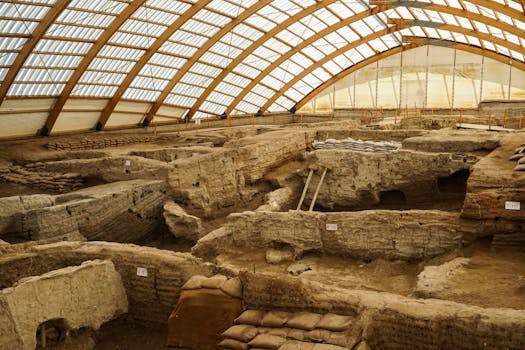
Imagine you love stories, but not just any stories. You love true stories from a very long time ago, especially those about how people believed in different gods, spirits, or ideas about the meaning of life. That is what a Religious Historian does! They are like detectives, but instead of solving crimes, they solve mysteries from the past by looking at old books, letters, buildings, and even archaeological finds. They study how religions started, how they changed over time, and how they affected people's lives, cultures, and societies in places like the UK and around the world. Being a Religious Historian means you spend a lot of time reading, researching in libraries or archives, and sometimes even travelling to see historical sites. You might write books or articles about what you discover, or teach students at a university about your findings. It's all about understanding why people believed what they did, how those beliefs shaped history, and what we can learn from it today. It takes a lot of curiosity, patience, and a love for exploring the past to uncover these fascinating stories.

Religious Historian

Flag Media

Please select a reason for flagging this content.

📊 Statistics

Average Starting Salary

For entry-level roles in academic research or museum work, you might expect to start around 25,000 to 30,000 pounds per year. More senior roles can earn significantly more.

Number of Positions

Specific roles as 'Religious Historian' are quite specialist. Many work within broader historian or academic roles. There are hundreds of university history departments and heritage organisations across the UK, offering various research and teaching positions.

Typical Working Hours

Many religious historians working in universities have flexible hours, but they often spend 35-40 hours a week researching, teaching, writing, and attending conferences. Museum or archive roles usually have more fixed hours.

🚀 Careers in this path

Flag Media

Please select a reason for flagging this content.

Archaeologist specialising in Religious Sites

Imagine digging up old churches, temples, or mosques to discover how people worshipped long ago. You'd find ancient artefacts and learn about their beliefs and customs, helping us understand the history of religion.

Flag Media

Please select a reason for flagging this content.

Curator of Religious Artefacts

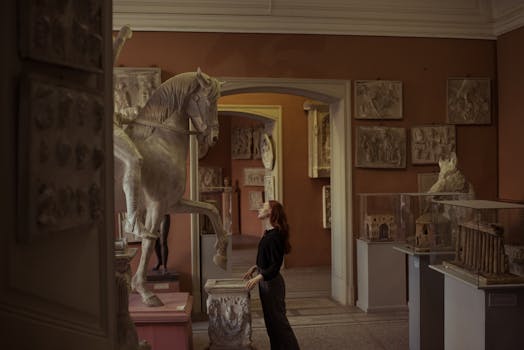
If you love old religious objects, you could work in a museum looking after them. You'd research their stories, make sure they're preserved, and help design exhibitions so visitors can learn about different religions and their history.

Flag Media

Please select a reason for flagging this content.

Documentary Maker for Religious History

You could travel to historical religious sites around the world, interview experts, and film fascinating stories about how religions have changed over time. You'd bring history to life for people watching on TV or online.

Build Your Foundations

Excel in School Subjects

Focus on subjects like History, Religious Studies, English, and Classical Civilisation. These will give you a strong base for understanding past cultures and how to analyse texts.

Doing well in these subjects during your GCSEs and A-Levels is really important. History will teach you how to research and interpret events, while Religious Studies will introduce you to different faiths and their impact. English helps you improve your writing and critical thinking, which are key skills for any historian. If your school offers it, Latin or Greek can be incredibly useful for reading ancient religious texts.

Read Widely

Beyond schoolwork, read books and articles about different religions, historical periods, and cultures. The more you read, the more knowledge you'll build.

Don't just stick to the history books your school recommends. Explore stories and non-fiction about ancient civilisations, different world religions, and even historical fiction that can bring the past to life. Look for documentaries or reputable online resources too. This wide reading will help you discover what aspects of religious history you find most fascinating.

Visit Museums and Historical Sites

Go to museums, cathedrals, temples, and historical sites to see historical objects and learn about different cultures firsthand.

Museums like the British Museum or local heritage sites often have amazing collections related to religious history, from ancient artefacts to medieval church relics. Seeing these objects in person can spark your imagination and help you connect with the past in a tangible way. Pay attention to the stories behind the exhibits and think about how they relate to the people who made or used them.

Higher Education & Specialisation

Choose a Relevant University Degree

Apply for a degree like History, Religious Studies, Theology, or Ancient History at university. Look for courses that offer modules in the history of religions.

A Bachelor's degree is essential. When choosing your course, look at the modules offered – do they cover ancient religions, specific faiths you're interested in, or methodologies for historical research? Some universities offer joint honours degrees, such as History and Theology, which could be perfect. Research different universities and their departments to find the best fit for your interests.

Pursue a Postgraduate Degree

After your first degree, consider a Master's (MA) and then a PhD (Doctor of Philosophy) in a specific area of religious history.

To become a professional religious historian, especially in academia, a PhD is usually required. Your Master's degree will allow you to specialise further and develop advanced research skills. For your PhD, you'll conduct original research on a very specific topic within religious history, which will contribute new knowledge to the field. This is where you become an expert in your chosen area.

Learn Ancient Languages

Depending on your specialisation, learning ancient languages like Latin, Greek, Hebrew, or Arabic will be vital for reading original texts.

If you want to study ancient Christianity, Latin and Greek are often necessary. For Jewish history, Hebrew is key, and for Islamic history, Arabic. Many university courses offer opportunities to learn these languages as part of your degree, or you might take extra courses. Being able to read primary sources in their original language gives you a deeper and more accurate understanding of the past.

Become a Professional Historian

Conduct Research and Publish

As you progress, you'll need to carry out original research and publish your findings in academic journals or books.

Publishing your research is how you share your discoveries with other historians and build your reputation in the academic world. This could involve writing articles for peer-reviewed journals, contributing chapters to edited books, or eventually writing your own book based on your PhD research. It shows that you are contributing new and valuable insights to the field.

Present at Conferences

Share your research with other scholars by presenting at academic conferences in the UK and internationally.

Conferences are great places to get feedback on your work, learn about what other historians are researching, and network with people in your field. It's an opportunity to practice public speaking and engage in discussions about your area of expertise. Many conferences have sessions specifically for postgraduate students or early career researchers.

Seek Academic Positions

Look for roles such as Research Fellow, Lecturer, or Professor at universities to teach and continue your research.

Academic jobs are very competitive, so gaining teaching experience during your PhD or post-doctoral research is beneficial. You might start as a research assistant, then move to a lectureship where you teach undergraduate and postgraduate students while continuing your own research. Eventually, you could become a Professor, leading research projects and guiding future historians.

🎯 View Apprenticeships

Explore relevant apprenticeships that can help you kickstart your career in Religious Historian. Apprenticeships offer hands-on experience and training while earning a wage.

Career Progressions

No career progressions found for Religious Historian

Sample Qualifications

A Religious Historian's primary role is research and interpretation of religious history, texts, and traditions, often within academic or archival settings. While they possess deep religious knowledge, their role is not typically to lead a congregation or perform sacerdotal duties, which is the core function of a Religious Leader. Given the extremely limited options, and the lack of a closer academic or research role, 'Religious leader' is the only provided option that broadly relates to religion, but it is not a good fit.

How to become

You can get into this job through:

  • a university course
  • an apprenticeship
  • applying directly

University

You may need a degree or postgraduate award for some leadership positions. Most subjects are accepted though theology and philosophy may be particularly useful.

Entry requirements

You'll usually need:

  • 2 to 3 A levels, or equivalent, for a degree
  • a degree in any subject for a postgraduate course

More Information

Apprenticeship

You could apply to do Church Minister Level 6 Degree Apprenticeship, if you want to train to be a religious leader within the Christian tradition.

This typically takes around 3 years and you will complete a degree in theology and ministry as part of the apprenticeship.

Entry requirements

Employers will set their own entry requirements.

More Information

Direct Application

The process of becoming a religious leader can take several years, and is often based on your knowledge, experience and position within the religion.

Each religion has a different way of training its leaders, so the training and the length of time it takes will vary. 

For many religions the process might include:

  • study at a college or religious training centre
  • intensive study of your faith's teachings and writings
  • time alone in contemplation or meditation
  • experience of working with people in the community
  • mentoring and supervision from an experienced leader of your religion

In some religions, there are rules on who can become a leader and what duties they can carry out.

If you want to train to become a leader in your faith, the first thing you should do is ask your own religious leader for advice and guidance.


More Information

Career tips

Becoming a religious leader is a serious commitment that can be seen as a calling as much as a career.

As well as a strong belief in your faith and its traditions, you should accept that the work will affect all aspects of your life.

Interested in More Career Paths?

Explore other careers or use our AI to discover personalised paths based on your interests.

Stay connected

Join our newsletter to stay up to date on features and releases

Address
Developing Experts Limited
Exchange Street Buildings
35-37 Exchange Street
Norwich
NR2 1DP
UK

Phone
01603 273515

Email
[email protected]

Copyright 2026 Developing Experts, All rights reserved.