

Creating Career Path...

Finding Further Careers...

Art Historian

View this career for different education levels:

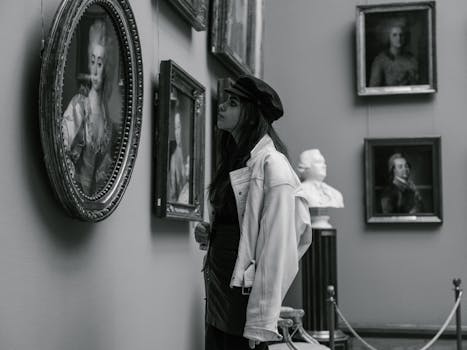
An Art Historian in the UK explores, interprets, and documents art and visual culture across various periods and regions. This career involves rigorous research into artworks, artists, styles, and their historical and cultural contexts. Art historians often work with primary sources, such as archival documents, and secondary sources, like scholarly texts, to develop a comprehensive understanding of art's evolution and significance. Their work can lead to publishing academic papers, curating exhibitions, lecturing at universities, or contributing to conservation efforts. They might specialise in a particular period, such as Renaissance art, or a specific medium, like photography, or even a geographical area. This role demands strong analytical skills, attention to detail, excellent written and verbal communication, and a profound passion for visual arts and their stories. They contribute to our collective understanding of human creativity and cultural heritage.

Art Historian

Flag Media

Please select a reason for flagging this content.

📊 Statistics

Average Salary Range

For entry-level roles such as museum assistants or archive roles, salaries might start around 20,000 to 25,000 GBP. Experienced curators or university lecturers can earn between 35,000 to 50,000 GBP, with senior or specialist positions potentially exceeding 60,000 GBP annually.

Number of Positions / Market Outlook

The job market for art historians in the UK is competitive, particularly for academic and curatorial roles, with an estimated few hundred specialised positions advertised annually across universities, museums, galleries, and auction houses. Many roles are project-based or require advanced degrees.

Typical Educational Requirement

A good undergraduate degree in Art History or a related field is essential, with a significant number of positions requiring a Masters degree (MA) or a Doctorate (PhD) for research, curatorial, and academic roles. Practical experience through internships is also highly valued.

🚀 Careers in this path

Flag Media

Please select a reason for flagging this content.

Curator Assistant

Work alongside experienced curators in museums or galleries, helping with exhibition planning, research, object handling, and collection management. This role provides practical experience in the museum sector.

Flag Media

Please select a reason for flagging this content.

Gallery Assistant

Gain front-of-house and administrative experience in an art gallery, assisting with sales, visitor engagement, artwork logistics, and marketing. It's a great way to understand the commercial art world.

Flag Media

Please select a reason for flagging this content.

Art Researcher or Archivist

Focus on in-depth research for art institutions, auction houses, or individual scholars. This could involve cataloguing artworks, verifying provenance, or managing historical documents related to art and artists.

Build Your Foundational Knowledge

Complete a Relevant Undergraduate Degree

Begin by pursuing a Bachelor's degree in Art History, History of Art, or a closely related humanities subject like History, Classics, or Archaeology with a strong art history component.

Many universities across the UK offer excellent Art History programmes. Look for courses that cover a broad range of periods and geographies, from ancient to contemporary art, and include modules on research methodologies and critical theory. A good programme will also offer opportunities for field trips to galleries and museums, which are invaluable for visual learning. Ensure the university has strong ties with local and national art institutions.

Engage in Extracurricular Activities

While studying, actively seek out opportunities to deepen your practical experience and network within the art world.

This could include joining university art societies, writing for student publications about art, attending lectures and seminars by visiting curators or academics, and visiting exhibitions regularly. Developing critical observation and analytical writing skills through these activities will be crucial. Consider starting a blog or online portfolio to showcase your interests and initial analyses of artworks.

Gain Initial Work Experience

Seek out internships or volunteer roles at galleries, museums, or art institutions to gain practical insight into the sector.

Even unpaid or short-term roles can provide invaluable experience. Look for opportunities in collections management, exhibition support, research departments, or education teams. This will help you understand the day-to-day operations of an art institution, build contacts, and identify areas of art history that particularly interest you. Websites like Art Fund, Museum Association, and university career portals often list such opportunities.

Specialise and Deepen Expertise

Undertake a Postgraduate Degree

A Master's (MA) degree is often a prerequisite for serious academic or curatorial roles in art history, allowing you to specialise.

An MA allows you to delve deeper into a specific period, movement, or geographical area of art history. This specialisation is vital for developing expert knowledge and refining your research skills. Many UK universities offer a range of MA programmes, some of which are taught, while others are research-focused. Consider programmes that offer practical components, such as object handling or curatorial studies, if you are leaning towards museum work. Your MA dissertation will be a critical piece of original research.

Develop Advanced Research Skills

During your Master's, focus on honing advanced research, critical analysis, and academic writing skills.

This involves learning how to navigate archives, use specialised databases, conduct visual analysis, and formulate compelling arguments based on primary and secondary sources. Active participation in seminars, presenting your research, and receiving feedback from peers and academics will be key to developing your scholarly voice. Attending academic conferences, even as an observer, can expose you to current research and methodologies in the field.

Network Professionally

Actively build relationships with academics, curators, conservators, and other professionals in the art world.

Attend academic conferences, art fairs, exhibition openings, and professional workshops. Join relevant professional organisations such as the Association of Art Historians (AAH) or the Museums Association. These networks can open doors to collaborative projects, mentorship opportunities, and future job prospects. A strong professional network is invaluable for career progression and staying informed about developments in the field.

Launch Your Career

Pursue a PhD (for Academia/High-Level Research)

If your goal is an academic career as a university lecturer or a top-tier research role, a doctoral degree (PhD) is almost always required.

A PhD involves undertaking extensive original research culminating in a substantial thesis that makes a new contribution to the field of art history. This is a highly demanding but rewarding path, typically lasting 3-4 years full-time. During your PhD, you will further refine your expertise, publish articles in academic journals, and potentially teach undergraduate courses. Securing funding for a PhD, through grants or scholarships, is often a crucial step.

Apply for Entry-Level Positions

Begin applying for roles such as Assistant Curator, Collections Researcher, Gallery Assistant, or Junior Academic Fellow.

Competition for roles in museums, galleries, and academia can be intense. Be persistent and tailor your applications to each specific role, highlighting your relevant research, writing, and practical experience. Be prepared for interview processes that may include presentations or written tasks. Consider roles at smaller regional institutions or auction houses, which can provide excellent stepping stones to larger institutions.

Continue Professional Development & Publishing

Once employed, actively engage in ongoing professional development and seek opportunities to publish your research.

Attending workshops, seminars, and conferences is vital for staying current in the field and expanding your knowledge. For academics, publishing in peer-reviewed journals and contributing to edited volumes is essential for career progression and establishing your reputation. For museum professionals, continuing to research and contribute to exhibition catalogues or online resources is equally important. Lifelong learning is a cornerstone of this career.

🎯 View Apprenticeships

Explore relevant apprenticeships that can help you kickstart your career in Art Historian. Apprenticeships offer hands-on experience and training while earning a wage.

Career Progressions

This page showcases various career options and the pathways to reach them. Each career listed here shares transferable skills and knowledge, making it easier for individuals to transition between them.

Your current career is highlighted to help you see how it fits into the broader landscape of potential career choices. By clicking on any career, you can learn more about it, including the training and education required to pursue it.

Remember, progressing in your career often involves further learning and training. This page provides insights into future career options as well as those that can lead up to your current one.

These career progression decisions are informed by comparing the skills and knowledge needed for different occupations, along with data on how people move between them. Explore the possibilities and discover the exciting journey ahead in your career!

Sample Qualifications

An Art Historian's expertise in the history of art, provenance, and contextual understanding of artworks directly aligns with the duties of a Museum curator, who is responsible for managing, interpreting, and acquiring art collections for museums.

How to become

You can get into this job through:

  • a university course
  • an apprenticeship
  • working towards this role

University

You can start by doing a degree in a subject like:

  • fine art or art history
  • museum or heritage studies
  • archaeology or ancient history
  • classics
  • natural sciences
  • anthropology
  • education

You can also study for a postgraduate qualification in museum and gallery studies, or in a particular style or period of art or history. This may give you an advantage when applying for jobs.

Some universities will require a relevant first degree to apply for a postgraduate course. Others may accept most subjects but expect you to have a lot of work experience to back up your application.

Entry requirements

You'll usually need:

  • 2 to 3 A levels, or equivalent, for a degree
  • a degree in any subject for a postgraduate course

More Information

Apprenticeship

You may be able to apply for a Curator Level 7 Apprenticeship with a cultural or heritage organisation.

This can take around 3 years to complete and combines on-the-job training with off-site learning.

Entry requirements

Employers will set their own entry requirements.

More Information

Work

You may be able to work as a collections assistant, education officer or conservator, before becoming a museum or gallery curator through training and promotion.

Volunteering

Paid or unpaid work experience in a museum, gallery or heritage property is usually essential to apply for courses and jobs.

More Information

Career tips

Digital skills are becoming increasingly important in this career, for example for cataloguing and archival purposes, and producing online and interactive content for wider public engagement. Any skills you can develop through work or volunteering will be helpful.

Professional and industry bodies

You can join the Museums Association for professional development and to make industry contacts.

Further information

You can learn more about how to become a museum or gallery curator from the Museums Association.

Interested in More Career Paths?

Explore other careers or use our AI to discover personalised paths based on your interests.

Stay connected

Join our newsletter to stay up to date on features and releases

Address
Developing Experts Limited
Exchange Street Buildings
35-37 Exchange Street
Norwich
NR2 1DP
UK

Phone
01603 273515

Email
[email protected]

Copyright 2026 Developing Experts, All rights reserved.
