




Creating Career Path...

Finding Further Careers...

Shipwright

View this career for different education levels:

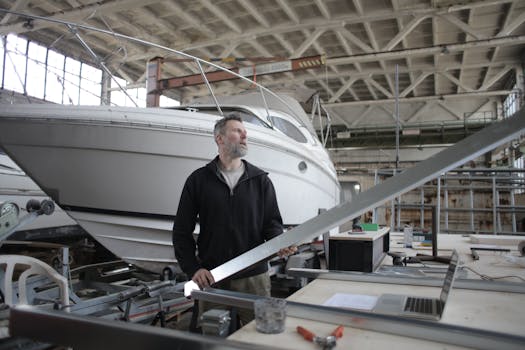
Imagine someone who knows how to build or fix boats from scratch that's a shipwright! Shipwrights are like the super builders of the boat world. They use lots of different tools and materials, like wood, metal, and special plastics, to make sure boats are strong, safe, and can float perfectly. They might work on brand new boats, making sure every part fits just right, or they might fix old boats that need some tender loving care to get them sailing again. It's a job that needs a lot of careful planning, measuring, and skilled hands, a bit like building a giant model, but one you can actually sail in! They could be working on small fishing boats, fancy yachts, or even really big ships. Being a shipwright means you get to be creative and solve problems. You learn all about how boats work and how to make them waterproof and strong enough for the sea. You might learn about different types of wood, how to use power tools safely, or even how to weld metal. Many shipwrights learn their skills through apprenticeships, which means they learn on the job from experienced builders while also studying at a college. It's a fantastic career for someone who loves working with their hands, enjoys being outdoors or near the water, and has a passion for boats and ships.

Shipwright

Flag Media

Please select a reason for flagging this content.

📊 Statistics

Starting Salary

Apprentice shipwrights in the UK might start with around 15,000 to 20,000 pounds a year while they are learning.

Experienced Salary

Once a shipwright has lots of experience, they could earn between 25,000 and 40,000 pounds a year. Very skilled shipwrights working on special projects might earn even more.

Job Opportunities

While not as many jobs as some careers, there are always opportunities for skilled shipwrights, especially in places with lots of boats or historic ships, like along the coast or rivers in the UK. Many work for smaller specialist companies.

🚀 Careers in this path

Flag Media

Please select a reason for flagging this content.

Boat Builder

Imagine building smaller boats, like the ones you might see on a lake or a river! You'd get to put all the parts together, making sure they float perfectly.

Flag Media

Please select a reason for flagging this content.

Toy Boat Maker

This is super fun! You'd design and build amazing toy boats out of wood or other materials, maybe even ones that can sail in a pond or a big bath!

Flag Media

Please select a reason for flagging this content.

Marine Carpenter

Think about fixing the wooden parts inside real boats, like the comfy seats or the floors. You'd be making sure everything is strong and looks super smart.

Learning the Ropes (Primary School Age)

Get Good at Building Things

Practice building things with your hands, like LEGOs, model kits, or even making paper boats. This helps you learn how different parts fit together.

At this age, it's all about having fun with building! Try to use different materials and tools safely. See if you can make your paper boats float and think about what makes them stable. You can also visit museums with old ships or watch videos about how boats are made to spark your interest.

Learn About Shapes and Sizes

Pay attention in your maths lessons, especially when you learn about shapes, measuring, and how things balance. This is super important for designing boats.

Understanding shapes like circles, squares, and triangles, and how to measure things like length and width, will be really helpful. Think about how a boat needs to be the right shape to move through water easily and not tip over. You could even try measuring things around your house!

Be Creative and Solve Problems

When something doesn't work, try to figure out why and find a new way to do it. Shipwrights need to be good at solving problems.

Sometimes when you're building, things don't go as planned. Don't worry! That's a chance to think like a detective and find a solution. Maybe a piece doesn't fit, or your paper boat sinks. Can you try a different shape or material? This kind of thinking helps you become a great problem-solver.

Secondary School Adventures (Secondary School Age)

Choose Helpful Subjects

Pick subjects like Design and Technology (DT) and Resistant Materials. These classes will teach you about different materials and how to build things properly.

In DT and Resistant Materials, you'll get to work with wood, metal, and plastics, which are all materials used in building boats. You'll learn how to use tools safely and create actual projects. Maths and Science (especially Physics) will also be super useful because they teach you how forces work and how materials behave.

Look for Work Experience

If you can, try to find a chance to visit a shipyard or a boat builder. Even for a day, you can see what the job is like!

Ask your teachers or parents if they know of any local boatyards or marine businesses that might allow you to visit for a day. Seeing real shipwrights at work and observing the different stages of boat building can give you a fantastic insight into the job and inspire you even more. You might even get to ask them questions!

Join a STEM Club

Join clubs that focus on Science, Technology, Engineering, and Maths (STEM). These clubs often have fun projects where you can design and build things.

STEM clubs are brilliant for practical learning. You might get to build robots, bridges, or even mini-boats. These activities help you develop teamwork skills, understand engineering principles, and get hands-on experience with design challenges, all of which are very useful for a future shipwright.

Training to be a Shipwright (Post-School)

Consider an Apprenticeship

The best way to become a shipwright is often through an apprenticeship. You learn on the job from experienced people and get paid while you train!

Apprenticeships are fantastic because you get hands-on experience right away in a real shipyard or boatbuilding company. You'll learn practical skills like cutting wood, welding metal, fitting engines, and repairing different parts of boats. You'll also study for a qualification at a college alongside your work, which gives you both practical and theoretical knowledge. Look for 'Marine Engineering Apprenticeships' or 'Boatbuilding Apprenticeships'.

Go to College

You could study a course related to boatbuilding, marine engineering, or naval architecture at a college or university.

Colleges offer courses like BTECs in Marine Engineering or Boatbuilding. These courses teach you the technical knowledge and practical skills you'll need. Universities offer degrees in Naval Architecture or Marine Technology, which are more about designing and engineering ships. Both pathways can lead to a career as a shipwright, depending on whether you prefer hands-on building or design work.

Keep Learning and Practising

Even when you're a shipwright, there are always new things to learn. Keep practising your skills and learning about new materials and technologies.

The world of boatbuilding is always changing! New materials, tools, and ways of designing boats are always being invented. A good shipwright never stops learning. You might attend short courses, get certifications for specific skills (like welding or fibreglass repair), or simply read up on new developments in the industry. This helps you stay brilliant at your job.

🎬 Useful Videos

🎯 View Apprenticeships

Explore relevant apprenticeships that can help you kickstart your career in Shipwright. Apprenticeships offer hands-on experience and training while earning a wage.

Career Progressions

This page showcases various career options and the pathways to reach them. Each career listed here shares transferable skills and knowledge, making it easier for individuals to transition between them.

Your current career is highlighted to help you see how it fits into the broader landscape of potential career choices. By clicking on any career, you can learn more about it, including the training and education required to pursue it.

Remember, progressing in your career often involves further learning and training. This page provides insights into future career options as well as those that can lead up to your current one.

These career progression decisions are informed by comparing the skills and knowledge needed for different occupations, along with data on how people move between them. Explore the possibilities and discover the exciting journey ahead in your career!

Sample Qualifications

A Shipwright's primary role is the construction, maintenance, and repair of ships and boats, making 'Boat builder' the closest and most accurate match from the provided list, as it encompasses the core duties of working on marine vessels.

How to become

You can get into this job through:

  • a college course
  • an apprenticeship
  • applying directly
  • a course with a commercial training provider

College

You could take a college course to learn some of the skills you would need as a trainee, or to join an apprenticeship.

Courses include:

  • boat building
  • marine engineering
  • marine electrical engineering
  • T Level in Engineering, Manufacturing, Processing and Control
  • T level in Maintenance, Installation and Repair

Entry requirements

Entry requirements for these courses vary.

More Information

Apprenticeship

You could apply to do a Level 3 Advanced Apprenticeship, for example:

  • Boatbuilder
  • Maritime Mechanical Fitter
  • Maritime Electrical Fitter
  • Maritime Pipeworker
  • Marine Engineer

These can take between 3 and 4 years to complete. You'll do on-the-job training and spend time with a college or training provider.

Entry requirements

You'll usually need:

  • 5 GCSEs at grades 9 to 4 (A* to C), or equivalent, including English and maths, for an advanced apprenticeship

More Information

Direct Application

You can apply directly if you've got relevant skills. Qualifications and experience in joinery, electrics, engineering, welding or plumbing can help.

Other Routes

You may be able to take a course with a commercial boat building training provider. Training can range from short courses in marine electrics and joinery, through to full boat building programmes, lasting several months.

More Information

Career tips

You'll need to be willing to move if necessary, as training providers and boat yards are located in coastal areas around the country.

Further information

You can find out more about becoming a boat builder from the Institute of Marine Engineering, Science and Technology and British Marine.

Interested in More Career Paths?

Explore other careers or use our AI to discover personalised paths based on your interests.

Stay connected

Join our newsletter to stay up to date on features and releases

Address
Developing Experts Limited
Exchange Street Buildings
35-37 Exchange Street
Norwich
NR2 1DP
UK

Phone
01603 273515

Email
[email protected]

Copyright 2025 Developing Experts, All rights reserved.
