Creating Career Path...

Finding Further Careers...

Farmer

View this career for different education levels:

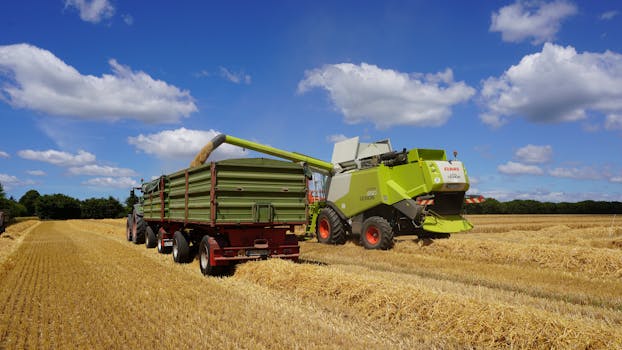
Farmers are responsible for producing food, fibre, and other products by managing land, crops, and animals. In the UK, farmers may specialise in arable farming (growing crops), livestock farming (raising animals such as cattle, sheep, or pigs), or mixed farming, which combines both. The role involves tasks such as planting, harvesting, maintaining equipment, caring for animals, and managing business aspects like finances and marketing. Farmers need practical skills, knowledge of modern agricultural techniques, and an understanding of environmental and animal welfare regulations.

Farmer

Flag Media

Please select a reason for flagging this content.

📊 Statistics

Average Salary

The average salary for a farmer in the UK ranges from £20,000 to £35,000 per year, depending on the size and type of farm.

Number of Farmers

There are approximately 150,000 full-time farmers in the United Kingdom, with many more working part-time or seasonally.

Working Hours

Farmers often work long and irregular hours, especially during planting and harvesting seasons, with many working over 50 hours per week.

🚀 Careers in this path

Dairy Farmer

Works specifically with cows or goats to produce milk and other dairy products.

Organic Crop Farmer

Grows fruits, vegetables, or grains using organic methods without synthetic chemicals.

Poultry Farmer

Specialises in raising chickens, ducks, or other birds for meat or egg production.

Explore Agriculture

Learn About Farming

Research different types of farming such as arable, livestock, dairy, or mixed farming to understand what interests you.

Farming is a diverse field. Some farmers focus on crops, others on animals, and some do both. You can start by reading books, watching documentaries, or visiting local farms to see what daily life is like. Consider joining farming clubs or volunteering at local community gardens to gain hands-on experience.

Visit Local Farms

Arrange visits to local farms to talk to farmers and see their daily work in action.

Visiting farms can give you insight into the realities of the work, the challenges, and the rewards. It is a great opportunity to ask questions about working hours, skills needed, and what a typical day involves. Many farms offer open days or school visits, which are ideal for students.

Gain Practical Skills

Get Work Experience

Apply for part-time, weekend, or seasonal work on a farm to build practical skills.

Experience is highly valued in agriculture. Tasks may include animal care, planting, harvesting, or machinery operation. Even short-term work over school holidays can provide valuable insight. Look for opportunities through local farms, agriculture colleges, or online job boards.

Consider Agricultural Courses

Enrol in relevant courses at school or college, such as GCSEs or BTECs in Agriculture or Land-based Studies.

Many colleges offer courses in agriculture, animal management, or horticulture. These provide both theoretical knowledge and practical experience. Some apprenticeships may also be available, combining work and study. Qualifications are not always required, but they can help you progress and open up more opportunities.

Start Your Farming Career

Find Your First Job or Apprenticeship

Apply for entry-level jobs, apprenticeships, or trainee positions on farms.

Many farmers start as farm workers or apprentices, learning on the job and working their way up. Apprenticeships offer structured training and a salary. Look for vacancies through job sites, local agricultural colleges, or farming organisations. Be prepared for hard work and long hours, especially during busy seasons.

Progress and Consider Specialising or Managing Your Own Farm

With experience, move into roles with more responsibility, such as supervisor or farm manager, or consider starting your own farm.

As you gain experience, you may choose to specialise in certain crops or livestock, or take on management roles. Some farmers eventually lease or purchase their own land to start an independent business. Continuing professional development, joining farming networks, and keeping up with new technology will help you succeed in the long term.

🎯 View Apprenticeships

Explore relevant apprenticeships that can help you kickstart your career in Farmer. Apprenticeships offer hands-on experience and training while earning a wage.

Career Progressions

This page showcases various career options and the pathways to reach them. Each career listed here shares transferable skills and knowledge, making it easier for individuals to transition between them.

Your current career is highlighted to help you see how it fits into the broader landscape of potential career choices. By clicking on any career, you can learn more about it, including the training and education required to pursue it.

Remember, progressing in your career often involves further learning and training. This page provides insights into future career options as well as those that can lead up to your current one.

These career progression decisions are informed by comparing the skills and knowledge needed for different occupations, along with data on how people move between them. Explore the possibilities and discover the exciting journey ahead in your career!

Sample Qualifications

How to become

You can get into this job through:

  • a university course
  • a college course
  • an apprenticeship
  • working towards this role

University

You could take a foundation degree, higher national diploma or degree in:

  • agriculture
  • land management
  • farm business management
  • crop and livestock production

Courses and qualifications are available at agricultural colleges and universities.

Entry requirements

You'll usually need:

  • 1 or 2 A levels, or equivalent, for a foundation degree or higher national diploma
  • 2 to 3 A levels, or equivalent, for a degree

More Information

College

You could do a course at agricultural college to learn some of the skills you'll need to start your career in farming. 

Courses include:

  • agriculture
  • land-based operations
  • T Level in Agriculture, Land Management and Production

Entry requirements

Entry requirements for these courses vary.

  • 4 or 5 GCSEs at grades 9 to 4 (A* to C), or equivalent, including English and maths for a T Level

More Information

Apprenticeship

You could apply to do an intermediate or advanced apprenticeship, for example:

  • General Farm Worker Level 2
  • Poultry Technician Level 3
  • Livestock Unit Technician Level 3
  • Crop Technician Level 3

You could also apply to do an Assistant Farm Manager Level 4 Higher Apprenticeship, if you want to work in farm management.

Entry requirements

You'll usually need:

  • some GCSEs, usually including English and maths, or equivalent, for an intermediate apprenticeship
  • 5 GCSEs at grades 9 to 4 (A* to C), or equivalent, including English and maths, for an advanced apprenticeship
  • 4 or 5 GCSEs at grades 9 to 4 (A* to C) and A levels, or equivalent, for a higher or degree apprenticeship

More Information

Work

You could get management experience by working as a supervisor, unit manager or assistant manager before moving into farm management.

More Information

Career tips

Farmers work long hours especially during busy periods, such as lambing season and harvest time.

Professional and industry bodies

You could become a member of the National Farmers Union (NFU) to keep up to date with developments in the farming industry.

The National Federation of Young Farmers' Clubs also supports young people in agricultural work and those interested in rural life.

You could join to:

  • learn new skills
  • keep up to date with rural issues
  • network with other young people

Further information

You can get more information about farming careers from:

Interested in More Career Paths?

Explore other careers or use our AI to discover personalised paths based on your interests.

Stay connected

Join our newsletter to stay up to date on features and releases

Address
Developing Experts Limited
Exchange Street Buildings
35-37 Exchange Street
Norwich
NR2 1DP
UK

Phone
01603 273515

Email
[email protected]

Copyright 2025 Developing Experts, All rights reserved.
