Creating Career Path...

Finding Further Careers...

Farmer

View this career for different education levels:

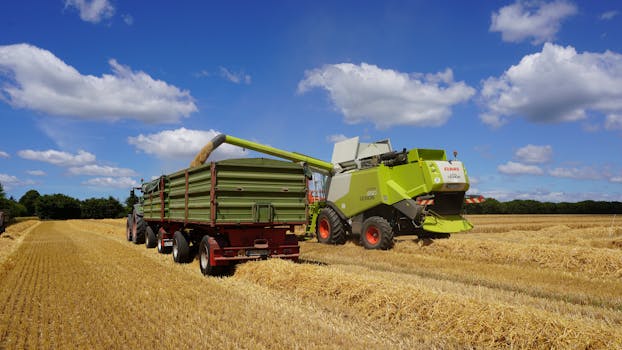
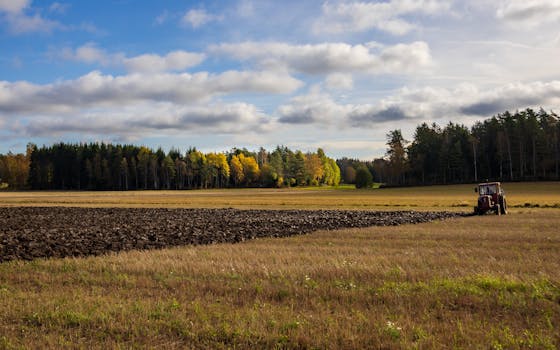
Farmers are responsible for producing food, crops, and livestock by managing farms and agricultural land. This career involves a wide range of tasks, such as planting, harvesting, looking after animals, maintaining farm machinery, and managing business operations like budgeting and marketing. The work can be physically demanding and is often carried out outdoors in all weather conditions. Farmers use a mix of traditional methods and modern technology, including tractors, automated equipment, and computer systems to monitor crops or livestock. Sustainability and environmental management are becoming increasingly important aspects of farming in the UK.

Farmer

Flag Media

Please select a reason for flagging this content.

📊 Statistics

Average Salary Range

Farmers in the UK typically earn between £20,000 and £50,000 per year, depending on the size and type of farm.

Employment Numbers

There are around 140,000 people employed as farmers, farm managers, and farm owners in the UK.

Working Hours

Farmers often work long and irregular hours, with an average working week of 39 to 60 hours, especially during busy seasons like planting and harvest.

🚀 Careers in this path

Flag Media

Please select a reason for flagging this content.

Dairy Farmer

Specialises in raising cows for milk production and managing all aspects of a dairy herd, including milking and caring for livestock.

Flag Media

Please select a reason for flagging this content.

Arable Farmer

Focuses on growing crops such as wheat, barley, and oilseed rape, using machinery to plant, tend, and harvest fields.

Poultry Farmer

Concentrates on raising chickens or other birds for eggs or meat, ensuring their health and welfare, and managing daily operations.

Gain Essential Education

Complete Secondary Education

Achieve good GCSEs, especially in subjects like biology, geography, and maths.

While there are no strict requirements, having a solid foundation in science and maths helps you understand the basics of plant and animal biology, environmental management, and farm accounts. Geography will also help you learn about soil, climate, and land use, all of which are important for running a successful farm.

Consider Further Study

Pursue a college course or apprenticeship in agriculture, land management, or animal care.

Courses like a Level 2 or 3 Diploma in Agriculture or apprenticeships in crop or livestock production will give you hands-on experience and practical skills. These qualifications are highly valued and will improve your chances of finding work or managing your own farm in the future.

Gain Practical Experience

Work on a Farm

Get a job or volunteer on local farms to gain real-world farming experience.

Working directly on a farm will teach you about daily routines, the seasonal nature of farming, and how to use equipment safely. You could help with planting, harvesting, animal care, or machinery maintenance. This hands-on experience is essential for developing practical skills and understanding the realities of farm life.

Attend Agricultural Events

Visit agricultural shows, open days, or farm tours to learn from professionals.

These events are great for networking and learning about the latest developments in farming technology, crop varieties, and livestock breeds. You can meet experienced farmers, ask questions, and get advice about the best routes into the profession.

Start Your Farming Career

Apply for Farming Roles

Look for jobs as a farm worker, assistant, or technician to begin your career.

Entry level roles are available on arable, dairy, livestock, or mixed farms. These jobs allow you to build your skills, gain references, and possibly progress to management roles. You could also work as a contractor, providing services to several farms.

Consider Starting Your Own Farm

Plan and set up your own farming business, either independently or with others.

This may involve securing land, obtaining funding, and deciding what to produce. Many new farmers start small, perhaps with a few animals or a small plot of crops, and expand as they gain experience. Support is available from agricultural organisations, government grants, and farming cooperatives.

🎯 View Apprenticeships

Explore relevant apprenticeships that can help you kickstart your career in Farmer. Apprenticeships offer hands-on experience and training while earning a wage.

Career Progressions

This page showcases various career options and the pathways to reach them. Each career listed here shares transferable skills and knowledge, making it easier for individuals to transition between them.

Your current career is highlighted to help you see how it fits into the broader landscape of potential career choices. By clicking on any career, you can learn more about it, including the training and education required to pursue it.

Remember, progressing in your career often involves further learning and training. This page provides insights into future career options as well as those that can lead up to your current one.

These career progression decisions are informed by comparing the skills and knowledge needed for different occupations, along with data on how people move between them. Explore the possibilities and discover the exciting journey ahead in your career!

Sample Qualifications

How to become

You can get into this job through:

  • a university course
  • a college course
  • an apprenticeship
  • working towards this role

University

You could take a foundation degree, higher national diploma or degree in:

  • agriculture
  • land management
  • farm business management
  • crop and livestock production

Courses and qualifications are available at agricultural colleges and universities.

Entry requirements

You'll usually need:

  • 1 or 2 A levels, or equivalent, for a foundation degree or higher national diploma
  • 2 to 3 A levels, or equivalent, for a degree

More Information

College

You could do a course at agricultural college to learn some of the skills you'll need to start your career in farming. 

Courses include:

  • agriculture
  • land-based operations
  • T Level in Agriculture, Land Management and Production

Entry requirements

Entry requirements for these courses vary.

  • 4 or 5 GCSEs at grades 9 to 4 (A* to C), or equivalent, including English and maths for a T Level

More Information

Apprenticeship

You could apply to do an intermediate or advanced apprenticeship, for example:

  • General Farm Worker Level 2
  • Poultry Technician Level 3
  • Livestock Unit Technician Level 3
  • Crop Technician Level 3

You could also apply to do an Assistant Farm Manager Level 4 Higher Apprenticeship, if you want to work in farm management.

Entry requirements

You'll usually need:

  • some GCSEs, usually including English and maths, or equivalent, for an intermediate apprenticeship
  • 5 GCSEs at grades 9 to 4 (A* to C), or equivalent, including English and maths, for an advanced apprenticeship
  • 4 or 5 GCSEs at grades 9 to 4 (A* to C) and A levels, or equivalent, for a higher or degree apprenticeship

More Information

Work

You could get management experience by working as a supervisor, unit manager or assistant manager before moving into farm management.

More Information

Career tips

Farmers work long hours especially during busy periods, such as lambing season and harvest time.

Professional and industry bodies

You could become a member of the National Farmers Union (NFU) to keep up to date with developments in the farming industry.

The National Federation of Young Farmers' Clubs also supports young people in agricultural work and those interested in rural life.

You could join to:

  • learn new skills
  • keep up to date with rural issues
  • network with other young people

Further information

You can get more information about farming careers from:

Interested in More Career Paths?

Explore other careers or use our AI to discover personalised paths based on your interests.

Stay connected

Join our newsletter to stay up to date on features and releases

Address
Developing Experts Limited
Exchange Street Buildings
35-37 Exchange Street
Norwich
NR2 1DP
UK

Phone
01603 273515

Email
[email protected]

Copyright 2025 Developing Experts, All rights reserved.
