Creating Career Path...

Finding Further Careers...

Fine Artist

View this career for different education levels:

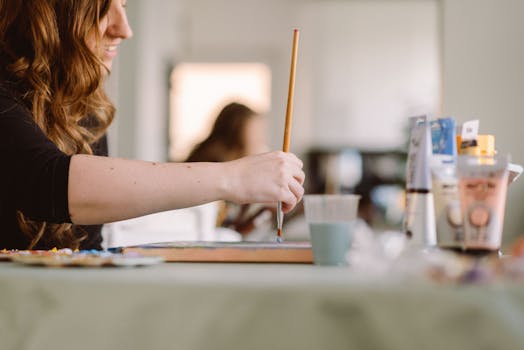
A fine artist is someone who creates original works of art, such as paintings, drawings, sculptures, or installations, often to express their own ideas or emotions. In the UK, fine artists may work in studios, galleries, or public spaces, and their work can be exhibited in art galleries, sold to private collectors, or commissioned for public spaces. The career often involves a high degree of independence and creativity, but it can also be competitive and financially unpredictable. Many fine artists supplement their income through teaching, workshops, or related creative work. Success in this field often requires building a personal reputation, networking, and continuous professional development.

Fine Artist

Flag Media

Please select a reason for flagging this content.

📊 Statistics

Average Salary

Fine artists in the UK typically earn between £20,000 and £40,000 per year, though established artists can earn significantly more through sales and commissions.

Employment Numbers

There are approximately 40,000 people working as artists or related roles in the UK, according to the Office for National Statistics.

Freelance Prevalence

Around 80 percent of fine artists in the UK are self-employed or work freelance, rather than being employed by a single organisation.

🚀 Careers in this path

Portrait Painter

Creates detailed and lifelike paintings of individuals or groups, often working on commissions for clients.

Sculptor

Designs and makes three dimensional art pieces using materials such as clay, stone, metal, or wood.

Illustrator

Produces images for books, magazines, advertisements, and digital media, bringing stories and concepts to life through art.

Develop Artistic Skills

Practise Art Regularly

Dedicate time to drawing, painting, or sculpting to build your artistic skills.

Experiment with different materials and techniques, such as watercolours, oils, charcoal, or clay, to discover your strengths and preferences. Regular practice will help you improve your technical abilities and develop your unique artistic style.

Study Art

Take art classes at school or join local art clubs to learn from teachers and peers.

Studying art formally at GCSE or A-level, or through evening classes and workshops, will introduce you to new techniques and art history. You will also receive valuable feedback that can help you grow as an artist.

Build a Portfolio

Create a Collection of Work

Assemble your best pieces into a portfolio that shows your range and style.

A portfolio is essential for applying to art courses, exhibitions, or seeking gallery representation. Include a variety of completed works and, if possible, sketchbooks or work-in-progress pieces to demonstrate your creative process.

Photograph and Present Your Art

Take high-quality photos of your work and organise them in both digital and physical formats.

Good presentation helps others appreciate your art. Use natural lighting and a neutral background for photographs. A digital portfolio can be shared easily online or attached to applications for courses and opportunities.

Pursue Art Education or Self-Employment

Apply for Art Courses

Consider studying art at university or college to gain formal training and industry connections.

Many fine artists study for a degree in Fine Art or a related subject. University courses offer expert teaching, access to studios, and an opportunity to build a professional network. Alternatively, apprenticeships and diplomas are available for those looking for practical experience.

Exhibit and Sell Your Work

Showcase your art in galleries, online platforms, or art fairs to reach potential buyers and audiences.

Entering open exhibitions, collaborating with local galleries, or setting up an online shop (such as Etsy or your own website) are good ways to start selling your artwork. Building a social media presence can also help attract commissions and opportunities.

🎯 View Apprenticeships

Explore relevant apprenticeships that can help you kickstart your career in Fine Artist. Apprenticeships offer hands-on experience and training while earning a wage.

Career Progressions

This page showcases various career options and the pathways to reach them. Each career listed here shares transferable skills and knowledge, making it easier for individuals to transition between them.

Your current career is highlighted to help you see how it fits into the broader landscape of potential career choices. By clicking on any career, you can learn more about it, including the training and education required to pursue it.

Remember, progressing in your career often involves further learning and training. This page provides insights into future career options as well as those that can lead up to your current one.

These career progression decisions are informed by comparing the skills and knowledge needed for different occupations, along with data on how people move between them. Explore the possibilities and discover the exciting journey ahead in your career!

Sample Qualifications

A Fine Artist and a Medical Illustrator both require advanced visual and artistic skills to create detailed and accurate representations. While a Fine Artist may focus on personal or abstract work, a Medical Illustrator applies artistic talent specifically to educational and scientific purposes, making it closely aligned in terms of technical expertise and artistic skill.

How to become

You can get into this job through:

  • a university course
  • working towards this role

University

To get into any of the branches of medical illustration you'll need a degree in a relevant subject like:

  • photography
  • graphic design
  • illustration
  • art and design
  • film or video production

You can apply for a trainee position as a medical illustrator in a healthcare setting once you finish your degree.

As a trainee you could gain a postgraduate qualification in specialisms like:

  • clinical photography
  • graphic design for healthcare
  • medical art

Entry requirements

You'll usually need:

  • 2 to 3 A levels, or equivalent, for a degree
  • a degree in a relevant subject for postgraduate study

More Information

Work

You can apply to do a postgraduate qualification if you're already working in healthcare and you have a relevant degree.

More Information

Career tips

Medical illustration is a small and specialised field, and there's a lot of competition for vacancies. You'll improve your job prospects if you also have relevant work experience.

Contact your local university hospital or NHS trust's medical photography department to arrange a visit or some work shadowing.

Professional and industry bodies

You can join the Institute of Medical Illustrators for professional recognition, training opportunities and to make industry contacts.

Further information

You'll find more advice on careers and training in medical illustration through the Institute of Medical Illustrators and Health Careers.

Interested in More Career Paths?

Explore other careers or use our AI to discover personalised paths based on your interests.

Stay connected

Join our newsletter to stay up to date on features and releases

Address
Developing Experts Limited
Exchange Street Buildings
35-37 Exchange Street
Norwich
NR2 1DP
UK

Phone
01603 273515

Email
[email protected]

Copyright 2025 Developing Experts, All rights reserved.
