
Creating Career Path...

Finding Further Careers...

Product Designer

View this career for different education levels:

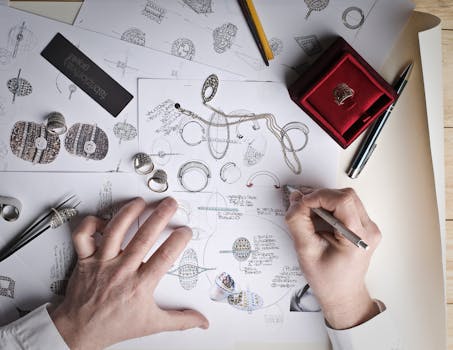
A Product Designer is responsible for creating and improving products, focusing on how they look, feel, and function for users. In the UK, product designers work across a wide range of industries, including technology, consumer goods, automotive, and healthcare. They use creativity and technical skills to develop ideas, make prototypes, and test how products work in real life. Product designers often collaborate with engineers, marketers, and manufacturers to ensure that products are both attractive and practical. They also consider the needs and feedback of users to make products better and more user-friendly. This career is ideal for people who enjoy solving problems, have an eye for detail, and are interested in both design and technology.

Product Designer

Flag Media

Please select a reason for flagging this content.

📊 Statistics

Average Salary

The average salary for a Product Designer in the UK ranges from £28,000 to £60,000 per year, depending on experience and location.

Job Openings

There were over 3,500 advertised product designer positions in the UK in 2023, with demand especially high in technology and manufacturing sectors.

Industry Growth

The design sector in the UK has seen a 10 percent growth in employment over the past five years, reflecting the increasing importance of user-centred products.

🚀 Careers in this path

Flag Media

Please select a reason for flagging this content.

User Interface Designer

Focuses on creating visually appealing and user-friendly interfaces for websites, apps, or digital products.

Flag Media

Please select a reason for flagging this content.

Packaging Designer

Specialises in designing the packaging for products to ensure they are attractive, practical, and reflect the brand.

Furniture Designer

Works on designing innovative and functional furniture pieces for homes, offices, or public spaces.

Build Your Creative and Technical Foundation

Study Relevant Subjects

Take subjects like Design and Technology, Art, or Computer Science at GCSE or A-level to develop your creative and technical skills.

Design and Technology courses help you understand the basics of design processes, materials, and problem-solving. Art will strengthen your creative thinking and visual communication skills. Computer Science introduces you to digital tools and basic coding, which are increasingly important for digital product design.

Develop a Portfolio

Start creating a portfolio of your design work. Include sketches, prototypes, or digital designs.

A portfolio showcases your abilities and creativity to future employers or academic institutions. You can include school projects, personal design experiments, or even redesigns of existing products. Take photographs or create digital presentations of your work to demonstrate your skills.

Gain Formal Qualifications

Pursue Further Education

Apply for a college or university course in Product Design, Industrial Design, or a related subject.

Many product designers hold a degree or HND in Product Design, Industrial Design, or similar courses such as 3D Design or User Experience Design. These courses typically include both theoretical and practical modules, helping you develop advanced design skills and learn about manufacturing processes and user research.

Take Part in Design Competitions or Work Experience

Enter design competitions or seek internships to gain real-world experience.

Design competitions, such as those run by the Design Council or D&AD, provide valuable opportunities to showcase your skills and receive feedback from professionals. Internships or work placements (even short-term) help you understand the day-to-day work of a product designer and build your network in the industry.

Start Your Career and Develop Specialisms

Apply for Product Designer Roles

Look for entry-level positions such as Junior Product Designer or Graduate Designer.

You can find job opportunities with design consultancies, tech companies, manufacturers, or as part of in-house design teams. Tailor your CV and portfolio to each job application, highlighting relevant skills and projects. Be prepared to discuss your design process and problem-solving abilities in interviews.

Continue Learning and Build a Network

Stay up to date with industry trends and connect with other designers through events and online communities.

Product design is a rapidly evolving field. Attend conferences, workshops, or local meetups to learn about the latest tools and methods. Joining professional networks, such as the Chartered Society of Designers or design groups on social media, can help you find mentors, collaborators, and new opportunities.

🎯 View Apprenticeships

Explore relevant apprenticeships that can help you kickstart your career in Product Designer. Apprenticeships offer hands-on experience and training while earning a wage.

Career Progressions

This page showcases various career options and the pathways to reach them. Each career listed here shares transferable skills and knowledge, making it easier for individuals to transition between them.

Your current career is highlighted to help you see how it fits into the broader landscape of potential career choices. By clicking on any career, you can learn more about it, including the training and education required to pursue it.

Remember, progressing in your career often involves further learning and training. This page provides insights into future career options as well as those that can lead up to your current one.

These career progression decisions are informed by comparing the skills and knowledge needed for different occupations, along with data on how people move between them. Explore the possibilities and discover the exciting journey ahead in your career!

Sample Qualifications

A Product Designer often focuses on creating user-centred designs and improving user interactions, which closely aligns with the role of a UX Designer. Both roles involve user research, wireframing, and prototyping to ensure optimal user experiences.

How to become

You can get into this job through:

  • a university course
  • a college course
  • an apprenticeship
  • applying directly

University

You could do a higher national diploma, degree or postgraduate award in:

  • UX design
  • product design
  • graphic design
  • human computer interaction (HCI)
  • digital media and web design

Entry requirements

You'll usually need:

  • 1 or 2 A levels, or equivalent, for a higher national diploma
  • 2 to 3 A levels, or equivalent, for a degree
  • a degree in a relevant subject for postgraduate study

More Information

College

You could do a college course, which may lead on to more advanced qualifications, or help you to get a trainee position with a company.

Courses include:

  • digital media design
  • digital product design
  • T Level in Digital Production, Design and Development

Entry requirements

Entry requirements for these courses vary.

  • 4 or 5 GCSEs at grades 9 to 4 (A* to C), or equivalent, including English and maths for a T Level

More Information

Apprenticeship

You could apply to do a Digital User Experience (UX) Professional Level 6 Degree Apprenticeship.

You may also find a Digital Accessibility Specialist Level 4 Higher Apprenticeship useful for this job.

Entry requirements

You'll usually need:

  • 4 or 5 GCSEs at grades 9 to 4 (A* to C) and A levels, or equivalent, for a higher or degree apprenticeship

More Information

Volunteering

If you're working in an organisation that conducts user research, you could get work experience by volunteering to help in research sessions and user interviews.

You could also get involved with the online user experience community for advice and tips, and to find a mentor to help you.

Direct Application

You can apply directly to companies or go through an agency that specialises in providing digital design professionals to clients.

You'll need qualifications and relevant experience to do this.

More Information

Career tips

You'll find it useful to have:

  • knowledge of coding like HTML , CSS and JavaScript so you can build wireframes and prototypes
  • experience of using design software like Adobe Creative Suite
  • an understanding of agile project development methods

It will also help if you have a portfolio to showcase examples of your work.

Further information

You can find out more about working as a user experience (UX) designer from the User Experience Professionals' Association (UXPA) and techskills.

Interested in More Career Paths?

Explore other careers or use our AI to discover personalised paths based on your interests.

Stay connected

Join our newsletter to stay up to date on features and releases

Address
Developing Experts Limited
Exchange Street Buildings
35-37 Exchange Street
Norwich
NR2 1DP
UK

Phone
01603 273515

Email
[email protected]

Copyright 2025 Developing Experts, All rights reserved.
