




Creating Career Path...

Finding Further Careers...

Shop Worker

View this career for different education levels:

As a Shop Worker, also commonly known as a Retail Assistant or Sales Assistant, you are often the first point of contact for customers in a wide range of retail environments, from supermarkets and department stores to small independent boutiques. Your core role revolves around providing excellent customer service, assisting shoppers with their needs, and ensuring the shop floor runs smoothly. Day-to-day tasks can be varied and dynamic. You'll likely be involved in serving customers at the till, processing payments, handling returns and exchanges, and providing product information and recommendations. Beyond direct customer interaction, you'll also be responsible for maintaining the appearance of the shop, which includes merchandising products, ensuring shelves are well-stocked and tidy, and potentially assisting with deliveries and stockroom organisation. It's a role that requires a friendly demeanour, good communication skills, and the ability to work effectively as part of a team.

Shop Worker

Flag Media

Please select a reason for flagging this content.

📊 Statistics

Average Salary (UK)

The typical annual salary for a Shop Worker in the UK ranges from approximately £18,000 to £23,000 for entry-level or less experienced roles, potentially rising to £25,000 or more for those with significant experience or supervisory responsibilities.

Job Outlook (UK)

The retail sector consistently offers a large number of employment opportunities across the UK. While specific figures fluctuate, there are tens of thousands of vacancies in retail at any given time, reflecting the high turnover and constant demand for staff in shops, supermarkets, and other retail outlets.

Working Hours

Many Shop Worker positions involve flexible hours, including evenings, weekends, and public holidays, to cover shop opening times. Full-time roles typically involve around 35-40 hours per week, but part-time opportunities are very common, offering flexibility for students or those with other commitments.

🚀 Careers in this path

Flag Media

Please select a reason for flagging this content.

Retail Assistant

Working on the shop floor, assisting customers with product enquiries, processing transactions, and maintaining merchandising standards. This role can be a great stepping stone into retail management or specialised sales.

Flag Media

Please select a reason for flagging this content.

Visual Merchandiser Assistant

Supporting the creation and implementation of attractive product displays and window layouts to entice customers and maximise sales. This blends creativity with an understanding of consumer behaviour and store layout.

Flag Media

Please select a reason for flagging this content.

E-commerce Fulfilment Operative

Focussing on the online aspect of retail, this involves picking, packing, and dispatching orders placed through the company's website. It offers insight into logistics and the growing digital side of retail operations.

Build Foundational Skills & Experience

Gain GCSEs or Equivalent

Ensure you have a solid academic foundation, particularly in subjects that demonstrate literacy and numeracy.

While specific academic qualifications aren't always mandatory for entry-level shop worker roles, having GCSEs (or equivalent vocational qualifications) in English and Maths at grades 4-9 (A*-C) will significantly strengthen your applications. These subjects demonstrate your ability to communicate effectively and handle basic calculations, which are essential for processing sales and interacting with customers. Consider taking functional skills qualifications if you need to boost these areas.

Develop Customer Service Skills

Actively seek opportunities to enhance your communication, problem-solving, and interpersonal abilities.

Customer service is at the heart of being a successful shop worker. Look for part-time jobs, volunteering roles, or even school/university projects that involve direct interaction with the public. Roles in hospitality, call centres, or even community events can provide valuable experience in handling enquiries, resolving issues, and maintaining a positive attitude under pressure. Practice active listening and clear communication.

Secure Entry-Level Retail Experience

Apply for part-time, temporary, or seasonal positions in any retail environment to get a feel for the industry.

The best way to get started is to gain direct experience. Many retailers hire for part-time roles, especially during busy periods like weekends, holidays, or Christmas. Look for positions such as Retail Assistant, Sales Assistant, Checkout Operator, or Stockroom Assistant. Even a few months of experience will provide invaluable insight into daily operations, stock management, till work, and customer interaction, making you a more attractive candidate for future roles.

Advance Your Retail Career

Excel in Your Current Role

Consistently perform well, take initiative, and demonstrate reliability and a strong work ethic.

Once you're in a shop worker role, focus on being an outstanding employee. This means arriving on time, being proactive in helping customers, accurately processing transactions, and keeping the shop floor tidy. Volunteer for extra tasks, show enthusiasm for learning new aspects of the business, and build positive relationships with your colleagues and managers. Your commitment and reliability will be noticed and make you a strong candidate for progression.

Seek Training and Development

Take advantage of any internal training programmes and consider external qualifications.

Many larger retailers offer internal training on topics like advanced customer service, visual merchandising, stock control systems, or health and safety. Actively participate in these. Additionally, look into NVQs (National Vocational Qualifications) in Retail or Customer Service, or even short courses in areas like leadership or sales techniques offered by colleges or private providers. These qualifications can boost your skills and your CV.

Pursue Supervisory or Specialised Roles

Apply for positions with greater responsibility as your experience and skills grow.

With a few years of solid experience and a demonstrated ability to lead, you can start looking at supervisory roles such as Senior Sales Assistant, Team Leader, or Assistant Manager. Alternatively, you might specialise in areas like visual merchandising, inventory management, or e-commerce if the company has such departments. Keep an eye on internal job boards and express your interest in career progression to your manager during performance reviews.

Explore Further Retail Opportunities

Consider Retail Management

Aim for roles like Store Manager, where you oversee all aspects of a retail outlet.

Becoming a Store Manager involves significant responsibility, including managing staff, achieving sales targets, overseeing operations, and ensuring customer satisfaction. This path often requires several years of experience in supervisory roles, strong leadership skills, and a deep understanding of retail business. Some might also pursue higher education like a degree in Business Management or Retail Management to support this career trajectory.

Branch into Head Office Roles

Explore careers in areas like buying, merchandising, marketing, or human resources within a retail company.

Your experience on the shop floor provides invaluable insight into customer behaviour and product performance. This can be a strong foundation for moving into head office roles. For instance, a buyer selects products, a merchandiser plans their display and stock levels, a marketer promotes them, and HR manages staff. These roles often require additional qualifications or specific expertise, but your retail background offers a unique perspective.

Entrepreneurship in Retail

Consider starting your own retail business or becoming a franchisee.

If you have an innovative idea, a passion for a particular product, and an entrepreneurial spirit, your experience as a shop worker gives you practical knowledge of the retail landscape. You'll understand customer needs, inventory, sales processes, and the day-to-day challenges. This path requires significant planning, capital, and a strong business acumen, but it offers the ultimate autonomy.

🎬 Useful Videos

🎯 View Apprenticeships

Explore relevant apprenticeships that can help you kickstart your career in Shop Worker. Apprenticeships offer hands-on experience and training while earning a wage.

Career Progressions

This page showcases various career options and the pathways to reach them. Each career listed here shares transferable skills and knowledge, making it easier for individuals to transition between them.

Your current career is highlighted to help you see how it fits into the broader landscape of potential career choices. By clicking on any career, you can learn more about it, including the training and education required to pursue it.

Remember, progressing in your career often involves further learning and training. This page provides insights into future career options as well as those that can lead up to your current one.

These career progression decisions are informed by comparing the skills and knowledge needed for different occupations, along with data on how people move between them. Explore the possibilities and discover the exciting journey ahead in your career!

Sample Qualifications

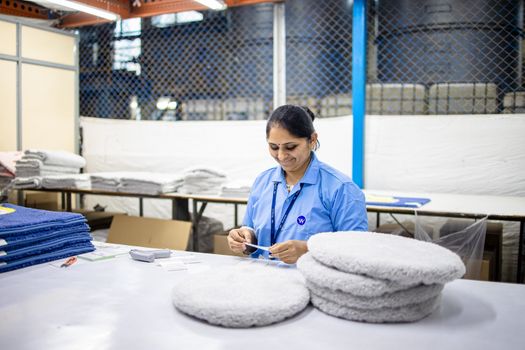
A 'Shop Worker' typically performs tasks related to the production or assembly of goods within a workshop or factory setting, which aligns closely with the duties of a Production worker in manufacturing.

How to become

You can get into this job through:

  • an apprenticeship
  • applying directly

Apprenticeship

You could apply to do an apprenticeship, for example:

  • Engineering and Manufacturing Level 2 Foundation Apprenticeship
  • Lean Manufacturing Operative Level 2 Intermediate Apprenticeship
  • Food and Drink Process Operator Level 2 Intermediate Apprenticeship
  • Battery Manufacturing Technician Level 3 Advanced Apprenticeship

There are many other apprenticeships available, covering specific manufacturing industries, such as automotive, chemicals and engineering.

Foundation apprenticeship

You can apply for a foundation apprenticeship if you're aged 16 to 21.

If you're aged 22 to 24, you can apply if you:

Entry requirements

You'll usually need:

  • no specific qualifications or experience to apply for a foundation apprenticeship
  • some GCSEs, usually including English and maths, or equivalent, for an intermediate apprenticeship
  • 5 GCSEs at grades 9 to 4 (A* to C), or equivalent, including English and maths, for an advanced apprenticeship


More Information

Direct Application

You could apply for production jobs directly. Some employers may look for GCSEs at grades 9 to 3 (A* to D), or equivalent qualifications. Experience of production line work would be useful.

You may have to take a test at interview to assess your practical skills.

More Information

Career tips

Forklift truck training could be useful for some jobs.

Interested in More Career Paths?

Explore other careers or use our AI to discover personalised paths based on your interests.

Stay connected

Join our newsletter to stay up to date on features and releases

Address
Developing Experts Limited
Exchange Street Buildings
35-37 Exchange Street
Norwich
NR2 1DP
UK

Phone
01603 273515

Email
[email protected]

Copyright 2026 Developing Experts, All rights reserved.