




Creating Career Path...

Finding Further Careers...

Optical Engineer

View this career for different education levels:

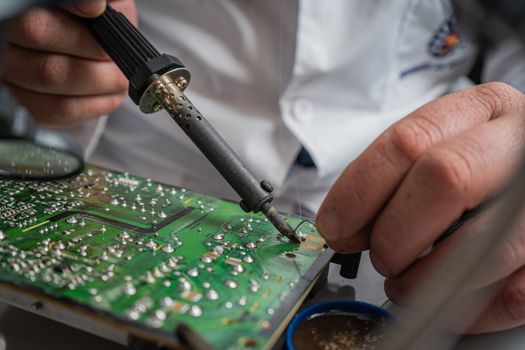
Imagine you are playing with a magnifying glass and sunlight, making a tiny bright spot. An optical engineer is like a super clever scientist and inventor who works with light! They design and build special devices that use light, like the cameras in your phone, the lasers doctors use, or even big telescopes that look at stars. They need to understand how light moves and behaves, and how to make it do amazing things. They might design new types of lenses, mirrors, or other gadgets that use light to help us see better, make things, or send information super fast. It is a bit like being a magician but using science instead of magic tricks! Optical engineers often work in teams with other smart people. They might be in a lab, at a factory, or even helping to build giant scientific instruments. They use computers to help design their creations and then test them to make sure they work perfectly. It is a job that involves lots of problem-solving and being creative to invent new ways to use light. They help make lots of the cool technology we use every day, from tiny lights in your TV to big lasers in factories.

Optical Engineer

Flag Media

Please select a reason for flagging this content.

📊 Statistics

Starting Salary

New optical engineers in the UK can expect to earn around 25,000 to 35,000 pounds a year.

Experienced Salary

With more experience, an optical engineer in the UK might earn between 35,000 and 60,000 pounds a year. Very experienced engineers could earn even more.

Job Openings

There are usually many exciting opportunities for optical engineers across the UK, especially in places that make new technologies.

🚀 Careers in this path

Flag Media

Please select a reason for flagging this content.

Lens Designer

Imagine you are a wizard who designs the special glass for cameras, telescopes, and even your glasses! You think about how light bends and bounces to make things look clear and bright. It's like solving a fun puzzle with light.

Flag Media

Please select a reason for flagging this content.

Lighting Designer

This job is like being an artist who paints with light! You decide where to put lights and what colours to use to make a stage show look amazing, or to make a room feel cosy. You help people see things in the best way using light.

Flag Media

Please select a reason for flagging this content.

Microscope Inventor

Do you love looking at tiny things? A microscope inventor designs super-powerful looking glasses that help scientists see very small bugs, plants, and even tiny cells that you can't see with your eyes alone. It's like having a superpower to see the invisible!

Learning About Light

Explore with Light

Have fun discovering how light works! Look at rainbows, play with torches, and see how light bounces off mirrors or bends through water.

At primary school, you can do fun experiments to see how light behaves. Try shining a torch through a magnifying glass to see how it makes light bigger, or use a prism to split white light into a rainbow of colours. You could even use a mirror to reflect light around a corner! These simple games help you understand how light travels and changes direction, which is super important for an Optical Engineer.

Build and Create

Use building blocks or craft materials to make your own models of things that use light, like a pretend camera or a cool telescope.

Making models helps you think like an engineer! You could use cardboard tubes to make a pretend telescope or a cereal box to design a 'camera'. Think about where the 'lens' would go and how the light would travel inside. This activity encourages creativity and helps you visualise how optical instruments are put together and how they might work.

Read and Watch

Read books or watch videos about light, colours, and how cameras and glasses work. There are lots of fun science shows!

There are many fantastic children's books and educational TV programmes that explain science in an exciting way. Look for ones about space, vision, or photography. These resources can introduce you to new ideas and show you amazing things that light can do, like helping doctors see inside the body or sending messages around the world. Knowing more will make you even more interested!

School Science Fun

Enjoy Science Lessons

Pay close attention in your science lessons at school, especially when you learn about light, energy, and how things work.

When you get to secondary school, science lessons will become more detailed. Make sure you listen carefully and ask questions about physics, which is the part of science that studies light and energy. Understanding concepts like reflection, refraction, and the electromagnetic spectrum will be a great start. These are the building blocks for understanding optics and how light can be controlled.

Good at Maths

Try your best in maths lessons! Optical Engineers use maths to work out how light will travel and design their inventions.

Maths is a superpower for engineers! You'll use it to calculate angles, measure distances, and understand patterns, all of which are vital when designing optical systems. Getting good at subjects like geometry (shapes and angles) and algebra (solving puzzles with numbers and letters) will give you a big advantage when you're older and working with complex optical designs.

Join a Science Club

If your school has a science club, join it! You'll get to do more experiments and build cool things with friends.

Science clubs are brilliant for getting hands-on experience and meeting other people who love science. You might get to do extra projects, visit science museums, or even build small robots or circuits. These activities help you develop problem-solving skills and a practical understanding of scientific principles, which is exactly what an Optical Engineer does every day.

Becoming an Expert

Study Further

After school, you'll need to go to university to learn lots more about physics and engineering, especially about light.

To become a professional Optical Engineer, you'll typically need to study for a degree at university, such as Physics, Engineering Physics, or Electrical Engineering with a focus on optics. These courses will teach you advanced topics like laser physics, optical fibre communications, and how to design complex lens systems. University study provides the deep theoretical knowledge and practical skills needed for this specialised career.

Learn from Experts

Try to meet real Optical Engineers or visit places where they work to see what they do every day.

During your university holidays, look for opportunities to do 'work experience' or visit companies that use optical technology. This could be anywhere from a camera manufacturer to a research lab. Seeing real-world applications of optics and talking to engineers will give you valuable insights into the job and help you decide what area of optical engineering you might like to specialise in, such as medical optics or space optics.

Keep Exploring

The world of light is always changing! Keep learning new things and think about how you can use light to invent something amazing.

Optical engineering is a field that is constantly evolving with new discoveries and technologies. Stay curious and keep up-to-date with new advancements in lasers, nanotechnology, and quantum optics. You might even invent something completely new, like a super-fast internet using light or a camera that can see through walls! Continuous learning is key to a successful and exciting career in this field.

🎬 Useful Videos

🎯 View Apprenticeships

Explore relevant apprenticeships that can help you kickstart your career in Optical Engineer. Apprenticeships offer hands-on experience and training while earning a wage.

Career Progressions

This page showcases various career options and the pathways to reach them. Each career listed here shares transferable skills and knowledge, making it easier for individuals to transition between them.

Your current career is highlighted to help you see how it fits into the broader landscape of potential career choices. By clicking on any career, you can learn more about it, including the training and education required to pursue it.

Remember, progressing in your career often involves further learning and training. This page provides insights into future career options as well as those that can lead up to your current one.

These career progression decisions are informed by comparing the skills and knowledge needed for different occupations, along with data on how people move between them. Explore the possibilities and discover the exciting journey ahead in your career!

Sample Qualifications

An Optical Engineer designs and develops optical systems, which is a specialised field often applied in aerospace for areas such as sensors, imaging systems, and laser technology on aircraft and spacecraft.

How to become

You can get into this job through:

  • a university course
  • a college course
  • an apprenticeship
  • working towards this role
  • applying directly

University

You could do a degree or postgraduate course in aerospace engineering, avionics, or a subject like:

  • electrical or electronic engineering
  • mechanical engineering
  • manufacturing or product engineering
  • physics or applied physics
  • astronautics and space engineering
  • software engineering or mathematics

Entry requirements

You'll usually need:

  • 2 or 3 A levels, or equivalent, including maths and physics
  • a degree in a relevant subject for postgraduate study

More Information

College

You could do A levels, a higher national certificate (HNC) or diploma (HND) in engineering before applying for a trainee technician job with an aerospace company.

Subjects include:

  • maths, physics and design and technology
  • mechanical engineering
  • aeronautical engineering
  • electrical engineering

You would then take further training to become a fully qualified engineer.

Entry requirements

Entry requirements for these courses vary.

More Information

Apprenticeship

You could apply to do a Level 6 Degree Apprenticeship to begin your career in the aerospace industry. Apprenticeships include:

  • Aerospace Engineer
  • Space Systems Engineer
  • Aerospace Software Engineer
  • Electro-Mechanical Engineer
  • Materials Science Technologist

You'll combine workplace learning with study for a degree at university.

Entry requirements

You'll usually need:

  • 4 or 5 GCSEs at grades 9 to 4 (A* to C) and A levels, or equivalent, for a degree apprenticeship

More Information

Work

You might be able to join a company as an aerospace engineering technician and do training on the job to qualify as an engineer.

Direct Application

You can apply for aerospace engineering jobs if you've got relevant qualifications and experience. For example, you might have worked in mechanical, electrical or electronics engineering.

More Information

Career tips

You can try out virtual work experiences in different aviation industry jobs, including aircraft maintenance.

Professional and industry bodies

You can join the Royal Aeronautical Society for professional development, career resources and to make industry contacts.

Further information

You can find out more about working in aerospace engineering from Careers in Aerospace and Neon.

You can learn about careers in the space industry through SpaceCareers.uk.

Interested in More Career Paths?

Explore other careers or use our AI to discover personalised paths based on your interests.

Stay connected

Join our newsletter to stay up to date on features and releases

Address
Developing Experts Limited
Exchange Street Buildings
35-37 Exchange Street
Norwich
NR2 1DP
UK

Phone
01603 273515

Email
[email protected]

Copyright 2026 Developing Experts, All rights reserved.
