

Creating Career Path...

Finding Further Careers...

Water Resource Manager

View this career for different education levels:

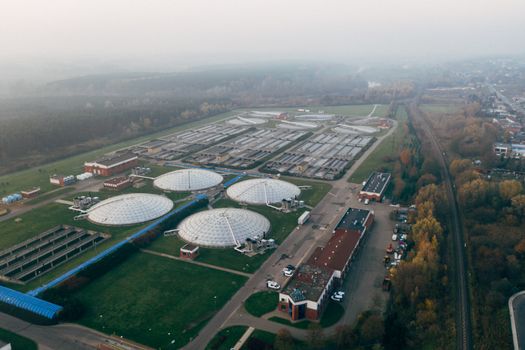
A Water Resource Manager plays a super important role in making sure we have enough clean water for everyone and for our environment, both now and in the future. They look after things like rivers, reservoirs, and underground water sources, making sure they are used wisely and protected from pollution. This involves lots of planning, checking water levels, and making decisions about how water is used by homes, farms, and businesses. They might work on projects to improve flood defences, develop new ways to save water, or ensure that water quality is high enough for people and wildlife. It's a job that helps protect our planet and keeps our communities healthy. This career involves a mix of outdoor work, like visiting water treatment plants or monitoring rivers, and office-based tasks, such as analysing data, writing reports, and working with maps and computer models. They often work with other experts like scientists, engineers, and local councils to solve problems and make sure water rules are followed. It's a great career for someone who cares about the environment, enjoys problem-solving, and likes the idea of helping to manage one of our most precious natural resources.

Water Resource Manager

Flag Media

Please select a reason for flagging this content.

📊 Statistics

Typical Salary Range

For an experienced Water Resource Manager in the UK, salaries can range from around 35,000 to 60,000 pounds per year. Entry-level positions might start a bit lower, while very senior roles could earn more.

Number of Positions

While there isn't one exact number, jobs in environmental and water management are consistently available across the UK, with many opportunities in water companies, environmental consultancies, and government bodies like the Environment Agency. It's a growing field due to climate change and population growth.

Education Needed

Most Water Resource Managers in the UK have a university degree in a relevant subject like environmental science, civil engineering, geography, or hydrology. Some might also have a postgraduate qualification.

🚀 Careers in this path

Flag Media

Please select a reason for flagging this content.

Hydrologist Assistant

Imagine being a detective for water! A Hydrologist Assistant helps scientists study how water moves through rivers, lakes, and underground. You could help collect samples or measure how much rain falls, understanding how to keep our water clean and available for everyone.

Flag Media

Please select a reason for flagging this content.

Water Conservation Officer

Do you love helping people and the planet? A Water Conservation Officer teaches communities and businesses how to use less water and protect our precious resources. You could design fun campaigns or give tips on how to save water at home and in the garden.

Flag Media

Please select a reason for flagging this content.

Environmental Scientist focusing on Water Quality

This role is like being a guardian of our waterways. An Environmental Scientist specialising in water quality checks if rivers and lakes are healthy and safe for fish, plants, and people. You could take samples from different places and use cool equipment to test for pollution, then figure out ways to make the water better.

Build a Strong Foundation

Excel in Science and Maths

Focus on your science, geography, and maths lessons as these subjects are really important for understanding water systems and solving environmental problems.

At school, try your best in subjects like Biology, Chemistry, Physics, Geography, and especially Maths. These will give you the core knowledge you need later on for university and for understanding complex water issues like water quality, flow rates, and environmental impacts. Think about choosing these subjects when you pick your GCSEs and A-levels.

Explore the Natural World

Spend time learning about rivers, lakes, and the environment around you. Understanding how nature works is key to managing water.

Join school clubs like an eco-club or a science club. Visit local nature reserves, learn about the plants and animals that live near water, and understand the water cycle. Even just observing how rain flows and where it goes can be a great start. This practical understanding of ecology and hydrology will be very valuable.

Develop Problem-Solving Skills

Practice thinking through challenges and finding solutions. Water resource management often involves tricky problems that need careful thought.

Take part in group projects, puzzles, and debates at school. Learning to think critically, analyse information, and work with others to find answers are crucial skills for a Water Resource Manager. You'll often be dealing with complex situations where there isn't one simple answer, so being able to evaluate different options is vital.

Gain Knowledge and Qualifications

Go to University

After school, you'll typically need to study a relevant subject at university to get a degree.

Look into degrees like Environmental Science, Civil Engineering, Geography, Hydrology, or Water Management. These courses will teach you about water systems, environmental law, engineering principles, and how to manage natural resources sustainably. Research different universities and their course content to find the best fit for your interests.

Consider a Postgraduate Degree

Some Water Resource Manager roles might benefit from further specialisation, which you can get with a Master's degree.

After your first degree, you might choose to do a Master's (MSc) in a specialised area like Water Resources Management, Environmental Engineering, or Catchment Management. This can give you deeper expertise and make you stand out when applying for jobs, especially for more senior or research-focused positions.

Seek Internships or Work Experience

While studying, try to get some real-world experience to see what the job is like.

Look for internships during university holidays or placements as part of your degree. Organisations like the Environment Agency, local water companies, environmental consultancies, or charities often offer opportunities. This experience is invaluable for understanding daily tasks, networking, and making your CV stronger.

Start Your Career Journey

Apply for Entry-Level Roles

After graduating, start looking for jobs that will help you gain practical experience in the field.

Search for roles such as Graduate Hydrologist, Assistant Water Resources Officer, Environmental Consultant (entry-level), or Water Management Trainee. These positions will allow you to work under experienced professionals, learn practical skills, and apply your university knowledge to real-world projects. Be prepared to learn a lot on the job!

Continue Professional Development

Keep learning and improving your skills throughout your career.

Once you're working, join professional bodies like the Chartered Institution of Water and Environmental Management (CIWEM). Attend workshops, conferences, and training courses to stay updated on new technologies, regulations, and best practices in water management. Gaining professional chartership can also be a significant step in your career progression.

Network and Build Relationships

Meet and connect with other people working in water management.

Go to industry events, join professional groups, and connect with colleagues. Building a strong network can lead to new opportunities, collaborations, and mentorship. Learning from others' experiences and sharing your own can greatly enhance your career journey and understanding of the sector.

🎬 Useful Videos

🎯 View Apprenticeships

Explore relevant apprenticeships that can help you kickstart your career in Water Resource Manager. Apprenticeships offer hands-on experience and training while earning a wage.

Career Progressions

This page showcases various career options and the pathways to reach them. Each career listed here shares transferable skills and knowledge, making it easier for individuals to transition between them.

Your current career is highlighted to help you see how it fits into the broader landscape of potential career choices. By clicking on any career, you can learn more about it, including the training and education required to pursue it.

Remember, progressing in your career often involves further learning and training. This page provides insights into future career options as well as those that can lead up to your current one.

These career progression decisions are informed by comparing the skills and knowledge needed for different occupations, along with data on how people move between them. Explore the possibilities and discover the exciting journey ahead in your career!

Sample Qualifications

Given the limited options, 'Water treatment worker' is the closest match as it is the only role directly related to water, even though a Water Resource Manager typically operates at a higher, strategic level focusing on resource planning and management rather than day-to-day treatment operations.

How to become

You can get into this job through:

  • an apprenticeship
  • working towards this role
  • applying directly

Apprenticeship

You could apply to do an apprenticeship with a water treatment firm, such as:

  • Water Process Operative Level 2 Intermediate Apprenticeship
  • Water Industry Treatment Process Technician Level 3 Advanced Apprenticeship
  • Water Treatment Technician Level 3 Advanced Apprenticeship
  • Water Industry Asset Maintenance Technician Level 3 Advanced Apprenticeship

These can take between 18 months and 4 years to complete.

Entry requirements

You'll usually need:

  • some GCSEs, usually including English and maths, or equivalent, for an intermediate apprenticeship
  • 5 GCSEs at grades 9 to 4 (A* to C), or equivalent, including English and maths, for an advanced apprenticeship


More Information

Work

You could start as a trainee with a water company and advance in your career through on-the-job training or an apprenticeship. For example, your employer may support you through a course in water engineering.

Direct Application

You could apply directly for water treatment jobs.

Some employers may want you to have GCSEs in English, maths and a science at grades 9 to 4 (A* to C).

Experience of working in industrial plant maintenance could be helpful though not essential.

More information

You can find more advice about careers and training in the water industry through Energy & Utilities Careers & Jobs.

Interested in More Career Paths?

Explore other careers or use our AI to discover personalised paths based on your interests.

Stay connected

Join our newsletter to stay up to date on features and releases

Address
Developing Experts Limited
Exchange Street Buildings
35-37 Exchange Street
Norwich
NR2 1DP
UK

Phone
01603 273515

Email
[email protected]

Copyright 2026 Developing Experts, All rights reserved.