


Creating Career Path...

Finding Further Careers...

Diver

View this career for different education levels:

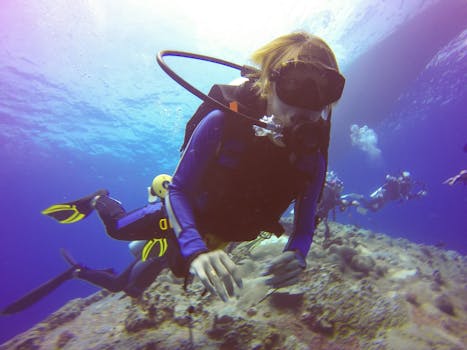
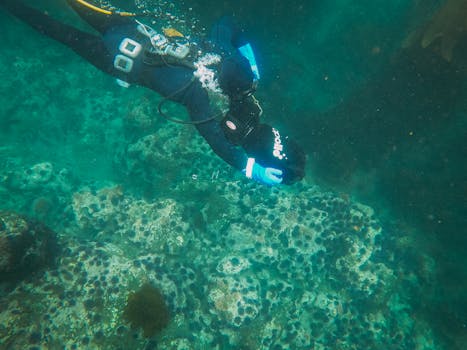
As a diver in the UK, you're not just going for a leisurely swim; you're typically a highly trained professional undertaking a variety of complex tasks underwater. This often means working as a commercial diver, involved in construction, maintenance, inspection, and repair of underwater structures. This could be anything from inspecting oil rigs, wind turbine foundations, and subsea pipelines in the North Sea, to repairing harbour walls, bridges, and even recovering sunken objects in shallower inshore waters. The job requires exceptional physical fitness, meticulous attention to safety protocols, and the ability to work effectively as part of a team in challenging and often hazardous environments. Depending on the specialisation, you might be working in 'surface supplied' mode (air supplied from the surface) or, for deeper or longer duration work, 'saturation diving' (living in a pressurised environment for weeks at a time to avoid decompression sickness). Beyond commercial roles, some divers work in scientific research, archaeological excavation, or even as police search and recovery divers. The career is physically demanding and often involves extensive travel, particularly for offshore projects. Training is rigorous and involves gaining industry-recognised qualifications, such as those compliant with HSE diving regulations, which are essential for working commercially in the UK. Many divers also develop specialist skills in welding, non-destructive testing, or operating remotely operated vehicles (ROVs). It's a career for those who thrive on problem-solving, enjoy hands-on work, and are comfortable in an unconventional workplace.

Diver

Flag Media

Please select a reason for flagging this content.

📊 Statistics

Salary Range (Commercial Diver UK)

Starting salaries for newly qualified commercial divers in the UK can range from 30,000 to 45,000 per year. Experienced and highly specialised divers working on complex offshore projects can earn significantly more, potentially ranging from 60,000 to over 100,000 per year, particularly for saturation diving or supervisory roles.

Number of Positions (UK)

While exact real-time figures are hard to pinpoint due to the niche nature, the UK's commercial diving sector is relatively small but highly skilled. Industry bodies like the HSE (Health and Safety Executive) monitor around 1,500-2,000 commercial divers working onshore and offshore in the UK at any given time, with opportunities often linked to oil and gas, renewable energy, and civil engineering projects.

Job Outlook (UK)

The demand for commercial divers in the UK is influenced by investment in offshore energy (oil, gas, and renewables), port infrastructure, and underwater civil engineering. While the oil and gas sector has seen fluctuations, growth in offshore wind farm development and decommissioning projects is creating new opportunities for qualified divers.

🚀 Careers in this path

Flag Media

Please select a reason for flagging this content.

Commercial Diver

Specialises in underwater construction, inspection, maintenance, and repair work for industries like oil and gas, renewable energy, and civil engineering. Requires specific certifications beyond recreational diving.

Flag Media

Please select a reason for flagging this content.

Police Underwater Search Unit Diver

Works as part of a specialist police team to recover evidence, locate missing persons, and conduct search and rescue operations in rivers, lakes, and other bodies of water. Involves public safety and law enforcement.

Flag Media

Please select a reason for flagging this content.

Marine Archaeologist Diver

Combines diving skills with archaeological expertise to survey, excavate, and preserve underwater historical sites, shipwrecks, and artefacts. Often works for heritage organisations or research institutions.

Initial Exploration and Research

Understand the Industry

Research the different sectors of professional diving, such as inshore, offshore, police, scientific, or media diving, to understand the diverse roles and environments involved.

Professional diving is a broad field. Inshore diving often involves civil engineering work in harbours or rivers, while offshore diving focuses on oil, gas, and renewable energy projects in deeper waters. Police divers search for evidence, scientific divers assist with research, and media divers work on film sets. Each area has specific requirements, challenges, and training pathways. Exploring these will help you identify which path aligns best with your interests and aptitudes.

Assess Prerequisites and Fitness

Review the essential qualifications for commercial diving, including strong swimming ability, good health, and an appropriate level of physical fitness.

Commercial diving requires excellent physical and mental health. You will need to pass a stringent medical examination carried out by an Approved Medical Examiner of Divers (AMED) before starting any training. This checks for conditions that could be dangerous underwater, such as respiratory or cardiac issues. A high level of fitness is crucial for managing heavy equipment, strong currents, and demanding work conditions. Good eyesight and hearing are also vital.

Identify Training Providers

Research UK-based training schools approved by the Health and Safety Executive (HSE) that offer the required commercial diving qualifications.

In the UK, commercial diving qualifications are regulated by the HSE. You must complete training at an HSE-approved diving school to gain recognised certifications. Look for schools offering HSE Professional SCUBA, HSE Surface Supplied (Inshore), or HSE Surface Supplied (Offshore) qualifications, depending on your chosen specialism. Compare course content, duration, costs, and career support services offered by different providers.

Core Training and Certification

Complete HSE Part 1 (Commercial SCUBA)

Undertake an HSE Part 1 (Professional SCUBA) course, which is often the entry-level qualification for commercial diving in the UK, suitable for inshore work.

This course covers the fundamentals of professional SCUBA diving, including diving physics, physiology, equipment use and maintenance, emergency procedures, and relevant health and safety legislation. It typically lasts several weeks and involves intensive practical training. Successfully completing this qualification allows you to work as a commercial SCUBA diver for tasks like inspections, surveys, and light construction in relatively shallow, sheltered waters.

Progress to Surface Supplied Diving

Pursue an HSE Surface Supplied Diver qualification (Parts 2 or 3) to enable work with surface-supplied air, a common method for more complex or deeper commercial operations.

Surface-supplied diving offers greater bottom time and allows for communication with the surface, making it safer and more efficient for many commercial tasks. An HSE Part 2 (Surface Supplied Inshore) qualifies you for work up to 50 meters, while an HSE Part 3 (Surface Supplied Offshore) is required for deeper offshore work and includes an in-date offshore medical. These courses build upon the foundational knowledge and skills from SCUBA diving and introduce more advanced equipment and procedures.

Obtain Essential Ancillary Qualifications

Acquire additional certifications vital for commercial diving, such as an OFTEC (Oil & Gas UK) medical, First Aid at Work, and relevant industry safety courses.

Beyond the core diving qualifications, several other certifications are often mandatory or highly advantageous. An OFTEC medical is specifically required for offshore work. First Aid at Work is crucial for any safety-critical role. You may also need boat handling qualifications, confined space entry training, or specific rigging and lifting certifications, depending on the type of work you intend to pursue. Welding certifications (e.g., underwater welding) can significantly enhance your employability.

Career Entry and Specialisation

Gain Entry-Level Experience

Seek opportunities for entry-level diving roles or 'tender' positions to build practical experience and establish a professional network within the industry.

The diving industry can be competitive. Many new divers start as dive tenders or 'trainee' divers, assisting experienced teams on dive sites. This hands-on experience is invaluable for understanding real-world operations, learning safety protocols, and gaining practical skills under supervision. Networking with experienced divers, supervisors, and contractors during your training and initial work is critical for finding subsequent job opportunities. Be prepared to travel for work, as projects can be located across the UK or internationally.

Develop Specialised Skills

Consider acquiring further specialist skills such as underwater welding, non-destructive testing (NDT), or explosive ordnance disposal (EOD) to enhance your career prospects.

Specialising can open doors to higher-paid and more niche roles. Underwater welding requires specific certification and is highly sought after in construction and repair. NDT involves inspecting structures for defects without damaging them, using techniques like ultrasonic testing or magnetic particle inspection. EOD divers work with military or police forces to neutralise underwater threats. Other specialisms include photographic/videographic work, marine archaeology, or working with remotely operated vehicles (ROVs), which some divers transition into later in their careers.

Continuous Professional Development

Commit to ongoing training and staying updated with industry regulations, new technologies, and advanced diving techniques throughout your career.

The commercial diving industry is constantly evolving with new technologies, equipment, and safety standards. Regular refresher courses, advanced first aid training, and staying informed through industry associations are crucial. Advanced diving techniques, such as saturation diving (for very deep, long-duration work), require significant additional training but can lead to highly specialised and lucrative roles. Maintaining your medical fitness and certifications is a continuous requirement to remain eligible to work.

🎯 View Apprenticeships

Explore relevant apprenticeships that can help you kickstart your career in Diver. Apprenticeships offer hands-on experience and training while earning a wage.

Career Progressions

No career progressions found for Diver

Sample Qualifications

How to become

You can get into this job through:

  • working towards this role
  • applying directly
  • training with a professional body

Work

You may be able to apply for diver training through your employer. For example, if you're in the police, armed forces or work for a marine engineering company. Once qualified, you could work with an underwater unit.

Similarly, if you work in scientific research, like oceanography or archaeology, your employer may put you through specialist diver training, so that you can carry out tasks underwater.


Direct Application

You could apply directly for jobs if you've got the right diving and safety qualifications.

You'll also need experience relevant to the industry you're working in. For example, you'll need a background in welding to work as an offshore underwater engineer, repairing pipelines or cables.

Other Routes

You can do a course with a commercial training organisation or professional body to get your diving qualifications.

Training must be approved by the Health and Safety Executive. Examples include courses offered by the:

More Information

Career tips

You might find it helpful to have experience of recreational scuba diving before training as a commercial diver.

Many diving schools offer assessments to help you decide whether you'll be suited to working underwater.

Further information

You can find out more about commercial and leisure diving careers through the:

Interested in More Career Paths?

Explore other careers or use our AI to discover personalised paths based on your interests.

Stay connected

Join our newsletter to stay up to date on features and releases

Address
Developing Experts Limited
Exchange Street Buildings
35-37 Exchange Street
Norwich
NR2 1DP
UK

Phone
01603 273515

Email
[email protected]

Copyright 2025 Developing Experts, All rights reserved.