

Creating Career Path...

Finding Further Careers...

Astronaut

View this career for different education levels:

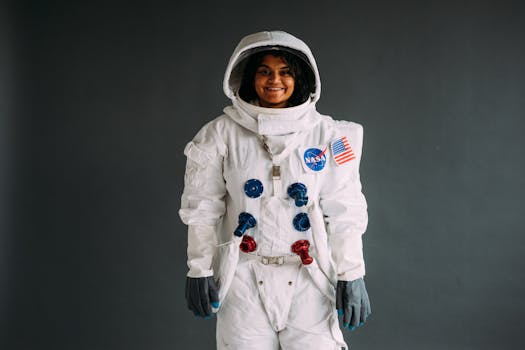
Imagine floating high above the Earth, looking down at our beautiful planet. That is what an astronaut does! Astronauts are super-brave scientists and explorers who travel into space. They live and work on the International Space Station, which is like a big science lab orbiting the Earth. They do exciting experiments to learn more about space, our planet, and how things work in zero gravity. They also fix things on the space station and sometimes even go on spacewalks outside! To become an astronaut, you need to be very smart, good at science and maths, and also very fit and healthy. You also need to be a great team player, as you will be working very closely with other astronauts for a long time.

Astronaut

Flag Media

Please select a reason for flagging this content.

📊 Statistics

UK Astronauts

Only a handful of people from the UK have ever been astronauts. It is a very special job that few get to do.

Salary for Astronauts

Astronauts working for the European Space Agency (ESA) often earn between 4,500 and 7,500 pounds a month, depending on how much experience they have. This is a very good salary!

Training Time

It takes about 2 years of basic training to become an astronaut, and then more training for specific missions. So, it is a long journey to get there.

🚀 Careers in this path

Flag Media

Please select a reason for flagging this content.

Rocket Scientist

Imagine designing amazing rockets that fly into space! You'd draw pictures of rockets and work out how to make them super-fast and super-safe for astronauts to travel in. It's like being an engineer for space travel.

Flag Media

Please select a reason for flagging this content.

Planet Explorer

If you love learning about planets, you could be a Planet Explorer! You'd use special telescopes and space probes to look at Mars, Jupiter, and all the other planets. You'd discover new things about them and share your exciting findings with everyone.

Flag Media

Please select a reason for flagging this content.

Space Robot Creator

Robots are very helpful in space! As a Space Robot Creator, you'd design and build robots that can explore rocky planets or fix things on the International Space Station. You'd make sure they can do important jobs far away from Earth.

Learn and Play

Love School Subjects

At school, try your best in subjects like maths and science. These are super important for understanding how rockets work and what happens in space.

When you're at school, pay extra attention during your maths and science lessons. Learning about numbers, shapes, and how things work in the world will build a strong foundation. These subjects help you understand physics and engineering, which are crucial for space travel. You can also read books about space, planets, and stars to spark your curiosity even more.

Stay Healthy and Strong

Astronauts need to be very fit and healthy. Exercise, eat yummy healthy foods, and get lots of sleep so your body is strong for future adventures.

Being an astronaut requires a strong body and mind. Regular exercise, like running, swimming, or playing sports, is a great way to stay fit. Eating a balanced diet with lots of fruits and vegetables gives you energy, and getting enough sleep helps your brain and body recover. Astronauts often have special training to prepare their bodies for the unusual conditions in space, so it's good to start thinking about healthy habits now.

Be Curious and Explore

Ask lots of questions about the world around you, look up at the stars, and wonder how things work. Scientists and explorers are always curious!

Curiosity is a superpower for astronauts! Look up at the night sky and try to spot constellations and planets. Ask your teachers and parents questions about science, space, and technology. Visit science museums or watch documentaries about space to learn even more. Building models of rockets or playing with space-themed toys can also help you understand and imagine what it's like to be an astronaut.

Grow and Discover

Learn Advanced Subjects

When you get older, you'll want to study subjects like physics, chemistry, biology, and engineering. These help you understand space even better.

As you move through high school, choose subjects that focus on science, technology, engineering, and maths (STEM). These include advanced physics to understand rockets and gravity, chemistry for life support systems, and biology for understanding how our bodies react in space. Engineering, especially aerospace engineering, is also a fantastic choice, as it teaches you how to design and build spacecraft.

Go to University

After school, you'll usually go to university to study a science or engineering degree, or maybe even become a pilot! This is a big step towards space.

Most astronauts have a degree from a university, often in a STEM field like engineering, physical science, computer science, or mathematics. Some astronauts also come from a medical background. Another path is to become a highly skilled pilot, especially in the military, flying jet aircraft. These advanced skills and knowledge are what space agencies like ESA (European Space Agency) and NASA look for in future astronauts.

Get Experience

After university, you'll need to work for a few years in your chosen field. This could be as a scientist, engineer, doctor, or a pilot.

Space agencies want astronauts who have real-world experience. This means working in your field for a few years after you finish university. For example, if you studied engineering, you might work on designing airplanes or other complex machines. If you studied medicine, you might work as a doctor. This experience shows that you can apply your knowledge and work well in challenging situations.

Reach for the Stars

Apply to be an Astronaut

Once you have lots of experience, you can apply to a space agency like ESA or NASA. This is a very competitive but exciting step!

Applying to be an astronaut is a huge moment! Space agencies don't recruit new astronauts very often, so you need to be ready when they do. They'll look at all your education, work experience, health, and even your personality to see if you're a good fit. They want people who are smart, calm under pressure, good at working in a team, and can solve problems. Keep an eye on the websites of space agencies for their recruitment announcements.

Go Through Training

If you're chosen, you'll do super intense training. You'll learn how to fly, spacewalk, live in space, and do lots of science experiments.

Astronaut training is incredibly rigorous and lasts for several years. You'll learn everything from how to fly different types of aircraft to survival skills. You'll spend hours in simulators that mimic space conditions, practice spacewalks underwater in giant pools (called neutral buoyancy laboratories), and learn about all the systems on the International Space Station. You'll also learn Russian, as it's the other main language spoken on the space station.

Fly to Space!

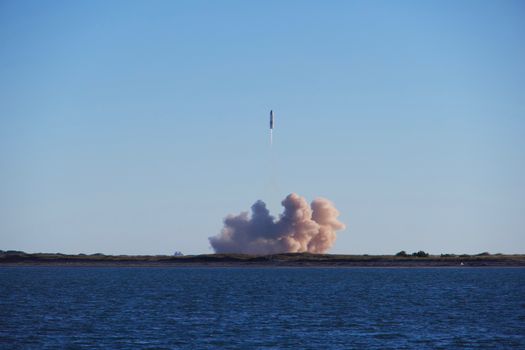
After all the hard work and training, you might get to blast off into space on a real rocket! Congratulations, you're an astronaut!

The ultimate reward for all your dedication is the chance to launch into space. You'll live and work on the International Space Station, conducting scientific research that helps us understand more about our universe and our planet. You'll also experience weightlessness, see incredible views of Earth, and truly become one of the select few humans who have travelled beyond our atmosphere. It's a journey that combines adventure, science, and international teamwork.

🎬 Useful Videos

🎯 View Apprenticeships

Explore relevant apprenticeships that can help you kickstart your career in Astronaut. Apprenticeships offer hands-on experience and training while earning a wage.

Career Progressions

No career progressions found for Astronaut

Sample Qualifications

How to become

You can get into this career by applying directly.

Direct Application

You can apply for astronaut training with the European Astronaut Corps or with NASA.

You need to be between 27 and 37 years old and able to speak English fluently. It'll be helpful if you can also speak basic Russian because it's spoken with English on the International Space Station.

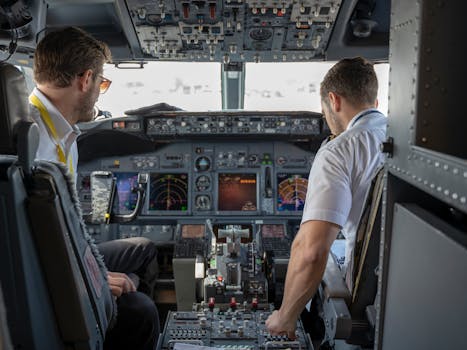
You'll have an advantage if you're a pilot with at least 1,000 hours of flying experience in a high performance aircraft like a fighter jet.

You'll also need a degree and a postgraduate qualification in a relevant subject like:

  • biology, chemistry or physics
  • engineering
  • medicine
  • aeronautics
  • mathematics

You must hold US citizenship or US dual-citizenship to become an astronaut with NASA.

More Information

Career tips

There's only a small number of astronaut training places available and there's a lot of competition for them.

You'll need to do rigorous physical and psychological testing as part of the application process so you'll need to maintain excellent health and endurance.

Further information

You can discover more about how to become an astronaut from:

Interested in More Career Paths?

Explore other careers or use our AI to discover personalised paths based on your interests.

Stay connected

Join our newsletter to stay up to date on features and releases

Address
Developing Experts Limited
Exchange Street Buildings
35-37 Exchange Street
Norwich
NR2 1DP
UK

Phone
01603 273515

Email
[email protected]

Copyright 2025 Developing Experts, All rights reserved.
