

Creating Career Path...

Finding Further Careers...

Royal Historian

View this career for different education levels:

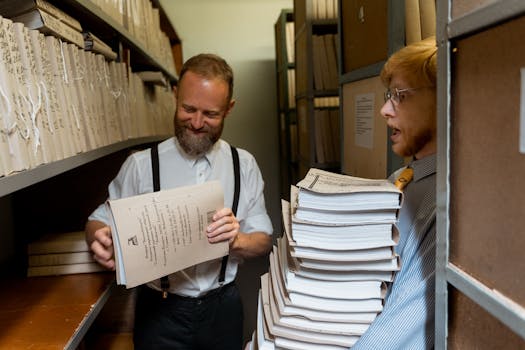
A Royal Historian in the UK is an expert in the history of the British monarchy, its members, institutions, and impact. This isn't usually a single, formally advertised job title, but rather a specialisation within the broader field of history. Individuals in this area conduct extensive research, often delving into primary sources like archival documents, personal letters, state papers, and visual records. They are dedicated to understanding, interpreting, and communicating the complexities of royal history, from medieval kings and queens to contemporary figures. Their work might involve writing books, articles, and academic papers, contributing to documentaries, advising heritage organisations like Historic Royal Palaces, or lecturing at universities. Accuracy, meticulous research, and the ability to critically analyse historical evidence are paramount in this field, requiring a deep understanding of historical methodologies and contexts. They might also be called upon for expert commentary by media outlets or to contribute to exhibitions and public engagement initiatives relating to the monarchy.

Royal Historian

Flag Media

Please select a reason for flagging this content.

📊 Statistics

Salary Range

The salary for historians in the UK can vary significantly based on experience, employer (e.g., academic institution, heritage organisation, or private research). For early career roles in related fields like academic research or archival work, salaries might start around 25,000 GBP to 30,000 GBP. More senior or specialised roles, particularly those with a focus on royal history and often involving commissioned work or academic professorships, could command salaries upwards of 45,000 GBP to 70,000 GBP or more, especially if coupled with publications and public speaking.

Number of Positions

The role of a 'Royal Historian' as a dedicated, official position is extremely rare and often project-based or appointed for specific tasks (e.g., writing an official biography or history for a royal institution). There isnt a fixed number of such roles advertised. Instead, historians specialising in monarchy or royal history usually work within universities, national archives, heritage organisations, or as independent authors and researchers. Competition for academic history roles, in general, is high, with around 1,500-2,000 history PhD graduates annually in the UK competing for a much smaller number of lectureships and research fellowships.

Educational Background

To become a Royal Historian or a historian specialising in royal history, a strong academic background is essential. This typically involves an undergraduate degree (BA Hons) in History, followed by a Masters degree (MA) in a relevant historical field (e.g., Early Modern History, Medieval Studies, British History). A Doctor of Philosophy (PhD) is almost always a prerequisite for senior research positions, academic roles, or for establishing oneself as an authority in the field, often taking 3-5 years post-MA to complete.

🚀 Careers in this path

Flag Media

Please select a reason for flagging this content.

Archivist Royal Archives

Works within a prestigious institution like the Royal Archives, responsible for cataloguing, preserving, and managing historical documents, photographs, and artefacts related to the British monarchy. This role requires meticulous attention to detail and a deep understanding of archival best practices.

Flag Media

Please select a reason for flagging this content.

Curator Royal Collection Trust

Specialises in the management and interpretation of specific collections within the Royal Collection, such as paintings, decorative arts, or armour. This involves research, exhibition development, conservation oversight, and public engagement to share the stories behind these historically significant items.

Flag Media

Please select a reason for flagging this content.

Genealogist for Noble Families

Researches and reconstructs family trees and lineages, often for noble or aristocratic families. This requires expert historical research skills, an understanding of heraldry, and the ability to interpret primary sources to trace ancestry and succession within a historical context.

Build Your Foundational Knowledge

Achieve a Relevant Undergraduate Degree

Start by pursuing a Bachelor's degree in History, ideally with a focus on British history, European history, or specific periods of monarchy.

Many universities in the UK offer excellent history programmes. Look for courses that allow you to specialise in areas like medieval history, early modern history, or modern British history, as these periods are rich with royal narratives. Developing strong research and analytical skills during your undergraduate studies is crucial for future historical work. Consider modules that focus on primary source analysis and historiography.

Develop Language Skills

Acquire proficiency in relevant historical languages, especially if you plan to research earlier periods or non-British monarchies.

For British history, Latin and Old French can be incredibly useful for medieval and early modern documents. For broader European royal history, languages like German, Spanish, or even Russian might be essential depending on your specific focus. Many universities offer language courses alongside your main degree, or you could take independent classes to build these skills.

Engage in Historical Societies and Events

Join historical societies, attend lectures, and participate in conferences to immerse yourself in the academic historical community.

Becoming a member of organisations like The Historical Association or the Royal Historical Society (at an appropriate stage) can provide networking opportunities and access to specialist knowledge. Attending public lectures by prominent historians, virtual seminars, and history festivals will expose you to current research and different methodologies within the field.

Specialise and Deepen Expertise

Undertake a Postgraduate Degree

Pursue a Master's (MA or MPhil) and subsequently a PhD in a highly specific area of royal history.

Your Master's degree allows for a deeper dive into a particular historical period or theme. This is where you might start to focus specifically on a particular monarch, dynasty, or aspect of royal culture. A PhD is essential for a career as a specialist historian, requiring you to conduct original research and make a significant contribution to historical scholarship. Choose a supervisor with expertise in royal history.

Master Archival Research

Gain extensive experience working with primary sources in major archives and libraries.

This is the cornerstone of a historian's work. Spend time in institutions like The National Archives (Kew), the British Library, Windsor Castle Archives, university special collections, and local county record offices. Learn how to navigate catalogues, handle delicate documents, transcribe historical texts, and critically analyse source material. Internships or volunteer roles in archives can provide invaluable practical experience.

Publish Academic Work

Start publishing your research in academic journals and presenting at conferences.

Even during your Master's or PhD, aim to turn your best essays or thesis chapters into publishable articles. Presenting your work at postgraduate conferences or national historical conferences is vital for sharing your research, receiving feedback, and building your academic profile. Publishing demonstrates your ability to conduct original research and contribute to the field.

Establish Your Career

Secure Postdoctoral or Research Fellowships

Apply for postdoctoral positions or research fellowships to continue your research and build your publication record after your PhD.

These competitive positions offer funded opportunities to refine your doctoral research into a book, pursue new projects, and teach. They are crucial for bridging the gap between PhD completion and securing a permanent academic or specialist research role. Look for fellowships offered by universities, research councils (like the AHRC), or specific historical institutes.

Seek Specialist Roles

Look for positions within universities, museums, heritage organisations, or even the Royal Household.

While direct 'Royal Historian' roles are rare, you can pursue careers as a university lecturer in royal history, a curator in a museum with royal collections (e.g., Historic Royal Palaces), a researcher for a heritage charity, or an archivist specialising in royal records. Some historians also work as consultants for media productions or historical projects related to royalty. Competition is fierce, so persistence and a strong CV are essential.

Engage Publicly and Build a Profile

Share your expertise with a wider audience through media, public lectures, and accessible writing.

Beyond academic publications, consider writing for popular history magazines, contributing to historical documentaries, giving talks to local history groups, or developing an online presence through a blog or social media. This not only broadens your impact but can also lead to commissions and recognition, enhancing your reputation as a leading expert in royal history.

🎯 View Apprenticeships

Explore relevant apprenticeships that can help you kickstart your career in Royal Historian. Apprenticeships offer hands-on experience and training while earning a wage.

Career Progressions

This page showcases various career options and the pathways to reach them. Each career listed here shares transferable skills and knowledge, making it easier for individuals to transition between them.

Your current career is highlighted to help you see how it fits into the broader landscape of potential career choices. By clicking on any career, you can learn more about it, including the training and education required to pursue it.

Remember, progressing in your career often involves further learning and training. This page provides insights into future career options as well as those that can lead up to your current one.

These career progression decisions are informed by comparing the skills and knowledge needed for different occupations, along with data on how people move between them. Explore the possibilities and discover the exciting journey ahead in your career!

Sample Qualifications

While 'Royal Historian' is not a direct military role, among the given options, 'Royal Navy officer' is the only one that suggests a prestigious, highly educated, and appointed position within a Royal institution, aligning with the implied status and intellectual demands of a historian serving royalty. Other options are either non-royal, lower-ranked military, or unrelated professions.

How to become

You can get into this job through:

  • a university course
  • applying directly

University

If you have a degree, you can apply through the Direct Graduate Entry route.

For some officer roles you'll need specific qualifications and experience, for example:

  • a degree in science, technology, engineering or maths (STEM) to be an air engineering officer
  • an approved degree in medicine to join as a medical officer

You can start applying before you finish your studies, as the process can take up to 6 months. If you're accepted, you'll attend Britannia Royal Naval College in Dartmouth, Devon, to begin officer training.

Entry requirements

You'll usually need:

  • 2 to 3 A levels, or equivalent, for a degree

More Information

Volunteering

You can join the Royal Navy Reserve to get some experience of what life is like in the service, and to learn new skills at the same time.

You'll need to:

  • be between 18 and 42
  • commit to basic training which includes a 2-week course at Britannia Royal Naval College in Dartmouth

If you're between 12 and 18 years old, you can join the Sea Cadets.

Direct Application

You can apply directly for officer training.

You'll need a minimum of:

Age limits vary depending on which officer role you're interested in.

If your application is accepted, you'll be invited to talk to someone at your local armed forces careers office about what you want to do. You'll also have a medical and fitness check.

There will be further assessments and interviews to complete and if you're successful, you'll be offered a place on a full officer training programme.

More Information

Career tips

You will need to pass physical fitness assessments, including swimming, to be accepted into the Royal Navy. Get fit to Join has information on how to check your current fitness and how to improve to the level required.

Further information

You'll find more details about how to become an officer from Royal Navy Careers.

Interested in More Career Paths?

Explore other careers or use our AI to discover personalised paths based on your interests.

Stay connected

Join our newsletter to stay up to date on features and releases

Address
Developing Experts Limited
Exchange Street Buildings
35-37 Exchange Street
Norwich
NR2 1DP
UK

Phone
01603 273515

Email
[email protected]

Copyright 2025 Developing Experts, All rights reserved.
