





Creating Career Path...

Finding Further Careers...

Naval Engineer

View this career for different education levels:

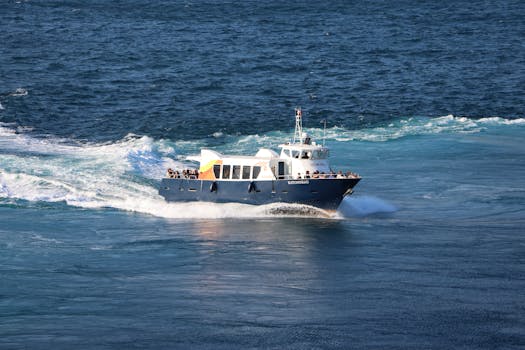
Imagine you love boats and ships, from tiny dinghies to giant ocean liners or even submarines. A Naval Engineer is like a super clever inventor and builder for these amazing floating machines! They think about how to design ships so they float properly, move fast through the water, and are super strong and safe for everyone on board. They work with big drawings and computer programmes to plan every part of a ship, from its shape and engines to how the pipes and wires fit inside. They need to be good at maths and science to make sure their designs are perfect and can handle the big waves and strong winds of the ocean. They might even help test the ships once they are built to make sure everything works just right before they go out to sea. Naval Engineers in the UK work on all sorts of projects. This could be designing a new super-fast ferry for crossing the English Channel, making sure a big cargo ship can carry lots of goods safely, or even helping to build advanced ships for the Royal Navy. They also think about how to make ships use less fuel, which is better for our planet, and how to make them comfortable for passengers and crew. It is a really exciting job for someone who loves the sea, solving problems, and seeing their ideas come to life as giant, powerful vessels.

Naval Engineer

Flag Media

Please select a reason for flagging this content.

📊 Statistics

Salary Range

A new Naval Engineer in the UK might start with a salary around 25,000 to 30,000 pounds a year. With more experience, this could grow to 40,000 to 60,000 pounds, and very experienced engineers could earn 70,000 pounds or more.

Job Growth

The engineering sector in the UK, which includes naval engineering, is always looking for talented people. There are usually around 1,000 to 2,000 job openings for naval architects and engineers each year in the UK, showing a steady need for these skills.

Working Hours

Most Naval Engineers in the UK work about 37 to 40 hours a week, Monday to Friday. Sometimes, they might need to work extra hours if there is an important project or if they are testing a ship.

🚀 Careers in this path

Flag Media

Please select a reason for flagging this content.

Ship Designer

Imagine drawing and planning how a big boat or submarine will look and work. You get to be creative and think about all the different rooms and engines inside.

Flag Media

Please select a reason for flagging this content.

Marine Electrician

You would be like a superhero making sure all the lights, computers, and radars on a ship work perfectly. You connect all the wires and make sure everything has power.

Flag Media

Please select a reason for flagging this content.

Underwater Robot Operator

You get to control amazing robots that explore deep under the sea. These robots can help fix things on submarines or find lost treasures, all while you stay warm and dry.

Learning About Ships

Explore Boats and Water

Start by looking at all sorts of boats and how they float on water. You can visit a harbour or watch videos about different types of ships.

Think about why some boats are big and some are small, or why some go fast and others go slowly. You could even build your own toy boat to see if it floats! This helps you understand basic ideas about how boats work.

Ask Questions

If you see a ship or a boat, ask grown-ups questions about it. 'How does it float?' 'What makes it move?' 'What is it used for?'

Don't be shy! Asking questions is a great way to learn. People who work with boats love to talk about them. You can also look in books or on safe websites with a grown-up to find answers to your curious questions.

Build and Create

Use building blocks, LEGO, or even paper and glue to design and build your own pretend ships. See if your designs float in the bath!

This is a fun way to start thinking like an engineer. When you build things, you learn about shapes, balance, and how different parts fit together. You can experiment with different designs and see what works best.

School Time Fun

Focus on Maths and Science

In school, try your best in subjects like maths and science. These are super important for understanding how things work, especially for engineers.

Maths helps you measure things and work out how strong something needs to be. Science helps you understand why boats float, how engines make them move, and how materials behave in water. These subjects are like tools for an engineer.

Join a Science Club

If your school has a science or engineering club, join it! You might get to do fun experiments and build cool things.

Clubs are a brilliant way to explore your interests outside of regular lessons. You could build rockets, experiment with water, or learn about different types of engines. It's a great chance to meet other kids who like science too!

Learn About Computers

Start to learn how to use computers, especially for drawing and designing. Naval Engineers use computers all the time to design ships.

Knowing how to use computers will be very helpful. You might learn about simple drawing programmes or even some special software that engineers use to create their designs. It's like drawing with super powerful pencils!

Future Steps

Study Further

After school, you'll need to go to university to study something called 'Naval Architecture' or 'Marine Engineering'. It's like going to a special school just for ship design!

At university, you will learn all the complex maths and science needed to design every part of a ship. You'll study how to make them fast, safe, and efficient, and learn about different types of engines and how to build boats that can handle big waves.

Gain Experience

While you're studying, try to get some work experience, maybe by visiting shipyards or working with engineers during your holidays.

Getting real-world experience is super important. You could see how big ships are built, repaired, or even launched into the water. This helps you understand what the job is really like and meet people who are already doing it.

Start Your Career

Once you've finished your studies, you can apply for jobs with companies that design or build ships, or even with the Royal Navy!

You could work for a company that designs cruise ships, cargo ships, or even special boats for scientific research. You might start as a junior engineer and learn from experienced engineers, helping to bring amazing ship ideas to life!

🎬 Useful Videos

🎯 View Apprenticeships

Explore relevant apprenticeships that can help you kickstart your career in Naval Engineer. Apprenticeships offer hands-on experience and training while earning a wage.

Career Progressions

This page showcases various career options and the pathways to reach them. Each career listed here shares transferable skills and knowledge, making it easier for individuals to transition between them.

Your current career is highlighted to help you see how it fits into the broader landscape of potential career choices. By clicking on any career, you can learn more about it, including the training and education required to pursue it.

Remember, progressing in your career often involves further learning and training. This page provides insights into future career options as well as those that can lead up to your current one.

These career progression decisions are informed by comparing the skills and knowledge needed for different occupations, along with data on how people move between them. Explore the possibilities and discover the exciting journey ahead in your career!

Sample Qualifications

A Naval Engineer specialises in the design, construction, maintenance, and repair of ships, submarines, and other marine vessels. This field, particularly in the context of naval vessels, involves many principles and disciplines closely aligned with aerospace engineering, such as fluid dynamics, propulsion systems, structural design for extreme conditions, and complex systems integration. While not identical, 'Aerospace engineer' is the closest available option that encompasses the high-tech, complex engineering involved in designing and maintaining craft that operate in challenging environments, as opposed to land-based or building services engineering.

How to become

You can get into this job through:

  • a university course
  • a college course
  • an apprenticeship
  • working towards this role
  • applying directly

University

You could do a degree in aerospace engineering, avionics, or a subject like:

  • electrical or electronic engineering
  • mechanical engineering
  • manufacturing or product engineering
  • physics or applied physics
  • software engineering or mathematics

Postgraduate study

You may be able to do a master's degree in aeronautical or aerospace engineering if you've studied for a degree in a related subject, such as engineering.

Entry requirements

You'll usually need:

  • 2 or 3 A levels, or equivalent, including maths and physics
  • a degree in a relevant subject for postgraduate study

More Information

College

You could do A levels, a higher national certificate (HNC) or diploma (HND) in engineering before applying for a trainee technician job with an aerospace company.

Subjects include:

  • maths, physics and design and technology
  • mechanical engineering
  • aeronautical engineering
  • electrical engineering

You would then take further training to become a fully qualified engineer.

Entry requirements

Entry requirements for these courses vary.

More Information

Apprenticeship

You could do a Level 6 Degree Apprenticeship to begin your career in the aerospace industry. Apprenticeships include:

  • Aerospace Engineer
  • Aerospace Software Engineer
  • Electro-Mechanical Engineer
  • Materials Science Technologist

You'll combine workplace learning with study for a degree at university.

Entry requirements

You'll usually need:

  • 4 or 5 GCSEs at grades 9 to 4 (A* to C) and A levels, or equivalent, for a higher or degree apprenticeship

More Information

Work

You might be able to join a company as an aerospace engineering technician and do training on the job to qualify as an engineer.

Direct Application

You can apply for aerospace engineering jobs if you've got relevant qualifications and experience. For example, you might have worked in mechanical, electrical or electronics engineering.

More Information

Professional and industry bodies

You can join the Royal Aeronautical Society for professional development, career resources and to make industry contacts.

Further information

You can find out more about working in aerospace engineering from Careers in Aerospace.

Interested in More Career Paths?

Explore other careers or use our AI to discover personalised paths based on your interests.

Stay connected

Join our newsletter to stay up to date on features and releases

Address
Developing Experts Limited
Exchange Street Buildings
35-37 Exchange Street
Norwich
NR2 1DP
UK

Phone
01603 273515

Email
[email protected]

Copyright 2025 Developing Experts, All rights reserved.
