


Creating Career Path...

Finding Further Careers...

Toy Designer

View this career for different education levels:

Imagine a job where you get to think up new games and toys all day long. That is what a Toy Designer does! They come up with brilliant ideas for dolls, action figures, board games, puzzles, and all sorts of other fun things that children play with. They might draw pictures of their ideas, build models out of clay or cardboard, and then work with teams to bring those ideas to life. It is all about making playtime super exciting and creating toys that children will love to play with again and again. They think about what colours to use, what materials are safe, and how the toy will move or sound. They want to make sure the toys are fun and safe for everyone. A Toy Designer needs to be very creative and always full of new ideas. They often work for big toy companies, or sometimes for smaller, special toy makers. They have to understand what children like and what makes a toy enjoyable. It is not just about drawing cool pictures; it is also about solving problems, like how to make a robot walk or how to make a doll's clothes easy to put on. They spend time drawing, sculpting, and even playing with prototypes to make sure their toys are perfect before they arrive in shops for children like you to enjoy.

Toy Designer

Flag Media

Please select a reason for flagging this content.

📊 Statistics

Average Starting Salary

New toy designers in the UK might start earning around 18,000 to 22,000 pounds a year. This is like the pocket money you get, but for grown-ups who make toys

Experienced Salary

Once toy designers have made lots of amazing toys, they can earn between 30,000 to 50,000 pounds a year, or even more if they become super famous for their creations

Number of Opportunities

While there are not thousands of toy designer jobs popping up every day, there are many smaller design roles in companies across the UK that make fun things for children. It is a special job that creative people often dream of

🚀 Careers in this path

Flag Media

Please select a reason for flagging this content.

Lego Creator

Imagine new sets and models for Lego, thinking about how they'd fit together and what stories kids could tell with them.

Flag Media

Please select a reason for flagging this content.

Stuffed Animal Maker

Design cuddly animals, choosing their colours, materials, and what special features they might have, like wings or a friendly smile.

Flag Media

Please select a reason for flagging this content.

Game Board Inventor

Create fun new board games, deciding on the rules, the game pieces, and what the board should look like to make it exciting for players.

Spark Your Imagination

Play with Lots of Toys

To design amazing toys, you need to know what makes toys fun! Play with many different kinds of toys and think about what you like and dislike about them.

When you play, really pay attention. What makes a toy exciting? Is it how it moves, the colours it uses, or the stories you can tell with it? Think about what could make a toy even better or something completely new you wish existed. This helps you understand what children enjoy.

Draw Your Ideas

Grab some paper and colourful pens or crayons! Start drawing all the toy ideas that pop into your head. Don't worry if they're not perfect, just have fun.

Drawing is a great way to show what's in your imagination. You can draw a new superhero action figure, a magical creature, or a building block set. The more you draw, the better you'll get at bringing your ideas to life on paper. Try drawing from different angles too!

Make Things with Your Hands

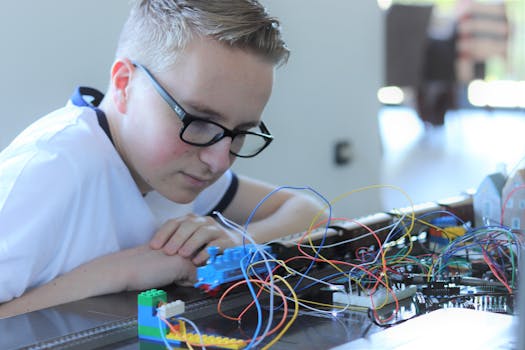
Use building blocks, playdough, cardboard, or recycled materials to make your own toy models. This helps you see if your ideas can really work.

Making physical models lets you test your ideas. Does your car roll well? Can your doll sit up? Building things helps you figure out the best way to make your toy strong and fun to play with. You can use everyday items from home to start creating wonderful things.

Learn and Grow

Study Art and Design at School

At big school, try to pick subjects like Art, Design and Technology (DT), or Graphics. These subjects teach you how to draw, design, and make things.

These lessons will teach you important skills like how to use different art materials, understand shapes and colours, and even how to use computers for design. Learning about different materials and how they work is super helpful for making toys. You'll learn how to plan your designs and make them safe and strong.

Learn About How Things Work

Understand how simple machines work, like wheels, levers, and gears. This is useful for designing toys that move or have special features.

Many toys have moving parts! Knowing a little bit about science and engineering helps you design toys that can spin, fly, or light up. You can learn this by taking things apart (with grown-up help!) or by building models and kits that show you how things fit together and move.

Visit Toy Shops and Museums

Look at all the different toys in shops and see how they are made. Visiting museums can show you old toys and how they've changed.

When you visit a toy shop, don't just look to play. Think like a designer! What materials are used? How is the packaging designed? What makes a toy popular? Toy museums can show you how toys have been made for hundreds of years, giving you lots of ideas and inspiration for your own designs.

Become a Toy Expert

Practice Digital Drawing

Learn to use computer programmes to draw your toy ideas. This is how many toy designers work today, making their drawings super clear and easy to change.

As you get older, there are lots of fun computer programmes that let you draw and even create 3D models of your toys. This skill is really important for a modern toy designer. You can start with simple drawing apps and then move on to more complex design software, which helps you show your ideas to other people.

Build a Portfolio of Your Designs

Keep all your best drawings and models in a special book or on a computer. This is called a portfolio, and it shows grown-ups your amazing ideas.

A portfolio is like your special show-and-tell book for your toy ideas. It should include your best drawings, photos of models you've built, and descriptions of how your toys work and why they're fun. This is what you'll show to universities or companies when you're older to get a job as a toy designer.

Maybe Go to University

Some toy designers go to a special university to learn even more about design, engineering, and how to make toys perfectly safe and fun.

There are university courses in Product Design or Toy Design that teach you all the really clever things about making toys. You'll learn about materials, safety rules, how to work with factories, and how to make toys that children all over the world will adore. It's a great way to meet other creative people too!

🎬 Useful Videos

🎯 View Apprenticeships

Explore relevant apprenticeships that can help you kickstart your career in Toy Designer. Apprenticeships offer hands-on experience and training while earning a wage.

Career Progressions

This page showcases various career options and the pathways to reach them. Each career listed here shares transferable skills and knowledge, making it easier for individuals to transition between them.

Your current career is highlighted to help you see how it fits into the broader landscape of potential career choices. By clicking on any career, you can learn more about it, including the training and education required to pursue it.

Remember, progressing in your career often involves further learning and training. This page provides insights into future career options as well as those that can lead up to your current one.

These career progression decisions are informed by comparing the skills and knowledge needed for different occupations, along with data on how people move between them. Explore the possibilities and discover the exciting journey ahead in your career!

Sample Qualifications

A Toy Designer is primarily involved in the conceptualisation, design, and development of new toy products, which aligns directly with the core responsibilities of a Product Designer who designs new products for manufacture.

How to become

You can get into this job through:

  • a university course
  • an apprenticeship

University

You could study a foundation degree, higher national diploma or degree in a subject like:

  • design
  • product design
  • industrial product design
  • engineering

You could also do a course covering a particular industry, which includes design options, for example automotive engineering and furniture design.

You can improve your job prospects by getting work experience during your studies.

Your university careers service can help you to find suitable placements, internships and year in industry opportunities.

Entry requirements

You'll usually need:

  • 1 or 2 A levels, or equivalent, for a foundation degree or higher national diploma
  • 2 to 3 A levels, or equivalent, for a degree

More Information

Apprenticeship

You could apply to do a Product Design and Development Engineer Level 6 Degree Apprenticeship.

This can take up to 5 years to complete and is a mix of workplace training with academic study at an approved university.

You might also apply to do a Model Making Level 6 Degree Apprenticeship. Training includes physical and digital model making, building prototypes and creating mock-ups.

Entry requirements

You'll usually need:

  • 4 or 5 GCSEs at grades 9 to 4 (A* to C) and A levels, or equivalent, for a degree apprenticeship

More Information

More Information

Career tips

Entering design competitions and exhibitions can be a good way of getting yourself noticed by employers.

You'll need to show employers that you have creative skills, technical knowledge and the ability to work to a design brief. This will usually involve presenting a portfolio of your design work to them.

Professional and industry bodies

You can join the Chartered Society of Designers for professional recognition, training opportunities and to make industry contacts.

Further information

You can get more information about careers in product design from Neon and the Design Business Association.

Interested in More Career Paths?

Explore other careers or use our AI to discover personalised paths based on your interests.

Stay connected

Join our newsletter to stay up to date on features and releases

Address
Developing Experts Limited
Exchange Street Buildings
35-37 Exchange Street
Norwich
NR2 1DP
UK

Phone
01603 273515

Email
[email protected]

Copyright 2025 Developing Experts, All rights reserved.