
You could do a forklift truck operations training course at a college, which would teach you some of the skills you need in this job.
Entry requirements
Entry requirements for these courses vary.
A forklift operator is responsible for operating industrial trucks to load and unload materials within warehouses, factories, storage yards, or construction sites. This role involves moving goods safely and efficiently, stacking products, and keeping accurate records of inventory movements. Forklift operators must adhere to health and safety regulations and inspect their vehicles to ensure they are in good working condition. They often work shifts, including early mornings, evenings, or weekends, especially in busy logistics or distribution centres. Attention to detail and good hand-eye coordination are important skills in this job.
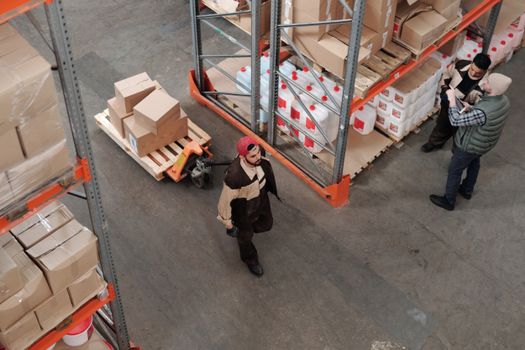
Forklift operators in the UK typically earn between £19,000 and £26,000 per year, depending on experience and location.
As of 2024, there are over 10,000 forklift operator positions advertised across the UK each year.
Most roles require a forklift truck licence, which can be obtained through accredited training courses lasting 3 to 5 days.
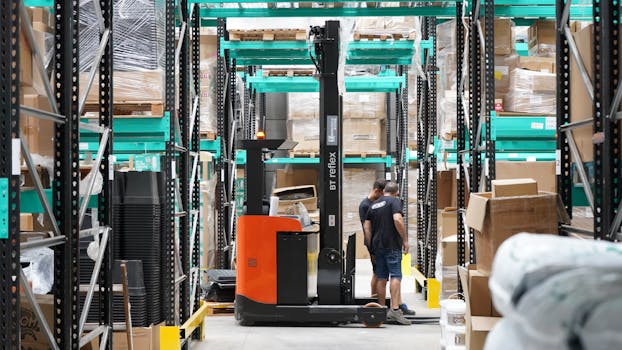
Operates a specialised reach truck to move pallets and goods in high racking systems within warehouses, often handling stock at greater heights than standard forklifts.
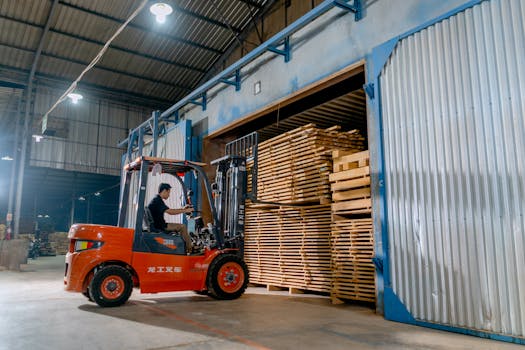
Uses a counterbalance forklift to transport and stack goods in warehouses, factories, or construction sites, which requires skill in handling heavier loads and working in tighter spaces.
Operates a forklift fitted with a clamp attachment to move and stack items such as paper rolls, appliances, or other goods that cannot be handled with standard forks.
Complete your secondary education, ideally achieving GCSEs in English and Maths.
Most employers require candidates to have basic literacy and numeracy skills to read safety instructions and complete paperwork. While there are no specific subject requirements for forklift operators, having GCSEs or equivalent qualifications will help you with job applications and further training opportunities.
Enrol on a forklift training course accredited by an organisation such as RTITB or ITSSAR.
Forklift training courses typically last from 3 to 5 days and cover both theory and practical driving skills. You must pass written and practical assessments to obtain a certificate. Many training centres work with employers, or you can pay for training independently.
Pass the test and obtain your forklift licence or operator card.
After successfully completing your training, you will be awarded a certificate or operator card that demonstrates your competence. This is essential for securing a forklift operator job in most workplaces across the UK.
Look for entry-level forklift operator jobs in warehouses, factories, or construction companies.
Prepare a CV highlighting your training, certification, and any related work experience. Search for job vacancies online, through recruitment agencies, or by contacting local employers directly. Be prepared to undergo a medical assessment to ensure you are fit for the role.
Gain practical experience operating forklifts and learn workplace procedures.
Your first job will help you build confidence and refine your skills. Employers may provide additional training on specific types of forklifts or equipment used on site. Always follow health and safety regulations to protect yourself and others.
Expand your skills by training on different types of forklifts or supervisory roles.
As you gain experience, you may have opportunities to operate more specialised equipment such as reach trucks or telehandlers. You could also become a team leader, supervisor, or move into warehouse management with further training.
Explore relevant apprenticeships that can help you kickstart your career in Forklift Operator. Apprenticeships offer hands-on experience and training while earning a wage.
This page showcases various career options and the pathways to reach them. Each career listed here shares transferable skills and knowledge, making it easier for individuals to transition between them.
Your current career is highlighted to help you see how it fits into the broader landscape of potential career choices. By clicking on any career, you can learn more about it, including the training and education required to pursue it.
Remember, progressing in your career often involves further learning and training. This page provides insights into future career options as well as those that can lead up to your current one.
These career progression decisions are informed by comparing the skills and knowledge needed for different occupations, along with data on how people move between them. Explore the possibilities and discover the exciting journey ahead in your career!
A forklift operator's primary role involves operating forklift trucks to move and manage goods within storage or warehouse environments. This is most similar to a forklift driver, as both require skills in vehicle operation, safety procedures, and handling heavy loads efficiently within a logistics or warehousing setting.
You can get into this job through:
You could do a forklift truck operations training course at a college, which would teach you some of the skills you need in this job.
Entry requirements for these courses vary.
You could apply to do a Supply Chain Warehouse Operative Level 2 Intermediate Apprenticeship.
You should check with the company you apply to whether their apprenticeship includes forklift training.
Employers will set their own entry requirements.
You can apply directly for jobs. Some employers may ask for GCSEs, including English and maths.
You'll have an advantage if you've completed forklift training, though your employer may put you through training when you start work.
Experience of loading and unloading goods and materials in a warehouse, in freight transport or on a building site would be useful.
Make sure you get a copy of your forklift training completion certificate so you can use it for job applications. Unlike a driving licence, there is no forklift licence as such, though some job adverts may refer to the completion certificate as a 'licence'.
You can find out more about working as a forklift driver in construction from Go Construct.
You can find details of approved forklift training providers through the Accrediting Bodies Association - Workplace Transport.
Explore other careers or use our AI to discover personalised paths based on your interests.
Address
Developing Experts Limited
Exchange Street Buildings
35-37 Exchange Street
Norwich
NR2 1DP
UK
Phone
01603 273515
Email
[email protected]
Copyright 2026 Developing Experts, All rights reserved.

Unlock expert-designed lessons, resources, and assessments tailored for educators. No credit card required.
Claim Your Free Trial →We use cookies to enhance your browsing experience and analyze our traffic. Learn more.
