A Season of Awe and Wonder: Christmas Activities for Primary Schools
This blog shares festive science, geography and history activities for the end of the autumn term, framed around Christmas and winter as a season of awe and wonder, with links to primary units and lessons.
Estimated read time: 4 minutes
If "Jingle Bells" is already ringing through your school corridors, that can only mean one thing: Christmas is nearly here! The school calendar is brimming with rehearsals, parties and Christmas jumper days, and fitting in planning alongside it all can feel like a bit of a juggling act.
This blog is here to help. It's packed with festive science, geography and history activities, with links to lessons you can use straight away, and a reminder that December is one of the best times of year to spark children's curiosity.
A Season Full of Questions
December is a wonderful time of year in school, with frosty mornings at registration and twinkly lights by home time. It doesn't take long for children to start asking questions. Why is it dark so early? Why is there frost on the car? Why do some countries have Christmas in summer? What did children get for Christmas a hundred years ago?
Questions like these make brilliant starting points for science, geography and history, and they don't need much planning. A torch, a globe or an old photograph is often all you need, and the activities below fit easily around carol concerts and Christmas fairs.
Not every child celebrates Christmas, so many of the ideas work just as well framed around winter, light or celebrations in general.
Festive Science Activities
Grow your own snowflakes. Look at magnified snowflake photos, then grow your own crystals: an adult pours hot water into a jar, and pupils stir in salt until no more will dissolve. Twist a pipe cleaner into a star shape, tie it to a pencil with string, and rest the pencil across the top of the jar so the star hangs down into the salty water without touching the sides or bottom. Leave the jar somewhere it won't be moved. Over the next few days, crystals will form on the star as the water cools and evaporates.
Find the sparkle. Ask pupils to shine a torch at tinsel, baubles, foil and a woolly jumper, and rank them by how much light bounces back. Why does tinsel glitter when wool doesn't? This investigation fits well with our lesson ‘Explore materials which are reflective’, part of ourYear 3 Light unit.
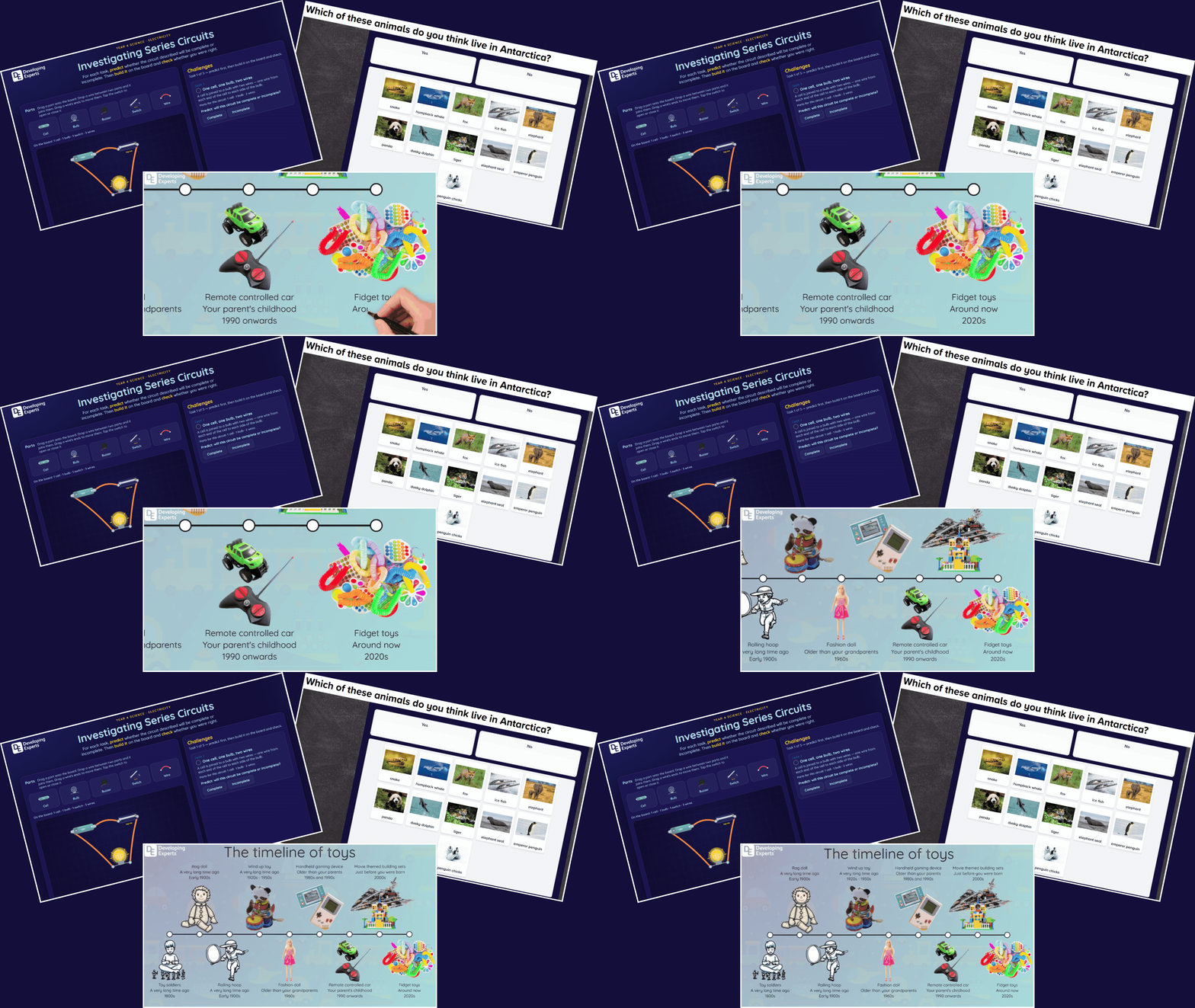
Fairy light circuits. Get pupils building simple circuits to light up a card star or Christmas tree, then predict what happens when one bulb is taken out. This fits perfectly with our Year 4 and Year 6 units on Electricity.
Keep the hot chocolate warm. Wrap cups in different materials and record the temperature every few minutes to find the best thermal insulator. It's a fair test with a tasty reward, and it’s already the investigation in our Year 5 ‘Explore thermal conductors and insulators’ lesson.
Reindeer eyes. Arctic reindeer have eyes that change from gold in summer to deep blue in winter, helping them see through months of near darkness. A memorable hook for adaptation and habitats, perfect for our Year 6 Evolution and Inheritance unit.
Festive Geography Activities
Christmas around the world. In Australia, Christmas falls in summertime, and many families head to the beach. In Iceland, children put a shoe on the windowsill for the 13 Yule Lads. As a class, plot different celebrations on a world map and compare them with your own.
Where does Christmas start? Kiritimati, also known as Christmas Island, is one of the first places on Earth to reach Christmas Day. When it's midnight there, it's only 10 am on Christmas Eve in the UK. Ask pupils to use time zones to work out what children around the world are doing at the same moment. This links well to our Year 5 ‘Why do we have different time zones around the world?’ lesson.
Polar opposites. Polar bears and penguins never meet in the wild, because polar bears live in the Arctic and penguins live in the Antarctic. Ask younger pupils to sort animals onto a map of the two poles as part of our Year 1 ‘What is it like in the North and South Poles?’ or EYFS ‘Where in the world is it cold?’ lessons.
Christmas dinner food miles. Check the labels on sprouts, satsumas, cranberries and potatoes, then map how far each has travelled. Which could be grown closer to home? This forms part of our Year 5 Our Connected World unit and is also explored in our Year 4 ‘What food is produced in the United Kingdom?’ lesson.
Festive History Activities
A Victorian Christmas. Many of our traditions date back to the 1840s. Henry Cole sent the first commercial Christmas card in 1843, Tom Smith invented the cracker a few years later, and a picture of Queen Victoria and Prince Albert beside a decorated tree in 1848 made Christmas trees fashionable. Even the robins on cards come from this time, as Victorian postmen were nicknamed "robins" for their red uniforms. This could be explored alongside our Year 2 The Victorians unit, or our Year 6 The Industrial Revolution unit.
Toys then and now. Compare a Victorian stocking, often containing an orange, a few nuts and a small wooden toy, with what children might hope for today. OurYear 1 The History of Toys unit explores how toys and games have changed across generations.
A medieval feast. In medieval castles, Christmas meant twelve days of feasting, music and games, sometimes led by a "Lord of Misrule" who was in charge of the fun. Pupils can plan a castle feast menu and compare it with Christmas dinner today. This fits well with ourEYFS lesson ‘What did Kings and Queens in the past do for fun?’, part of our Kings and Queens unit.
Christmas in wartime. During the Second World War, rationing meant homemade presents, paper decorations and Christmas cakes made without many of the usual ingredients. Pupils can try designing a gift using only what a 1940s family might have had at home. OurYear 6 World War II unit covers life on the home front.
Keeping the Wonder Going
All too soon, the tinsel will be packed away for another year. Until then, there's a lovely opportunity to give children a moment of real wonder, and December makes that easier than almost any other time of year.
If you're new to Developing Experts, you can explore all of our science, geography and history units with a free two-week trial. Simply visitwww.developingexperts.com to sign up today.
Stay connected
Join our newsletter to stay up to date on features and releases
Address
Developing Experts Limited Exchange Street Buildings 35-37 Exchange Street Norwich NR2 1DP UK