This blog explores the Bayeux Tapestry's arrival in London, the conservation debate surrounding its journey, and how it links to KS2 History and KS3 and KS4 Science teaching.

Estimated read time: 4 minutes
On Thursday 10th September, a 1,000-year-old piece of embroidery goes on display in London for the first time in its existence, after a journey that took over three years to plan.
The Bayeux Tapestry is at the British Museum from 10 September 2026 until 11 July 2027. For most pupils in your classroom, this will likely be the only chance in their lifetime to see it on this side of the Channel. It is also, unexpectedly, one of the richest cross-curricular hooks of the year: a history source that is currently generating physics headlines. Here's what the tapestry is, how it got here, and where it fits across your curriculum.
The Bayeux Tapestry tells the story of the events surrounding the Norman Conquest of England in 1066, culminating in William the Conqueror's victory over Harold Godwinson at the Battle of Hastings.
A few things worth knowing before you teach it:
How was the Bayeux Tapestry Transported to London?
Transporting the Bayeux Tapestry presented an extraordinary conservation challenge. The tapestry arrived in July 2026, folded accordion-style inside a climate-controlled case, itself placed within a shock-absorbing cradle.
Conservation teams from both countries then examined it centimetre by centimetre, comparing it against photographs taken in Bayeux in September 2025. Two broken threads were found across the full 70 metres. Otherwise, the tapestry's condition was reported as virtually unchanged.
That result was not a foregone conclusion. Critics of the loan had warned that sudden changes in temperature, humidity or light could cause the fibres to contract or expand and the colours to fade. Because the wool embroidery sits on a fragile linen backing, any movement of those threads carried a risk of tearing, stitch loss and distortion of the fabric.
The response to that risk is visible the moment you walk in. Visitors in London see the tapestry lying flat rather than upright, a decision French authorities welcomed as better for the conservation of the fibres. There is a genuine physics lesson sitting inside that decision, and it's below.
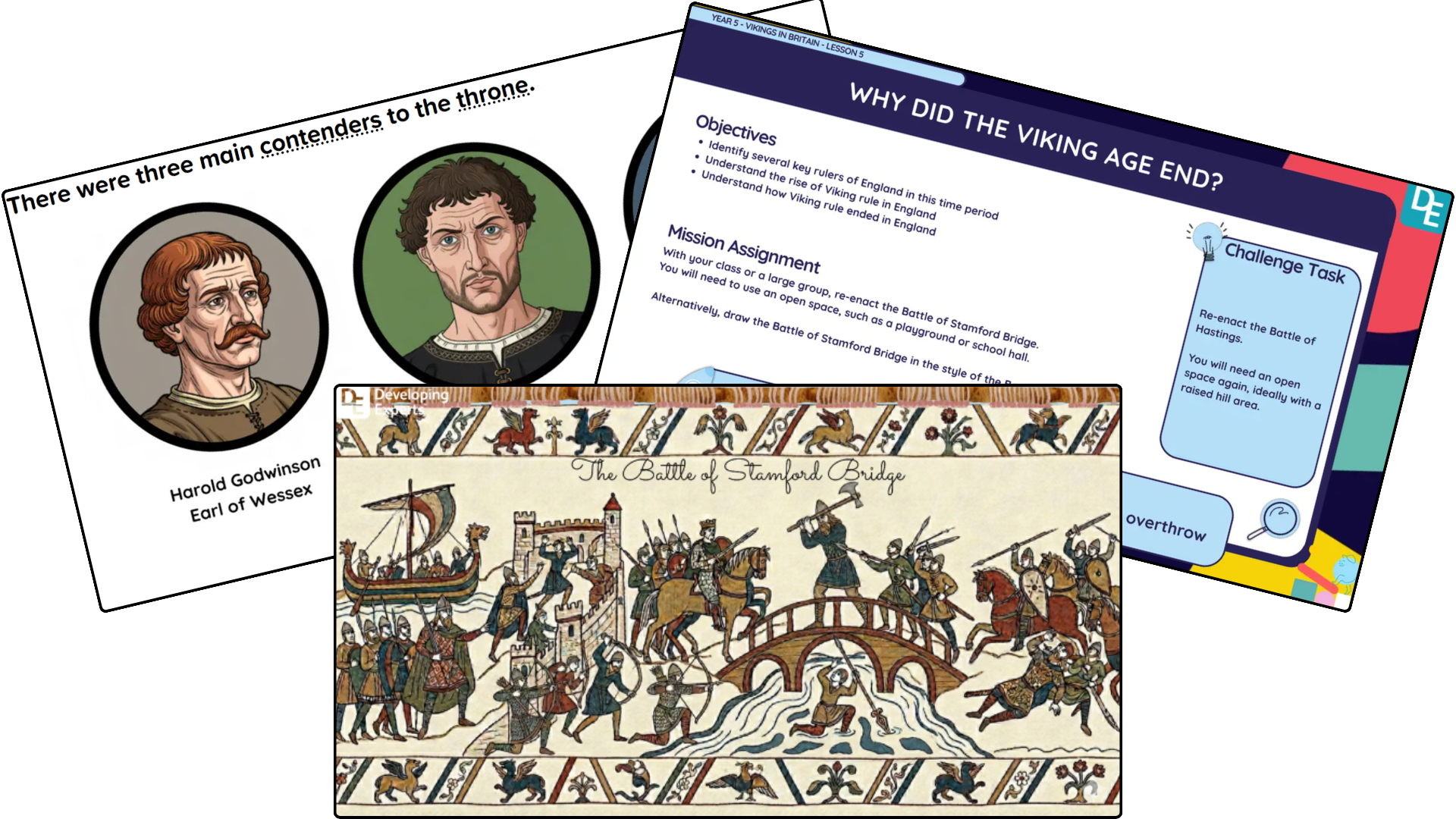
The tapestry slots directly into Developing Expert’s Year 5 ‘Vikings in Britain’ unit, and particularly the lesson ‘Why did the Viking Age end?’, where pupils reenact the battles of Stamford Bridge and Hastings and create their own tapestry-style panel.
Three ways to use it:
The argument over how to protect the tapestry is a physics problem playing out in public, which presents an opportunity for pupils to see scientific enquiry in the real world
Forces: Hung upright, the tapestry's own weight acts downward through the fabric, and the fibres at the top carry the load of everything below them: thousand-year-old linen under a tensile stress it was never designed for. Laid flat, the surface underneath takes the weight along the whole length, so no part of the fabric is holding up any other part. The tapestry weighs the same either way. What changes is where the strain goes.
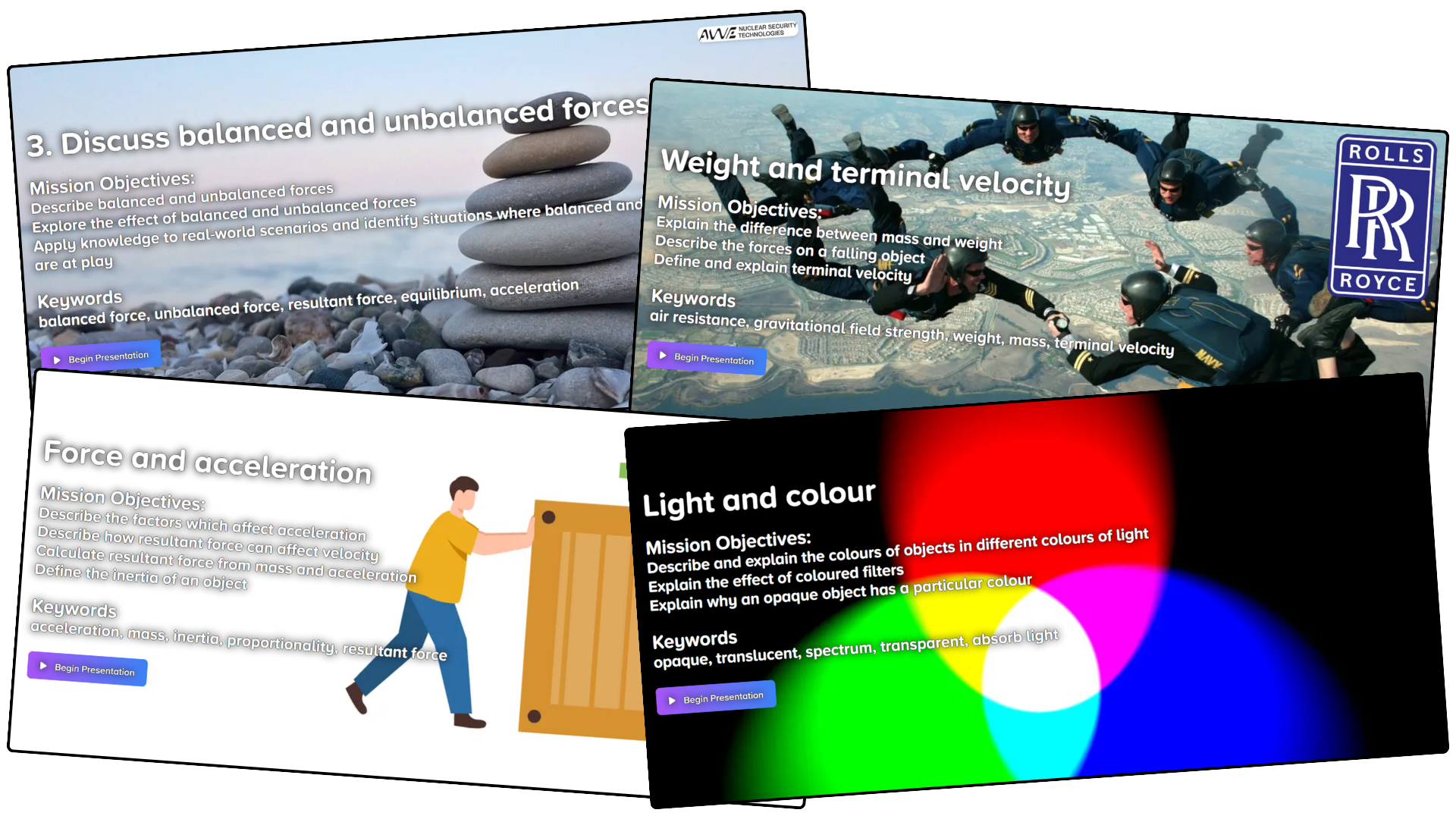
Pupils already meet the two forces at play here in our KS3 lesson ‘Discuss balanced and unbalanced forces’: weight pulling down, contact force pushing back up, and the difference between the two being balanced or not. At KS4, ‘Weight and Terminal Velocity’ covers weight as mass × gravitational field strength, and ‘Force and Acceleration’ gives them resultant forces - everything needed to explain a curatorial decision that made international news.
Light and colour: The warnings about fading are, at heart, an absorption and reflection problem. Our KS4 ‘Light and Colour’ lesson explains why a dye appears red, and therefore what is happening when ultraviolet exposure breaks down the pigment molecules that produce that colour. It also explains why the gallery the tapestry is displayed in is kept so dim.
Bayeux Tapestry Classroom Activities
Our Year 5 Vikings in Britain unit and our KS3 and KS4 physics lessons are fully resourced and sequenced, so this can be a lesson hook rather than another evening of planning. You'll find them all in our Science, History and Geography curricula.
Our Expert Films and Career Films featuring archaeologists from DigVentures are a natural companion here. Pupils hear directly from people whose job is to read physical evidence, handle fragile finds and work out what an object can and cannot tell us - the same skills the Bayeux Tapestry demands, from people doing it for a living. You'll find them all in our History curriculum.
If you're new to Developing Experts, you can explore everything with a free two-week trial. Simply visit www.developingexperts.com to sign up today.
A Once-in-a-Lifetime Teaching Opportunity
The tapestry returns to Normandy in July 2027. Between now and then, your pupils can study a primary source about the end of Viking Britain that is sitting on this side of the Channel - and, in the same term, use it to explain tension, contact forces and colour fading. Objects this useful rarely come along, and this one won't be back.
Address
Developing Experts Limited
Exchange Street Buildings
35-37 Exchange Street
Norwich
NR2 1DP
UK
Phone
01603 273515
Email
[email protected]
Copyright 2026 Developing Experts, All rights reserved.

Unlock expert-designed lessons, resources, and assessments tailored for educators. No credit card required.
Claim Your Free Trial →We use cookies to enhance your browsing experience and analyze our traffic. Learn more.