

Creating Career Path...

Finding Further Careers...

Air Quality Scientist

View this career for different education levels:

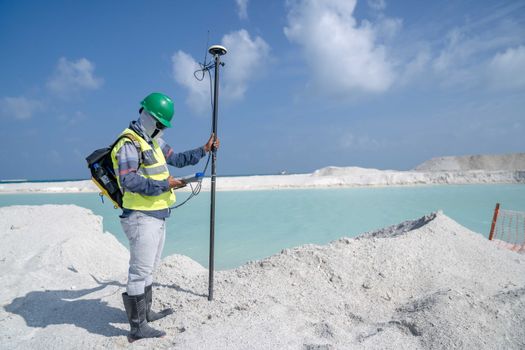
An Air Quality Scientist in the UK plays a vital role in understanding, monitoring, and mitigating atmospheric pollution. Their work involves a blend of field investigation, laboratory analysis, and data interpretation to assess the impact of various sources on air quality. This can range from industrial emissions and vehicle exhaust to agricultural practices and domestic heating. They are often involved in designing and implementing air quality monitoring programmes, using specialised equipment to collect samples and measure pollutant concentrations. Once data is gathered, they analyse it using statistical methods and modelling software to identify trends, predict future air quality scenarios, and evaluate the effectiveness of mitigation strategies. Beyond data collection and analysis, Air Quality Scientists frequently contribute to environmental impact assessments for new developments, ensuring that projects comply with UK and European air quality standards. They might advise local authorities, government bodies, and private companies on best practices for reducing emissions and improving public health. This often involves preparing detailed reports, presenting findings to stakeholders, and contributing to policy development. The role requires a strong scientific background, excellent analytical skills, and a commitment to protecting both the environment and public wellbeing.

Air Quality Scientist

Flag Media

Please select a reason for flagging this content.

📊 Statistics

Average Salary (UK)

Starting salaries for Air Quality Scientists in the UK can typically range from £22,000 to £28,000. With experience, this can rise to £30,000 to £45,000, and senior or principal roles can command £50,000+.

Job Outlook (UK)

The demand for Air Quality Scientists in the UK is projected to remain stable, with potential for growth driven by increasing environmental regulations, public health concerns, and infrastructure development. The environmental sector as a whole is seeing continued investment.

Typical Working Hours

Most Air Quality Scientists in the UK work standard full-time hours, typically around 37-40 hours per week, Monday to Friday. However, some roles may involve occasional fieldwork which could require flexibility, including overnight stays or weekend work depending on project needs.

🚀 Careers in this path

Flag Media

Please select a reason for flagging this content.

Air Quality Consultant

An Air Quality Consultant assesses, monitors, and predicts air pollution levels for various projects (e.g., new developments, industrial sites) to ensure compliance with UK regulations. They advise clients on mitigation strategies and help secure environmental permits. This often involves fieldwork, data analysis, and report writing.

Flag Media

Please select a reason for flagging this content.

Environmental Health Officer specializing in Air Quality

An Environmental Health Officer (EHO) with an air quality focus works for local authorities in the UK. They investigate complaints related to air pollution, enforce environmental legislation, monitor local air quality, and develop strategies to improve public health by reducing airborne contaminants. They also provide advice to businesses and the public.

Flag Media

Please select a reason for flagging this content.

Atmospheric Modeller

An Atmospheric Modeller uses complex computer models and data to simulate and predict the movement, dispersion, and chemical reactions of pollutants in the atmosphere. They contribute to understanding the impact of emissions, forecasting air quality, and informing policy decisions, often working in research, government agencies, or consultancies.

Build Your Foundational Knowledge

Pursue a Relevant Degree

Obtain an undergraduate degree in a science or environmental field to gain essential theoretical knowledge.

A Bachelor's degree is typically the minimum entry requirement. Consider subjects like Environmental Science, Chemistry, Physics, Meteorology, Environmental Engineering, or a related discipline. Look for programmes accredited by relevant professional bodies where possible, as this can enhance your credibility and future career prospects. Focus on modules that cover atmospheric chemistry, pollution control, data analysis, and environmental modelling.

Develop Key Scientific Skills

Enhance your practical and analytical skills crucial for environmental science work.

During your degree, actively seek opportunities to develop strong laboratory skills, data collection techniques, statistical analysis, and report writing. Proficiency in using scientific instrumentation and software for data processing is highly valued. Courses or projects involving fieldwork and environmental sampling will also be incredibly beneficial for demonstrating practical capability.

Gain Work Experience

Acquire practical experience through internships, volunteering, or placements within relevant organisations.

Gaining real-world experience is vital. Look for internships or work placements with environmental consultancies, local authorities, government agencies (e.g., Environment Agency), research institutions, or large industrial companies with environmental departments. This experience will provide insight into day-to-day operations, allow you to apply your academic knowledge, and build a network of contacts within the field.

Specialise and Professionalise

Consider Postgraduate Study

Deepen your expertise with a Master's or PhD, which can be highly advantageous for specialist roles.

While not always mandatory, a Master's degree in Air Pollution Control, Environmental Monitoring, Atmospheric Science, or a related specialism can significantly boost your career prospects, especially for research-focused or senior roles. A PhD is usually required for academic research positions or highly specialised R&D roles. These programmes offer advanced theoretical knowledge and practical research experience.

Join Professional Bodies

Engage with professional organisations to stay updated and enhance your professional standing.

Becoming a member of relevant professional bodies, such as the Institution of Environmental Sciences (IES), the Institute of Air Quality Management (IAQM), or the Royal Society of Chemistry (RSC), demonstrates your commitment to the profession. These organisations often provide networking opportunities, CPD (Continuing Professional Development) resources, and access to industry insights and job listings. Achieving chartership (e.g., CEnv, CSci) can further validate your expertise.

Develop Specialist Technical Skills

Master specific tools and techniques used in air quality monitoring and modelling.

Focus on developing proficiency in critical software and instrumentation. This includes air quality modelling software (e.g., ADMS, AERMOD), Geographic Information Systems (GIS) for spatial data analysis, and various types of air quality monitoring equipment (e.g., particulate matter monitors, gas analysers). Understanding regulations and standards (e.g., UK Air Quality Strategy, EU Directives) is also paramount.

Advance Your Career

Seek Initial Air Quality Roles

Apply for entry-level positions to gain hands-on experience in the field.

Look for roles such as 'Assistant Air Quality Scientist', 'Environmental Consultant (Air Quality)', 'Air Quality Analyst', or 'Monitoring Technician' with environmental consultancies, local government departments, or regulatory bodies. These positions will provide practical experience in data collection, analysis, reporting, and contributing to air quality assessments and management plans.

Continuous Professional Development

Regularly update your knowledge and skills through training courses and workshops.

The field of air quality science is constantly evolving with new technologies, regulations, and research. Attend workshops, seminars, and short courses on emerging air quality issues, new monitoring techniques, advanced modelling approaches, or changes in environmental legislation. This commitment to lifelong learning is crucial for career progression and staying competitive.

Pursue Leadership and Specialisation

Progress into more senior roles involving project management, specialised expertise, or policy development.

With several years of experience, you can advance to roles like 'Senior Air Quality Scientist', 'Principal Consultant', 'Team Leader', or 'Policy Advisor'. These positions often involve managing complex projects, providing expert testimony, developing strategies, mentoring junior staff, or influencing environmental policy. Specialising in areas like industrial emissions, urban air pollution, or health impacts can also open specific advanced career pathways.

🎬 Useful Videos

🎯 View Apprenticeships

Explore relevant apprenticeships that can help you kickstart your career in Air Quality Scientist. Apprenticeships offer hands-on experience and training while earning a wage.

Career Progressions

This page showcases various career options and the pathways to reach them. Each career listed here shares transferable skills and knowledge, making it easier for individuals to transition between them.

Your current career is highlighted to help you see how it fits into the broader landscape of potential career choices. By clicking on any career, you can learn more about it, including the training and education required to pursue it.

Remember, progressing in your career often involves further learning and training. This page provides insights into future career options as well as those that can lead up to your current one.

These career progression decisions are informed by comparing the skills and knowledge needed for different occupations, along with data on how people move between them. Explore the possibilities and discover the exciting journey ahead in your career!

Sample Qualifications

An Air Quality Scientist typically researches atmospheric conditions, pollution, and climate impacts, which aligns closely with the duties and expertise of a Climate scientist focusing on environmental systems.

How to become

You can get into this job through a university course.

University

You could do a degree or postgraduate qualification in a relevant subject like:

  • environmental science or ecology
  • geography, earth sciences or geology
  • physics
  • maths and statistics
  • oceanography or marine science
  • meteorology and climate science
  • computer science

Work experience

You can get work experience through internships, placements or a year in industry during your course. This may help you to identify your area of interest for research.

For example, the Met Office early careers section has details of online and in-person work placements, as well as industrial placements and graduate schemes.

Entry requirements

You'll usually need:

  • 2 or 3 A levels, or equivalent, including maths and a science for a degree
  • a degree in a relevant subject for postgraduate study

More Information

More Information

Career tips

You can find information about global climate conditions through:

Further information

Discover more about working in climate science from:

Interested in More Career Paths?

Explore other careers or use our AI to discover personalised paths based on your interests.

Stay connected

Join our newsletter to stay up to date on features and releases

Address
Developing Experts Limited
Exchange Street Buildings
35-37 Exchange Street
Norwich
NR2 1DP
UK

Phone
01603 273515

Email
[email protected]

Copyright 2026 Developing Experts, All rights reserved.
