



Creating Career Path...

Finding Further Careers...

Air Quality Scientist

View this career for different education levels:

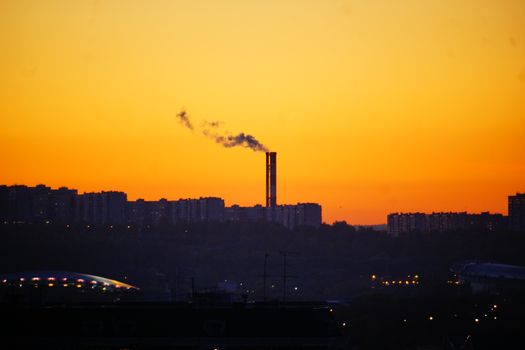
An Air Quality Scientist is like a detective for the air we breathe. They study the air around us to understand what is in it and how clean or polluted it is. This involves collecting samples of air, often using special equipment, and then testing them in a laboratory to identify different gases and tiny particles. They might look for things like car exhaust fumes, smoke from factories, or even pollen. Their work helps us understand where pollution comes from, how it affects our health and the environment, and what we can do to make the air cleaner. They often work outdoors to collect data and indoors to analyse it and write reports. Their job is really important because clean air is essential for everyone's health and for the planet. Air Quality Scientists might advise local councils, businesses, or even the government on how to reduce pollution. They use their scientific knowledge to predict how air pollution might change in the future and to develop plans to improve air quality. This could involve suggesting new technologies, recommending changes to traffic flow, or helping to set environmental rules. They are always working to ensure that the air we breathe is as healthy as possible.

Air Quality Scientist

Flag Media

Please select a reason for flagging this content.

📊 Statistics

Average Salary

Starting salaries for Air Quality Scientists in the UK can be around 25,000 to 30,000 pounds per year. With more experience, this can rise to 35,000 to 45,000 pounds, and senior roles might earn 50,000 pounds or more annually.

Number of Positions

While specific numbers for new Air Quality Scientist positions can vary, the environmental sector in the UK is growing, creating consistent demand. There are often hundreds of job listings related to environmental science and air quality available across the UK each year.

Entry Level Education

To become an Air Quality Scientist, you will usually need a degree in a relevant science subject, such as environmental science, chemistry, physics, or engineering. Some roles may also require a postgraduate qualification, like a Masters degree.

🚀 Careers in this path

Flag Media

Please select a reason for flagging this content.

Environmental Scientist

If you're interested in air quality, you might also like studying the wider environment. Environmental scientists look at all sorts of things like water pollution, soil health, and how to protect nature. They help make sure our planet stays healthy for everyone.

Flag Media

Please select a reason for flagging this content.

Meteorologist

Air quality is often affected by the weather. Meteorologists study the weather and climate, predicting what's going to happen with the wind, rain, and temperature. This helps us understand how pollutants move around in the air and how to prepare for different weather conditions.

Flag Media

Please select a reason for flagging this content.

Public Health Specialist

Air quality is really important for people's health. Public health specialists work to protect and improve the health of communities. They might look at how air pollution affects people and come up with ideas to make the air cleaner and help people live healthier lives.

Build a Strong Foundation

Excel in Science and Maths at School

Focus on your science subjects like Chemistry, Physics, and Biology, and make sure your Maths skills are strong. These subjects are essential for understanding air quality.

At school, pay close attention in your science lessons. Chemistry helps you understand what gases and particles are in the air. Physics helps you understand how air moves and how pollutants spread. Biology helps you understand how air pollution affects living things, including people. Maths is crucial for analysing data and making calculations.

Explore Environmental Topics

Read books, watch documentaries, and visit websites about climate change, pollution, and the environment. The more you know, the better!

Look for resources that explain environmental issues in a simple way. Websites like the BBC Bitesize or National Geographic Kids can be a great starting point. Try to understand what causes air pollution, what its effects are, and what people are doing to try and fix it. This will help you see if this career path truly interests you.

Join Science Clubs or Projects

If your school has a science club or an environmental group, join it! You can do fun experiments and learn more about the world around you.

Participating in extracurricular activities like a science club can give you hands-on experience and help you meet people who share similar interests. You might get to do experiments related to air, water, or soil, which can be really exciting and help you decide if you like practical science work.

Further Your Education

Choose A-Levels or Equivalent

When you're older, pick A-Levels (or equivalent qualifications like BTECs) in subjects like Chemistry, Physics, Environmental Science, and Maths.

These subjects will give you the detailed knowledge you need for university. Chemistry is particularly important for understanding the composition of air and pollutants. Environmental Science will give you a broad overview of environmental issues. Good grades in these subjects will help you get into a relevant university degree.

Go to University

Study for a degree in a relevant field such as Environmental Science, Chemistry, Physics, or Atmospheric Science.

A Bachelor's degree (BSc) is usually the minimum requirement for an Air Quality Scientist role. Look for courses that include modules on atmospheric chemistry, pollution control, environmental monitoring, and data analysis. Some universities also offer specific degrees in Air Quality Management or Environmental Engineering.

Consider a Master's Degree

For more specialised roles or research positions, a Master's (MSc) or even a PhD can be very beneficial.

While not always essential, a postgraduate degree can open up more advanced opportunities, especially in research or policy-making. It allows you to specialise further in areas like air pollution modelling, impact assessment, or advanced analytical techniques. This extra study can make you a more competitive candidate.

Gain Experience and Start Your Career

Get Practical Experience

Look for internships, work experience, or volunteer roles with environmental agencies, research labs, or consultancies that deal with air quality.

Practical experience is incredibly valuable. It gives you a real insight into the day-to-day work of an Air Quality Scientist. You might help with collecting samples, analysing data, or even writing reports. This hands-on experience will boost your CV and help you make connections in the industry.

Develop Key Skills

Work on skills like data analysis, problem-solving, report writing, and using specialised equipment. Communication skills are also important.

Air Quality Scientists need to be good at understanding complex data, identifying problems, and explaining their findings clearly to others. Being able to use scientific instruments and software for monitoring and modelling air quality is also crucial. Practise writing clear reports and presenting your ideas.

Look for Entry-Level Jobs

Search for jobs as an 'Environmental Consultant', 'Air Quality Analyst', 'Junior Scientist', or 'Research Assistant' with environmental consultancies, government bodies, or research organisations.

Your first job might involve supporting more senior scientists, helping with fieldwork, data processing, or preparing permits and assessments. Many environmental consultancies recruit graduates, and government agencies like the Environment Agency also have entry-level roles. Keep an eye on job boards and professional networking sites.

🎬 Useful Videos

🎯 View Apprenticeships

Explore relevant apprenticeships that can help you kickstart your career in Air Quality Scientist. Apprenticeships offer hands-on experience and training while earning a wage.

Career Progressions

This page showcases various career options and the pathways to reach them. Each career listed here shares transferable skills and knowledge, making it easier for individuals to transition between them.

Your current career is highlighted to help you see how it fits into the broader landscape of potential career choices. By clicking on any career, you can learn more about it, including the training and education required to pursue it.

Remember, progressing in your career often involves further learning and training. This page provides insights into future career options as well as those that can lead up to your current one.

These career progression decisions are informed by comparing the skills and knowledge needed for different occupations, along with data on how people move between them. Explore the possibilities and discover the exciting journey ahead in your career!

Sample Qualifications

An Air Quality Scientist typically researches atmospheric processes, pollution, and climate change impacts, which closely aligns with the work of a Climate Scientist focusing on atmospheric composition and environmental effects.

How to become

You can get into this job through a university course.

University

You could do a degree or postgraduate qualification in a relevant subject like:

  • environmental science or ecology
  • geography, earth sciences or geology
  • physics
  • maths and statistics
  • oceanography or marine science
  • meteorology and climate science
  • computer science

Work experience

You can get work experience through internships, placements or a year in industry during your course. This may help you to identify your area of interest for research.

For example, the Met Office early careers section has details of online and in-person work placements, as well as industrial placements and graduate schemes.

Entry requirements

You'll usually need:

  • 2 or 3 A levels, or equivalent, including maths and a science for a degree
  • a degree in a relevant subject for postgraduate study

More Information

More Information

Career tips

You can find information about global climate conditions through:

Further information

Discover more about working in climate science from:

Interested in More Career Paths?

Explore other careers or use our AI to discover personalised paths based on your interests.

Stay connected

Join our newsletter to stay up to date on features and releases

Address
Developing Experts Limited
Exchange Street Buildings
35-37 Exchange Street
Norwich
NR2 1DP
UK

Phone
01603 273515

Email
[email protected]

Copyright 2026 Developing Experts, All rights reserved.
