

Creating Career Path...

Finding Further Careers...

Air Quality Scientist

View this career for different education levels:

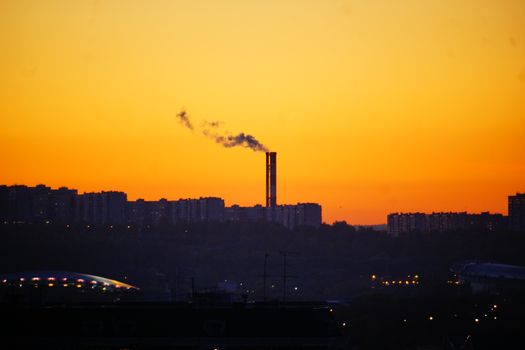
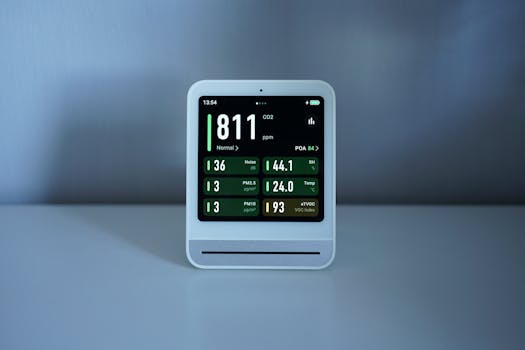
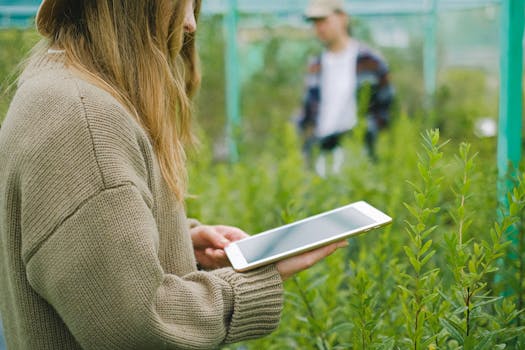
An Air Quality Scientist is like a detective for the air we breathe! They study what is in the air, like tiny dust particles or gases that we cannot see. They use special tools to measure how clean or dirty the air is, often near roads, factories, or in towns. Their job is super important because they help us understand if the air is healthy for people to breathe and for nature. They might figure out where pollution comes from and suggest ways to make the air cleaner, like encouraging less driving or using cleaner energy. They might also work with councils or big companies to make sure they are following rules to keep the air fresh and nice for everyone. They spend time both outdoors collecting samples and indoors in labs testing them. They also spend time in offices looking at all the data they have collected on computers. They write reports and give advice to help protect our planet and our health. It is a job that helps make the world a better place by keeping the air clean and safe.

Air Quality Scientist

Flag Media

Please select a reason for flagging this content.

📊 Statistics

Starting Salary

A new Air Quality Scientist in the UK might earn around 25,000 to 30,000 pounds per year.

Experienced Salary

With more experience, an Air Quality Scientist could earn between 35,000 and 50,000 pounds per year, and sometimes even more.

Jobs Available

There are usually hundreds of jobs for environmental scientists and related roles available in the UK each year, including for air quality.

🚀 Careers in this path

Flag Media

Please select a reason for flagging this content.

Air Quality Monitor

Imagine you have a special sniff-machine that tells you how clean or dirty the air is! You'd set up these machines around towns and parks to check if the air is good for breathing. If it's a bit too mucky, you'd tell grown-ups so they can help clean it up, like making sure cars aren't puffing out too much smoke.

Flag Media

Please select a reason for flagging this content.

Weather Forecaster for Air

Do you like watching the weather report? This job is a bit like that, but specifically for the air! You'd look at maps and special tools to guess if the air will be fresh and clear tomorrow, or if there might be a bit more dust or misty air around. You'd tell people so they know if it's a good day for playing outside or staying indoors.

Flag Media

Please select a reason for flagging this content.

Pollution Buster

This is a bit like being a detective for air! You'd go to places where the air might not be very clean, like near a big factory, and try to find out what's making it dirty. Then, you'd help think of clever ideas to stop the dirt from getting into the air, like making sure factories use special filters, so everyone can breathe lovely fresh air.

Learning About Air

Be an Air Detective

Start by observing the air around you. What does it look like on different days? Can you smell anything in the air? This helps you notice changes in the air.

Pay attention to things like mist, fog, or smoke from bonfires. Think about how the air feels too – is it windy, still, warm, or cold? These observations are the first step to understanding air quality. You could even draw pictures of what the sky looks like on a clear day compared to a cloudy or hazy day.

Learn About the Weather

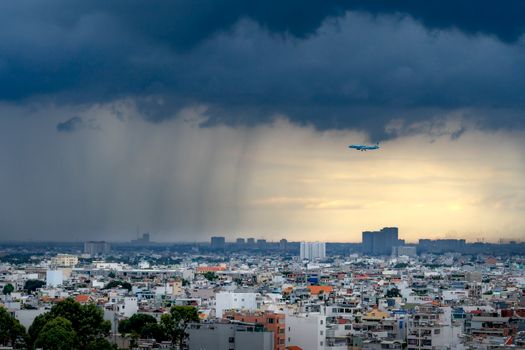
Weather plays a big part in air quality. Learn about wind, rain, and sunshine and how they affect the air around us.

Wind can blow pollution away, but it can also bring new pollution. Rain can wash dust and tiny particles out of the air. Sunshine can sometimes cause new kinds of pollution to form. Understanding these basics helps you see the bigger picture of air quality. You could even keep a simple weather diary!

Explore Nature

Spend time outdoors and notice how plants and animals react to their environment. Healthy plants and animals often mean healthy air.

When you are outside, look at the leaves on trees. Are they green and healthy? Are there lots of insects and birds? Plants help clean our air, and animals need clean air to thrive. Noticing changes in nature can be an early sign of changes in air quality. Maybe you could even help plant a tree!

School Time Fun

Enjoy Science Lessons

Pay close attention in science class! Learning about chemistry and how things mix together is very important for an Air Quality Scientist.

In primary school, you might do experiments that show how things change or react. These are like mini versions of what scientists do. Understanding basic science, like what atoms and molecules are (even in a simple way), will be a great help when you get older. Ask your teacher lots of questions!

Become a Maths Whiz

Maths helps scientists measure things and understand patterns. Practise counting, adding, subtracting, and understanding numbers.

Air Quality Scientists use numbers to measure how much pollution is in the air. They also use maths to create graphs and charts that show how air quality changes over time. Being good with numbers will help you understand all the data scientists collect. You could even count how many cars go past your house in a minute!

Read and Write Well

Scientists need to read lots of information and write down what they find. Practise reading books and writing stories or reports.

Air Quality Scientists read reports about air pollution and write their own findings to share with others. Being able to explain complex ideas clearly in writing is a very important skill. Reading non-fiction books about the environment or science can also give you lots of interesting facts and ideas. Try writing a short report about your 'Air Detective' findings!

Future Steps

Choose Helpful Subjects

When you're older, you'll pick subjects like chemistry, physics, biology, and geography. These help you understand air, pollution, and the Earth.

In secondary school, these subjects will teach you about the tiny particles in the air, how they travel, and how they affect living things and the planet. Geography will teach you about weather patterns and different environments. These are the building blocks for becoming an Air Quality Scientist.

Go to University

After school, you'll likely go to university to study a science subject like environmental science, chemistry, or atmospheric science.

At university, you'll learn even more about air pollution, how to measure it with special equipment, and how to find solutions to make our air cleaner. You'll do lots of experiments and projects, and meet people who are experts in this field. It's an exciting time of learning!

Start Your Air Journey

Once you have your degree, you can start working for a company, the government, or a charity, helping to keep our air clean and healthy.

You might work in a lab, out in the field taking air samples, or in an office analysing data and writing reports. Your job will be to protect our environment and ensure everyone has clean air to breathe. You could be helping to design cleaner cars or new ways for factories to work. It's a very important job!

🎬 Useful Videos

🎯 View Apprenticeships

Explore relevant apprenticeships that can help you kickstart your career in Air Quality Scientist. Apprenticeships offer hands-on experience and training while earning a wage.

Career Progressions

This page showcases various career options and the pathways to reach them. Each career listed here shares transferable skills and knowledge, making it easier for individuals to transition between them.

Your current career is highlighted to help you see how it fits into the broader landscape of potential career choices. By clicking on any career, you can learn more about it, including the training and education required to pursue it.

Remember, progressing in your career often involves further learning and training. This page provides insights into future career options as well as those that can lead up to your current one.

These career progression decisions are informed by comparing the skills and knowledge needed for different occupations, along with data on how people move between them. Explore the possibilities and discover the exciting journey ahead in your career!

Sample Qualifications

An Air Quality Scientist focuses on atmospheric composition and processes, which closely aligns with the work of a Climate Scientist who studies Earth's climate, including atmospheric conditions and environmental changes.

How to become

You can get into this job through a university course.

University

You could do a degree or postgraduate qualification in a relevant subject like:

  • environmental science or ecology
  • geography, earth sciences or geology
  • physics
  • maths and statistics
  • oceanography or marine science
  • meteorology and climate science
  • computer science

Work experience

You can get work experience through internships, placements or a year in industry during your course. This may help you to identify your area of interest for research.

For example, the Met Office early careers section has details of online and in-person work placements, as well as industrial placements and graduate schemes.

Entry requirements

You'll usually need:

  • 2 or 3 A levels, or equivalent, including maths and a science for a degree
  • a degree in a relevant subject for postgraduate study

More Information

More Information

Career tips

You can find information about global climate conditions through:

Further information

Discover more about working in climate science from:

Interested in More Career Paths?

Explore other careers or use our AI to discover personalised paths based on your interests.

Stay connected

Join our newsletter to stay up to date on features and releases

Address
Developing Experts Limited
Exchange Street Buildings
35-37 Exchange Street
Norwich
NR2 1DP
UK

Phone
01603 273515

Email
[email protected]

Copyright 2026 Developing Experts, All rights reserved.
