




Creating Career Path...

Finding Further Careers...

Acoustic Engineer

View this career for different education levels:

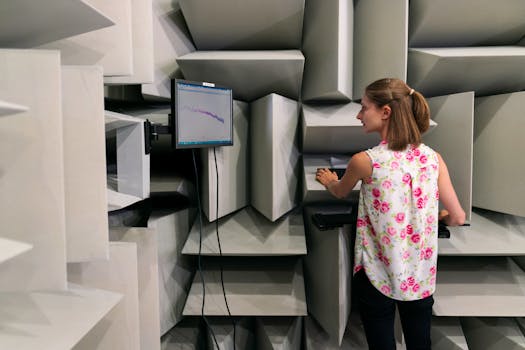
Imagine a world where sounds are perfect, where concerts sound amazing, and noisy roads dont disturb your sleep. Thats a bit like what an Acoustic Engineer helps to create! An Acoustic Engineer studies sound and vibration. They use their knowledge of physics and engineering to design spaces and products that sound just right. This could mean making sure a new concert hall has fantastic sound quality, reducing noise from a busy factory so it doesnt bother nearby homes, or designing quieter engines for cars and aeroplanes. They might also work on making sure buildings are quiet inside, or helping to design headphones that block out unwanted noise. Its a career where you get to solve problems using science to make the world a better, more pleasant sounding place to live.

Acoustic Engineer

Flag Media

Please select a reason for flagging this content.

📊 Statistics

Starting Salary

A new Acoustic Engineer in the UK might expect to earn around 25,000 to 30,000 pounds per year.

Experienced Salary

With more experience, an Acoustic Engineer can earn between 35,000 and 55,000 pounds annually, and even more for very senior roles.

Job Outlook

The demand for Acoustic Engineers in the UK is steady, especially in areas like environmental noise control, building acoustics, and product design.

🚀 Careers in this path

Flag Media

Please select a reason for flagging this content.

Sound Technician for Live Events

Imagine being in charge of how music sounds at a concert or how actors' voices are heard in a school play. You'd set up microphones, speakers, and mixing desks to make sure everyone hears perfectly. It's like being a DJ, but for sound quality!

Flag Media

Please select a reason for flagging this content.

Audio Visual Technician for Schools

This job involves helping teachers and students with all things sound and vision in school. You might set up projectors, ensure the sound system works for assemblies, or help with recording school performances. You'd be the go-to person for all the techy bits.

Flag Media

Please select a reason for flagging this content.

Game Sound Designer Assistant

Do you love video games? This role would involve helping to create all the amazing sounds you hear in games, like the 'zing' of collecting a coin, the roar of a monster, or the background music. You'd help make the game world sound real and exciting.

Build Your Foundations

Excel in STEM Subjects

Focus on your science, technology, engineering, and maths (STEM) subjects at school. These are super important for understanding how sound works and the technical side of engineering.

At school, pay special attention to Physics, as this subject covers sound waves, frequencies, and vibrations, which are the core concepts of acoustics. Mathematics is also crucial for calculations and problem-solving, and Design & Technology can help you understand how things are built and function. English will also be useful for writing reports and explaining your ideas clearly.

Explore Sound and Music

Get curious about sound! Play a musical instrument, join a choir, or learn about how different sounds are made and recorded. This will help you develop an ear for sound.

Engaging with music, whether by learning an instrument like the guitar or piano, or singing in a school choir, can train your ear and help you understand pitch, rhythm, and timbre. You could also explore sound engineering software, even basic programmes, to see how sounds can be manipulated. Visiting a recording studio or a concert hall might also give you a taste of how acoustics are used in real life.

Research Acoustic Engineering

Learn more about what an Acoustic Engineer actually does. Watch videos, read articles, and look at different types of projects they work on.

Spend some time online researching what an Acoustic Engineer's daily life involves. Look up famous acoustic projects, like the design of opera houses or noise reduction in cities. You can find many inspiring stories and examples of how acoustic engineers solve real-world problems, from making buildings quieter to improving the sound quality of loudspeakers. This will help you decide if it's the right career for you.

Academic Journey

Choose A-Levels or Equivalent

After your GCSEs, you'll need to choose A-level subjects (or equivalent qualifications like BTECs) that support an engineering degree. Maths and Physics are usually essential.

For A-levels, Mathematics and Physics are almost always required for a university degree in engineering. Further Mathematics can also be very beneficial. Some universities might also like to see subjects like Design & Technology, Computer Science, or even Music Technology, as they can provide useful complementary skills. Make sure to check the specific entry requirements for universities you're interested in.

University Degree in Engineering

The main path is to get a degree in Acoustics, Audio Engineering, or a related engineering field like Mechanical or Electrical Engineering with an acoustics specialism.

Look for Bachelor of Engineering (BEng) or Master of Engineering (MEng) courses. Specific degrees in 'Acoustical Engineering', 'Audio Engineering', or 'Sound Engineering' are ideal. If these aren't available, a broader engineering degree like Mechanical Engineering, Electronic Engineering, or Physics with an acoustics module can also lead to this career. Research different universities and their course content to find the best fit for your interests.

Gain Work Experience or Internships

While studying, try to get some work experience, even just for a few weeks, or complete an internship with an acoustics consultancy or an audio company. This gives you a real-world insight.

Many universities offer placement years as part of their engineering degrees, which is a fantastic way to get hands-on experience. If your course doesn't, try to find summer internships or voluntary work with companies that deal with sound or vibration, such as architectural acoustics firms, environmental noise consultants, or audio equipment manufacturers. This experience will make your CV stand out and help you understand the practical side of the job.

Start Your Career

Apply for Graduate Roles

Once you finish university, start applying for graduate engineer positions in acoustics. Look for companies that specialise in areas like building acoustics, environmental noise, or product sound design.

Many engineering and consultancy firms offer specific graduate schemes or entry-level positions for Acoustic Engineers. These roles often provide structured training and mentorship, helping you to develop your skills further. Look on job boards, company websites, and university career services for these opportunities. Be prepared to talk about your degree projects and any work experience you gained.

Join Professional Organisations

Become a member of professional bodies like the Institute of Acoustics (IOA) in the UK. This helps you learn, network, and grow in your career.

Joining professional organisations like the IOA is important for your ongoing professional development. They offer training courses, conferences, and publications that keep you up-to-date with the latest developments in the field. Being a member also shows employers your commitment to the profession and provides excellent networking opportunities with other acoustic engineers.

Consider Further Specialisation

As you gain experience, you might want to specialise in a particular area of acoustics, such as architectural acoustics, noise control, or even underwater acoustics. The field is very broad!

Acoustic engineering has many different branches. You might find you really enjoy designing the acoustics for concert halls and recording studios (architectural acoustics), or you might prefer working on reducing noise from trains and planes (environmental noise). Other areas include product sound design (making washing machines quieter or cars sound better), or even medical acoustics. Continuous learning and specialisation can open up exciting new career paths.

🎬 Useful Videos

🎯 View Apprenticeships

Explore relevant apprenticeships that can help you kickstart your career in Acoustic Engineer. Apprenticeships offer hands-on experience and training while earning a wage.

Career Progressions

No career progressions found for Acoustic Engineer

Sample Qualifications

An Acoustic Engineer's primary role involves analysing and mitigating sound issues, which directly aligns with the duties of an Acoustics consultant who provides expert advice on noise and vibration control.

How to become

You can get into this job through:

  • a university course
  • working towards this role

University

Most employers will expect you to have a degree in a subject like:

  • acoustics
  • maths
  • physics
  • engineering

You could do a degree in music technology or environmental science, followed by further training in acoustics or applied acoustics at postgraduate level.

The Institute of Acoustics also offers the Diploma in Acoustics and Noise Control, which can help towards gaining membership of the Institute.

Entry requirements

You'll usually need:

  • 5 GCSEs at grades 9 to 4 (A* to C), or equivalent, including English, maths and science
  • 2 or 3 A levels, or equivalent, including maths and physics
  • a degree in a relevant subject for postgraduate study

More Information

Work

You may be able to start work as an assistant or trainee acoustics technician and with further training, qualify as an engineer or consultant.

You'll normally need at least 4 GCSEs at grades 9 to 4 (A* to C), including two science subjects. A levels or equivalent, like applied science, may be acceptable. Employers may also consider relevant work experience, for example, in non-destructive testing, if you do not have sufficient academic qualifications.

More Information

Professional and industry bodies

You can join the Institute of Acoustics for professional development opportunities and to make contacts in the industry.

Further information

You can find out more about a career as an acoustics consultant from the Institute of Acoustics.

Interested in More Career Paths?

Explore other careers or use our AI to discover personalised paths based on your interests.

Stay connected

Join our newsletter to stay up to date on features and releases

Address
Developing Experts Limited
Exchange Street Buildings
35-37 Exchange Street
Norwich
NR2 1DP
UK

Phone
01603 273515

Email
[email protected]

Copyright 2026 Developing Experts, All rights reserved.
