



Creating Career Path...

Finding Further Careers...

Satellite Engineer

View this career for different education levels:

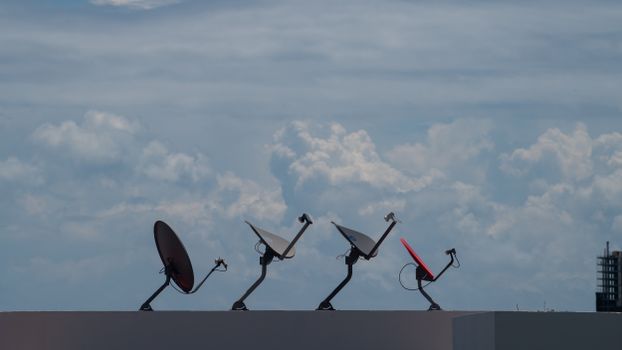
Imagine building and looking after amazing machines that fly high above the Earth! That is what a Satellite Engineer does. They help design, build, and test satellites before they are sent into space on rockets. Satellites are like super clever robots that orbit our planet. They help us do lots of things, like watch TV, use our mobile phones, and even help scientists understand the weather. Once a satellite is in space, an engineer might help make sure it is working properly and sending back all its important information. To be a Satellite Engineer, you need to be very good at solving puzzles and enjoy maths and science. You might work in a big factory building the satellites, or in a control room making sure they are doing their job high above us. It is a very exciting job where you get to work with amazing technology and learn about space!

Satellite Engineer

Flag Media

Please select a reason for flagging this content.

📊 Statistics

Starting Salary

A new Satellite Engineer in the UK might start with a salary of around 25,000 to 35,000 pounds a year.

Experienced Salary

With more experience, a Satellite Engineer in the UK could earn between 45,000 and 70,000 pounds or even more each year.

Number of Jobs

The UK space industry is growing, creating many interesting jobs. There are hundreds of people working in this field across the country.

🚀 Careers in this path

Flag Media

Please select a reason for flagging this content.

Astronaut

Imagine flying a rocket to space and floating amongst the stars! Astronauts are super brave explorers who learn all about space and sometimes even fix things on the International Space Station, which is like a big house in space.

Flag Media

Please select a reason for flagging this content.

Rocket Scientist

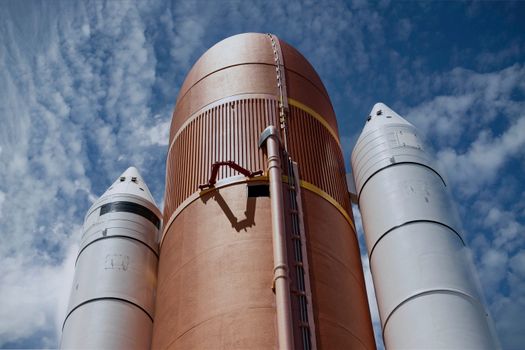
These clever people design and build the amazing rockets that take satellites and astronauts into space. They use maths and science to make sure the rockets are super strong and fly just right.

Flag Media

Please select a reason for flagging this content.

Space Explorer

A Space Explorer is like a detective for the universe! They use powerful telescopes to look at distant planets, stars, and galaxies, trying to find new things and understand how space works. Sometimes they even help plan missions to send robots to other planets.

Learning & Exploring

Be a Space Explorer!

Start by being super curious about space, stars, and how things fly! Read books about planets and rockets, and watch documentaries about space travel.

The more you learn about how our world works and what's out in space, the better! Look at books from your local library about astronauts, rockets, and the planets. There are many fun shows and cartoons that teach you about space too. Try to visit a science museum if you can, as they often have cool exhibits about space and engineering.

Build & Experiment

Play with building toys like LEGOs, K'nex, or even simple craft materials to make your own rockets or pretend satellites. See how things fit together!

Building toys are fantastic for learning how different parts connect and what makes structures strong. Try to build tall towers or vehicles. You could even use cardboard boxes and toilet paper rolls to construct your own space station! Don't be afraid to experiment and see what happens if you change something.

Love Maths & Science

Pay attention in your maths and science lessons at school. Understanding numbers and how things work is super important for an engineer.

Maths helps you understand measurements and how things move, while science helps you understand electricity, gravity, and materials. These are all things satellite engineers use every day. Ask your teachers questions if you don't understand something and try to do extra fun activities related to science, like simple experiments at home or joining a science club.

Secondary School & Beyond

Study Important Subjects

When you get to secondary school, focus on subjects like maths, physics, and design and technology. These are key for understanding engineering.

For GCSEs and A-levels, choosing subjects like Physics, Maths, and Further Maths (if offered) will give you a really strong foundation. Design and Technology (DT) is also great because it teaches you about designing and making practical things. If your school offers computer science or engineering clubs, definitely join them!

Join STEM Clubs

Look for clubs at school or in your local area that involve Science, Technology, Engineering, and Maths (STEM). They are lots of fun!

STEM clubs often have exciting projects like building robots, coding games, or designing small structures. These activities let you try out engineering ideas in a fun, hands-on way and meet other kids who love science and building too. You might even get to visit engineering companies or universities.

Visit Universities or Open Days

When you're older, visit universities that have engineering courses. See what it's like and ask questions about studying to become an engineer.

Many universities have 'open days' where you can visit, look around, and talk to students and teachers. You can learn about different types of engineering, like aerospace engineering, which is perfect for satellite engineers. It's a great way to imagine yourself studying there and see the cool labs and equipment.

University & Training

Go to University

After school, you'll likely go to university to study a special type of engineering, like 'Aerospace Engineering' or 'Electronic Engineering'.

To become a satellite engineer, a university degree is usually needed. Courses like Aerospace Engineering, Aeronautical Engineering, Electronic Engineering, or Mechanical Engineering with a focus on space technology are excellent choices. You'll learn about how rockets fly, how satellites work, and all the maths and science behind them. Look for universities with strong engineering departments and links to the space industry.

Get Work Experience

While you're at university, try to do some work experience or an internship at a company that builds satellites or rockets.

Many engineering companies offer internships or placements during university holidays. This is a brilliant way to see what the job is really like, meet engineers, and learn practical skills that aren't taught in books. It also looks great on your CV when you apply for jobs later. Ask your university career services for help finding these opportunities.

Start Your Engineering Job

After university, you can apply for jobs at companies that design, build, or launch satellites, or even space agencies!

Look for entry-level positions or graduate schemes at aerospace companies, satellite manufacturers, or space agencies in the UK or internationally. Your first job might involve helping a team with designing small parts, testing equipment, or analysing data from satellites. Keep learning and asking questions, and you'll become an amazing Satellite Engineer!

🎬 Useful Videos

🎯 View Apprenticeships

Explore relevant apprenticeships that can help you kickstart your career in Satellite Engineer. Apprenticeships offer hands-on experience and training while earning a wage.

Career Progressions

This page showcases various career options and the pathways to reach them. Each career listed here shares transferable skills and knowledge, making it easier for individuals to transition between them.

Your current career is highlighted to help you see how it fits into the broader landscape of potential career choices. By clicking on any career, you can learn more about it, including the training and education required to pursue it.

Remember, progressing in your career often involves further learning and training. This page provides insights into future career options as well as those that can lead up to your current one.

These career progression decisions are informed by comparing the skills and knowledge needed for different occupations, along with data on how people move between them. Explore the possibilities and discover the exciting journey ahead in your career!

Sample Qualifications

A Satellite Engineer is responsible for designing, building, testing, and operating satellites, which are a specific type of spacecraft within the broader field of aerospace engineering.

How to become

You can get into this job through:

  • a university course
  • a college course
  • an apprenticeship
  • working towards this role
  • applying directly

University

You could do a degree or postgraduate course in aerospace engineering, avionics, or a subject like:

  • electrical or electronic engineering
  • mechanical engineering
  • manufacturing or product engineering
  • physics or applied physics
  • astronautics and space engineering
  • software engineering or mathematics

Entry requirements

You'll usually need:

  • 2 or 3 A levels, or equivalent, including maths and physics
  • a degree in a relevant subject for postgraduate study

More Information

College

You could do A levels, a higher national certificate (HNC) or diploma (HND) in engineering before applying for a trainee technician job with an aerospace company.

Subjects include:

  • maths, physics and design and technology
  • mechanical engineering
  • aeronautical engineering
  • electrical engineering

You would then take further training to become a fully qualified engineer.

Entry requirements

Entry requirements for these courses vary.

More Information

Apprenticeship

You could apply to do a Level 6 Degree Apprenticeship to begin your career in the aerospace industry. Apprenticeships include:

  • Aerospace Engineer
  • Space Systems Engineer
  • Aerospace Software Engineer
  • Electro-Mechanical Engineer
  • Materials Science Technologist

You'll combine workplace learning with study for a degree at university.

Entry requirements

You'll usually need:

  • 4 or 5 GCSEs at grades 9 to 4 (A* to C) and A levels, or equivalent, for a degree apprenticeship

More Information

Work

You might be able to join a company as an aerospace engineering technician and do training on the job to qualify as an engineer.

Direct Application

You can apply for aerospace engineering jobs if you've got relevant qualifications and experience. For example, you might have worked in mechanical, electrical or electronics engineering.

More Information

Career tips

You can try out virtual work experiences in different aviation industry jobs, including aircraft maintenance.

Professional and industry bodies

You can join the Royal Aeronautical Society for professional development, career resources and to make industry contacts.

Further information

You can find out more about working in aerospace engineering from Careers in Aerospace and Neon.

You can learn about careers in the space industry through SpaceCareers.uk.

Interested in More Career Paths?

Explore other careers or use our AI to discover personalised paths based on your interests.

Stay connected

Join our newsletter to stay up to date on features and releases

Address
Developing Experts Limited
Exchange Street Buildings
35-37 Exchange Street
Norwich
NR2 1DP
UK

Phone
01603 273515

Email
[email protected]

Copyright 2026 Developing Experts, All rights reserved.
