


Creating Career Path...

Finding Further Careers...

Hydroelectric Engineer

View this career for different education levels:

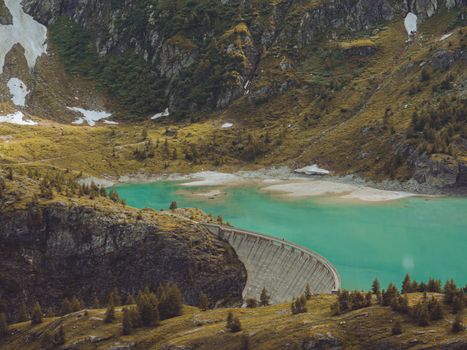
A Hydroelectric Engineer is like a superhero for electricity, using the power of water to create clean energy! Your main job would be to design, build, and maintain power stations that turn the movement of water, often from rivers or large reservoirs, into electricity. This involves a lot of different tasks, like figuring out the best place to build a dam, designing the big turbines that spin when water rushes through them, and making sure all the electrical systems work perfectly. Youd also need to think about how your projects affect the local environment and communities, making sure they are safe and sustainable. This career involves a mix of indoor work, where you might be using computers to design plans or analyse data, and outdoor work, visiting sites to inspect progress or troubleshoot problems. You might work on new projects from scratch, helping to build a whole new power plant, or you could be involved in upgrading and maintaining existing ones to make them more efficient. It's a really important job because hydroelectric power is a 'renewable' energy source, meaning it won't run out and it produces very little pollution, helping us look after our planet.

Hydroelectric Engineer

Flag Media

Please select a reason for flagging this content.

📊 Statistics

Average Starting Salary

For a graduate Hydroelectric Engineer in the UK, you could expect to start with a salary ranging from 25,000 to 30,000 pounds per year.

Experienced Professional Salary

With several years of experience, a Hydroelectric Engineer in the UK can earn between 35,000 and 60,000 pounds annually, and even more for senior roles.

Job Market Growth (Renewable Energy Sector)

The wider renewable energy sector in the UK, which includes hydroelectric power, is projected to grow significantly. This means more opportunities for engineers in this field as the UK aims for net-zero emissions.

🚀 Careers in this path

Flag Media

Please select a reason for flagging this content.

Hydraulic Modeller

Imagine building a digital twin of a river or a water system on a computer. A Hydraulic Modeller does just that, using special software to predict how water will flow and behave in different situations, like during a flood or when a new dam is built. This helps engineers design better water structures and manage water resources. You'd be good at this if you like computers and solving puzzles.

Flag Media

Please select a reason for flagging this content.

Renewable Energy Consultant

A Renewable Energy Consultant advises businesses and governments on the best ways to use clean energy, like hydro, solar, or wind power. They help people choose the right technologies, understand the benefits, and make plans for a greener future. It's a bit like being a detective for sustainable solutions, finding the best ways to power our world without harming the planet.

Flag Media

Please select a reason for flagging this content.

Water Resources Manager

A Water Resources Manager looks after all the water in a specific area, making sure there's enough for everyone and everything, from drinking water to powering homes with hydroelectricity. They plan how to store water, distribute it, and protect it from pollution. It involves understanding how water systems work and making big decisions about this precious resource for the community.

Build a Strong Foundation

Excel in STEM Subjects

Focus on subjects like Maths, Physics, and Design & Technology. These are the building blocks for understanding how things work and how to design them.

At school, try your best in Maths, especially algebra and geometry, as these are crucial for engineering calculations. Physics will teach you about energy, forces, and electricity, which are all vital for hydroelectric power. Design & Technology can help you learn about materials and practical building skills. Don't be afraid to ask your teachers for extra help if you find something tricky!

Explore Science Clubs and Activities

Join school clubs or attend workshops that involve science, engineering, or even robotics to get hands-on experience and see if you enjoy it.

Many schools have science or engineering clubs where you can build projects, conduct experiments, or learn about different types of engineering. Look out for STEM (Science, Technology, Engineering, Maths) events, fairs, or even online challenges. Building things, even simple models, can help you develop problem-solving skills and see the practical side of engineering.

Research Engineering

Learn more about different types of engineering, especially civil and mechanical engineering, as these are very important for hydroelectric power.

Use the internet, books, and talk to people to find out what civil engineers do (they design and build things like dams and bridges) and what mechanical engineers do (they design machines and systems, like turbines). Understanding these fields will give you a better idea of what a hydroelectric engineer's job involves and which areas you might enjoy most. Look up famous hydroelectric projects like the Hoover Dam (even though it's not in the UK, it's a great example) or learn about UK power stations.

Higher Education and Specialisation

Choose A-Levels or Equivalent

Select A-Level subjects that will prepare you for an engineering degree at university, typically Maths and Physics are essential.

After your GCSEs, you'll need to choose subjects for your A-Levels (or Scottish Highers, or equivalent qualifications like a BTEC). For engineering, Maths and Physics are almost always required. Further Maths or Chemistry can also be very helpful. Aim for good grades in these subjects to increase your chances of getting into a good university engineering programme.

Study an Engineering Degree

Apply for a university degree in a relevant engineering field, such as Civil Engineering, Mechanical Engineering, or Electrical Engineering.

Most hydroelectric engineers will have an undergraduate degree (a Bachelor's) in an engineering discipline. Civil engineering is key for designing the structures (like dams and powerhouses), while mechanical or electrical engineering is vital for the machinery (turbines, generators). Some universities might even offer degrees with a focus on renewable energy or power engineering. Look for programmes accredited by engineering bodies like the Institution of Civil Engineers (ICE) or Institution of Mechanical Engineers (IMechE).

Consider a Master's Degree

Think about pursuing a Master's degree (MSc or MEng) in a specialised area like Hydraulic Engineering or Renewable Energy Systems.

While not always essential, a Master's degree can give you a deeper understanding of specific areas relevant to hydroelectric power and can make you more attractive to employers. Programmes in 'Water Resources Engineering', 'Hydraulic Engineering', or 'Renewable Energy Engineering' are excellent choices. Many universities offer integrated Master's degrees (MEng) which combine undergraduate and postgraduate study into one longer course.

Gaining Experience and Professional Growth

Seek Work Experience or Internships

Try to get practical experience during your university holidays by working with engineering companies, especially those involved in water or energy projects.

Internships or summer placements are fantastic ways to see what the job is really like and to make connections in the industry. Look for opportunities with civil engineering firms, energy companies, or consultancies that work on large infrastructure projects, dams, or power generation. Even voluntary work that involves problem-solving or practical skills can be valuable.

Apply for Graduate Schemes

Look for graduate programmes offered by engineering companies in the energy or civil infrastructure sectors. These schemes provide structured training.

Many large engineering and energy companies in the UK offer graduate schemes. These are structured programmes designed to help new graduates gain a wide range of experience and develop their skills over 1-3 years. They often involve rotations through different departments or projects, which is perfect for exploring various aspects of hydroelectric engineering.

Work Towards Chartership

Once you start working, begin the process of becoming a 'Chartered Engineer' (CEng), which is a recognised professional qualification.

Becoming a Chartered Engineer is a mark of high professional competence and commitment. It involves demonstrating your engineering knowledge, skills, and experience to a professional engineering institution like the Institution of Civil Engineers (ICE) or the Institution of Mechanical Engineers (IMechE). Your employer will often support you through this process, which typically takes several years after graduation. It opens doors to more senior roles and higher responsibilities.

🎬 Useful Videos

🎯 View Apprenticeships

Explore relevant apprenticeships that can help you kickstart your career in Hydroelectric Engineer. Apprenticeships offer hands-on experience and training while earning a wage.

Career Progressions

This page showcases various career options and the pathways to reach them. Each career listed here shares transferable skills and knowledge, making it easier for individuals to transition between them.

Your current career is highlighted to help you see how it fits into the broader landscape of potential career choices. By clicking on any career, you can learn more about it, including the training and education required to pursue it.

Remember, progressing in your career often involves further learning and training. This page provides insights into future career options as well as those that can lead up to your current one.

These career progression decisions are informed by comparing the skills and knowledge needed for different occupations, along with data on how people move between them. Explore the possibilities and discover the exciting journey ahead in your career!

Sample Qualifications

A Hydroelectric Engineer primarily focuses on the design, construction, and maintenance of dams, powerhouses, and other infrastructure for hydroelectric power generation, which falls directly under the remit of Civil Engineering, particularly its specialisations in water resources and structural engineering. None of the other options are relevant.

How to become

You can get into this job through:

  • a university course
  • a college course
  • an apprenticeship
  • working towards this role

University

You can do a foundation degree, higher national diploma or degree in civil engineering.

Many universities specialise in particular areas of civil engineering, like:

  • transport engineering
  • environmental engineering
  • coastal and maritime engineering

You can search for accredited courses through the Institution of Civil Engineers. Some courses include a work placement, which can be useful for making industry contacts to help you find work after university.

You can also do further study for a postgraduate master's qualification in civil engineering, if you've got a degree in a related subject like maths, science or geology.

Entry requirements

You'll usually need:

  • 2 or 3 A levels, or equivalent, including maths and a science for a degree
  • a degree in a relevant subject for postgraduate study

More Information

College

You could take a course at college, which might help you to get work as a trainee civil engineer, or to apply for further study at university.

Subjects include:

  • civil engineering
  • maths, physics or geography
  • construction and the built environment

Entry requirements

Entry requirements for these courses vary.

More Information

Apprenticeship

You can apply to do a Civil Engineer Level 6 Degree Apprenticeship with an engineering or construction company.

This takes around 5 years to complete.

Entry requirements

You'll usually need:

  • 4 or 5 GCSEs at grades 9 to 4 (A* to C) and A levels, or equivalent, for a higher or degree apprenticeship

More Information

Work

You could work as a civil engineering technician and study on the job for a degree or apprenticeship.

You'll usually need 5 GCSEs at grades 9 to 4 (A* to C), or equivalent, including English, maths and science. Employers may also look for 1 or 2 A levels, or equivalent qualifications.

More Information

Professional and industry bodies

You can join the Institution of Civil Engineers (ICE) for professional development opportunities and to make industry contacts.

Further information

You can learn more about how to become a civil engineer from the Institution of Civil Engineers (ICE).

Interested in More Career Paths?

Explore other careers or use our AI to discover personalised paths based on your interests.

Stay connected

Join our newsletter to stay up to date on features and releases

Address
Developing Experts Limited
Exchange Street Buildings
35-37 Exchange Street
Norwich
NR2 1DP
UK

Phone
01603 273515

Email
[email protected]

Copyright 2026 Developing Experts, All rights reserved.