

Creating Career Path...

Finding Further Careers...

Midwife

View this career for different education levels:

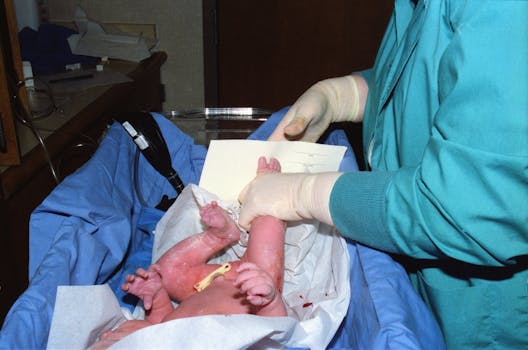
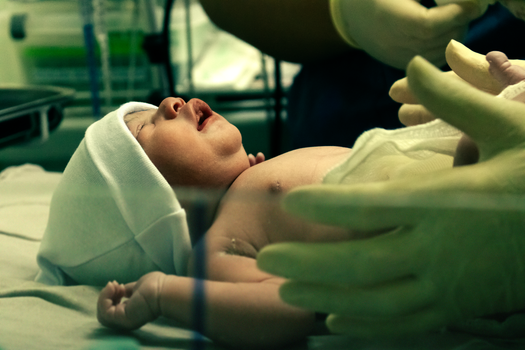
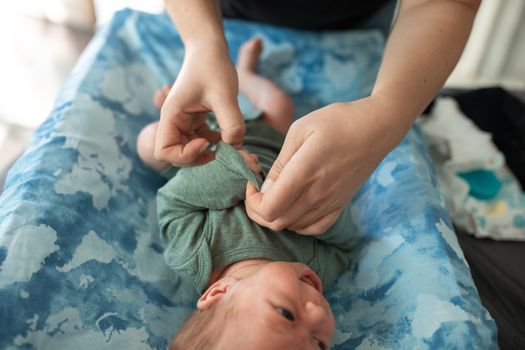
Being a midwife is a truly special job where you help women and families throughout pregnancy, childbirth, and the first few weeks after the baby is born. You're there to offer support, care, and advice every step of the way. This means checking on the mum and baby's health, helping to prepare for birth, and teaching new parents how to care for their newborn. Midwives work in lots of different places, like hospitals on maternity wards, in birth centres, or even in people's homes. You might help deliver babies, or you might spend more time providing antenatal (before birth) and postnatal (after birth) care. It's a really rewarding career where you play a vital role in bringing new life into the world and supporting families through a very important time. You need to be caring, patient, a good communicator, and able to stay calm under pressure. You also need to be a good problem-solver and able to work well in a team with doctors, nurses, and other healthcare professionals.

Midwife

Flag Media

Please select a reason for flagging this content.

📊 Statistics

Starting Salary

Newly qualified midwives in the NHS usually start on around 28,407 pounds per year (Band 5).

Experienced Salary

With experience, midwives can earn between 35,392 pounds and 42,618 pounds per year (Band 6). Senior or specialist roles can go even higher.

Workforce Numbers

There are over 25,000 registered midwives working in the UK, mostly within the NHS.

🚀 Careers in this path

Flag Media

Please select a reason for flagging this content.

Neonatal Nurse

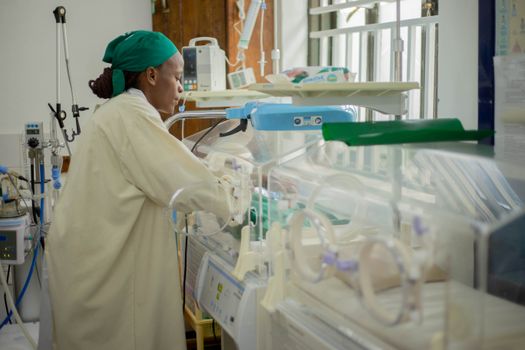
A nurse who specialises in looking after newborn babies who are poorly or have been born early. They work in a special unit in the hospital and help babies get strong and healthy enough to go home.

Flag Media

Please select a reason for flagging this content.

Health Visitor

A nurse who works in the community, visiting families with young children at home. They give advice and support on everything from feeding and sleeping to child development, helping make sure children are growing up healthy and happy.

Flag Media

Please select a reason for flagging this content.

Sonographer

A healthcare professional who uses a special machine to take pictures (ultrasounds) of babies inside their mother's tummy. They help check how the baby is growing and developing, and can often be the first person to show parents their baby's picture.

Build Your Foundations

Excel in Science Subjects

Focus on subjects like Biology and Chemistry at school, as these are super important for understanding how the body works.

To become a midwife, you'll need a strong understanding of human biology and sometimes chemistry. Aim to do well in these subjects at GCSE and then consider taking them at A-level. Maths and English are also really important, as you'll need to calculate doses of medicine and write clear notes.

Gain Work Experience

Try to get some experience in a caring environment, like volunteering at a hospital, care home, or even a nursery.

Work experience shows universities you're committed and understand what working with people is like. Even if it's not directly in a maternity ward, any role where you're helping and communicating with people is valuable. This could be volunteering at a local charity, helping out at a school, or assisting in a care home. It helps you develop important 'people skills'.

Research Universities and Courses

Look into which universities offer Midwifery degrees and what their entry requirements are.

Midwifery is a degree-level profession in the UK. You'll need to complete a university degree in Midwifery (usually 3 years). Start looking at different university websites to see what A-level grades or equivalent qualifications they ask for, and what their courses involve. You might find some offer open days which are great for getting a feel for the university.

University and Training

Apply for a Midwifery Degree

After your A-levels, apply to universities for a Bachelor of Science (BSc) in Midwifery.

You'll typically apply through UCAS (Universities and Colleges Admissions Service). Make sure your personal statement highlights your passion for midwifery, your relevant experiences, and why you believe you'd be a great midwife. Universities are looking for caring, compassionate, and resilient individuals who can handle demanding situations.

Complete Your Midwifery Degree

Study hard at university, learning about pregnancy, birth, and how to care for mums and babies.

Your degree will involve a mix of classroom learning and practical placements in hospitals and the community. You'll learn about anatomy, physiology, pharmacology, and mental health related to pregnancy. You'll also spend a lot of time working alongside experienced midwives, gaining hands-on experience in antenatal clinics, delivery suites, and postnatal wards.

Gain Professional Registration

Once you've finished your degree, you'll need to register with the Nursing and Midwifery Council (NMC) to practise legally.

The NMC is the regulatory body for nurses and midwives in the UK. Completing an approved midwifery degree means you're eligible to apply for registration. This is a crucial step that allows you to legally work as a qualified midwife in the UK. You'll need to renew your registration periodically to ensure you're keeping your skills and knowledge up to date.

Start Your Career

Apply for Midwife Positions

Look for jobs in hospitals or community health trusts as a newly qualified midwife.

Many newly qualified midwives start their careers in rotational posts within hospitals, working across different areas like labour ward, antenatal ward, and postnatal ward. This helps you gain a wide range of experience. Keep an eye on NHS Jobs and other healthcare recruitment websites for vacancies.

Continue Learning and Developing

Midwifery is always changing, so keep learning new skills and staying up-to-date with best practices.

Even after qualifying, midwives undertake continuous professional development (CPD). This involves attending courses, workshops, and training sessions to keep your knowledge and skills sharp. You might specialise in areas like public health, neonatal care, or ultrasound. Many midwives also choose to pursue postgraduate qualifications like a Master's degree.

Consider Specialising

After gaining experience, you might choose to focus on a particular area of midwifery that interests you most.

With experience, you could specialise in areas like becoming a specialist bereavement midwife, a public health midwife, a sonographer, or even move into management or education. The field of midwifery offers many different paths for career progression and specialisation, allowing you to develop your expertise in areas you're passionate about.

🎬 Useful Videos

🎯 View Apprenticeships

Explore relevant apprenticeships that can help you kickstart your career in Midwife. Apprenticeships offer hands-on experience and training while earning a wage.

Career Progressions

This page showcases various career options and the pathways to reach them. Each career listed here shares transferable skills and knowledge, making it easier for individuals to transition between them.

Your current career is highlighted to help you see how it fits into the broader landscape of potential career choices. By clicking on any career, you can learn more about it, including the training and education required to pursue it.

Remember, progressing in your career often involves further learning and training. This page provides insights into future career options as well as those that can lead up to your current one.

These career progression decisions are informed by comparing the skills and knowledge needed for different occupations, along with data on how people move between them. Explore the possibilities and discover the exciting journey ahead in your career!

Sample Qualifications

How to become

You can get into this job through:

  • a university degree
  • an apprenticeship
  • a specialist course run by a professional body

University

You can do a degree in midwifery as long as it's approved by the Nursing and Midwifery Council.

If you already have a degree that is not in midwifery, you can do a postgraduate midwifery course to become a midwife.

You may be able to get additional student financial support through the NHS Learning Support Fund.

Entry requirements

You'll usually need:

  • 5 GCSEs at grades 9 to 4 (A* to C), or equivalent, including English, maths and science
  • 2 or 3 A levels, including a science, or a level 3 diploma or access to higher education in health, science or nursing
  • a degree in a relevant subject for postgraduate study

More Information

Apprenticeship

You can do a Midwife Level 6 Degree Apprenticeship.

This typically takes 48 months to complete and includes learning on the job and studying at an approved university.

Entry requirements

You'll usually need:

  • 4 or 5 GCSEs at grades 9 to 4 (A* to C) and A levels, or equivalent, for a degree apprenticeship

More Information

Volunteering

You'll find it helpful to get some volunteering experience in healthcare before you apply for a course.

You can also find volunteering opportunities through The National Council for Voluntary Organisations and Do IT.

Other Routes

If you're a registered adult nurse you may be able to take a conversion course to become a midwife. These usually take between 18 and 24 months.

More Information

Registration

Career tips

When applying for degree courses and apprenticeships, you'll be expected to show an understanding of how the NHS values apply in your work.

Further information

You can find more on how to become a midwife from the Royal College of Midwives and Health Careers.

Interested in More Career Paths?

Explore other careers or use our AI to discover personalised paths based on your interests.

Stay connected

Join our newsletter to stay up to date on features and releases

Address
Developing Experts Limited
Exchange Street Buildings
35-37 Exchange Street
Norwich
NR2 1DP
UK

Phone
01603 273515

Email
[email protected]

Copyright 2026 Developing Experts, All rights reserved.
