

Creating Career Path...

Finding Further Careers...

Veterinarian

View this career for different education levels:

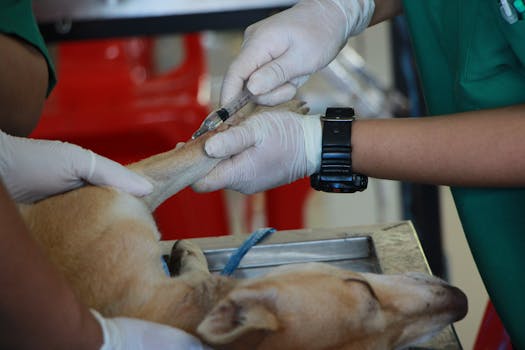
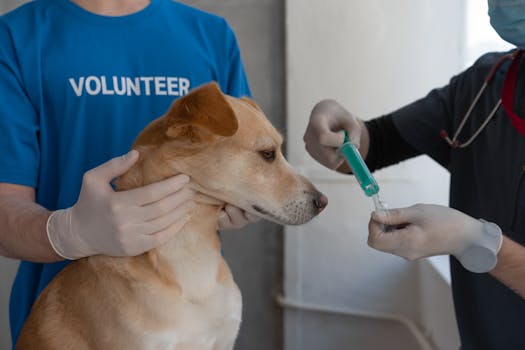
Being a veterinarian in the UK means you're a doctor for animals! You'd be responsible for making sure pets like cats, dogs, rabbits, and sometimes larger farm animals like cows and sheep, are healthy and happy. This job involves a lot of different tasks, from giving vaccinations and checking for illnesses, to performing operations and helping animals recover from injuries. You would spend your days diagnosing problems, prescribing medicines, and offering advice to animal owners on how to care for their pets. It's a really rewarding career where you get to help animals every day, but it also requires a lot of hard work, studying, and compassion. You'll need to be good at science, especially biology, and have a strong stomach because you'll see all sorts of things! Vets work in clinics, animal hospitals, and sometimes travel to farms. It's not just about treating sick animals; it's also about preventing diseases and making sure animals live their best lives.

Veterinarian

Flag Media

Please select a reason for flagging this content.

📊 Statistics

Starting Salary

A newly qualified vet in the UK can expect to earn around 28,000 to 35,000 pounds per year.

Experienced Salary

With a few years experience, a vet's salary can rise to 45,000 to 70,000 pounds. Vets in specialist roles or management positions might earn even more.

UK Registered Vets

There are over 25,000 registered veterinary surgeons in the UK, working in various practices and fields.

🚀 Careers in this path

Flag Media

Please select a reason for flagging this content.

Veterinary Nurse

If you love helping animals and want to work closely with them, a Veterinary Nurse helps vets look after sick or injured pets, gives medicines, and assists during operations. It's like being a nurse for animals!

Flag Media

Please select a reason for flagging this content.

Animal Behaviourist

Do you ever wonder why animals act the way they do? An Animal Behaviourist helps owners understand their pets' behaviour and trains them to be well behaved. This could be for dogs, cats, or even horses.

Flag Media

Please select a reason for flagging this content.

Zoo Keeper

If you dream of working with a wider variety of animals, a Zoo Keeper looks after animals in a zoo. This involves feeding them, cleaning their enclosures, and making sure they are healthy and happy. You get to learn about lots of different species!

Build a Strong Foundation

Excel in Science Subjects

Focus on doing really well in subjects like Biology, Chemistry, and Maths at school. These subjects are super important for understanding how animals' bodies work and for the advanced studies you'll need later.

At school, aim for strong grades in science-based subjects, especially Biology and Chemistry. Mathematics is also crucial for problem-solving and understanding drug dosages later on. These subjects form the bedrock of veterinary science and will be essential for university applications. Consider taking GCSEs and then A-Levels in these subjects.

Gain Animal Experience

Volunteer or get work experience with animals as much as you can. This could be at a local vet practice, a farm, an animal shelter, or even a riding stable. It shows you're serious and gives you a real feel for the job.

University courses for veterinary medicine are highly competitive, and having relevant work experience is a must. Seek out opportunities to volunteer or do work experience at places like veterinary clinics, farms, animal sanctuaries, zoos, or stables. This demonstrates your commitment and provides valuable insights into animal care and veterinary practice. Keep a diary of your experiences and what you learned.

Develop Communication Skills

Being a vet isn't just about animals; you'll talk to their owners a lot! Practice explaining things clearly and listening carefully. Joining school clubs like debate or drama can really help.

Vets need to communicate effectively with animal owners, often in stressful situations, as well as with colleagues. Developing strong verbal and written communication skills is vital. Participate in activities that build these skills, such as public speaking, school presentations, or volunteering roles that involve interacting with people. Being able to explain complex medical information in an easy-to-understand way is a key part of the job.

University Education

Apply for a Veterinary Medicine Degree

Once you've got your strong A-Level grades, apply to universities that offer a Bachelor of Veterinary Medicine (BVetMed) or similar degree. This is a very challenging but rewarding course.

After completing your A-Levels (usually in Biology, Chemistry, and sometimes Maths or Physics), you'll need to apply for a recognised veterinary degree programme. These are typically 5 or 6-year courses leading to a Bachelor of Veterinary Medicine (BVetMed), VetMB, or BVM&S qualification. Research different universities' entry requirements and course structures, as some may prefer specific A-Level subjects or have additional admission tests.

Complete Your Degree

Study hard at university! You'll learn about animal anatomy, diseases, surgery, and how to look after different types of animals. There will be lots of practical work too.

The university degree involves a comprehensive curriculum covering anatomy, physiology, pharmacology, pathology, clinical skills, and animal welfare across various species (e.g., small animals, farm animals, horses, exotic animals). You'll spend a significant amount of time in lectures, labs, and gaining practical experience through placements, often called 'extramural studies' (EMS), which are a mandatory part of the course.

Undertake Extramural Studies (EMS)

During your university holidays, you'll do placements called EMS. This means spending time in vet practices and on farms, getting hands-on experience and seeing what real vet life is like.

Extramural studies are practical placements that you complete during your university holidays. These are crucial for gaining real-world experience in veterinary practice, animal husbandry, and understanding the practicalities of the profession. You'll spend time in various settings, including veterinary clinics, farms, and abattoirs, observing and participating in routine procedures, diagnoses, and treatments. These experiences are invaluable for developing your practical skills and consolidating your theoretical knowledge.

Start Your Career

Register with RCVS

Once you graduate, you need to register with the Royal College of Veterinary Surgeons (RCVS). This is like getting your official license to practice as a vet in the UK.

Upon successful completion of your veterinary degree, you will need to register with the Royal College of Veterinary Surgeons (RCVS). This is the regulatory body for veterinary surgeons in the UK, and registration is a legal requirement to practice. The RCVS ensures that vets meet high standards of education, professional conduct, and animal welfare. Registration involves an application process and adherence to their professional guidelines.

Begin as a Junior Vet

Most new vets start as a junior vet in a practice, often under the guidance of more experienced vets. This is where you put all your learning into action and continue to grow your skills.

Your first role after graduation will typically be as a junior or 'new graduate' veterinary surgeon in a practice. Many practices offer structured new graduate programmes or mentorship schemes to support you during your first few years. This period is vital for gaining practical experience, refining your diagnostic and surgical skills, and learning how to manage cases independently. You'll work closely with senior vets, gradually taking on more responsibility.

Consider Specialising

After a few years, you might find you love working with a particular type of animal, like cats, horses, or farm animals, or a specific area like surgery. You can then choose to do extra training to become a specialist!

As you gain experience, you might discover a passion for a particular area of veterinary medicine, such as small animal surgery, equine medicine, farm animal health, exotic animal care, or dermatology. You can pursue further qualifications, such as certificates or diplomas, to specialise in these areas. This often involves additional study, examinations, and supervised practice, allowing you to become an expert in your chosen field and potentially open doors to advanced roles or research.

🎬 Useful Videos

🎯 View Apprenticeships

Explore relevant apprenticeships that can help you kickstart your career in Veterinarian. Apprenticeships offer hands-on experience and training while earning a wage.

Career Progressions

No career progressions found for Veterinarian

Sample Qualifications

A 'Veterinarian' is commonly and officially referred to as a 'Vet' in UK English, serving the same role of providing medical care to animals.

How to become

You can get into this job through a university course.

University

You'll need to complete a veterinary degree approved by the Royal College of Veterinary Surgeons (RCVS).

Entry to courses is highly competitive. For this reason the selection process is very thorough. You can expect to be interviewed and to take screening tests at most universities. 

You'll need to show:

  • you are able to meet the academic requirements of the course
  • you understand what the role involves
  • you are highly motivated
  • you have done some relevant work experience

Many universities offer a foundation year, which prepares you for the veterinary degree course.

You can find out more about studying veterinary science from UCAS.

Full-time veterinary degrees usually take 5 to 6 years.

If you already have a degree in a related subject, for example, biomedical sciences, you may be able to take a 4-year graduate entry veterinary degree course.

You can also apply to join the Army Medical Service while completing your degree at university. On selection, you would receive further training to become a veterinary officer in the army.

Entry requirements

You'll usually need:

  • 5 GCSEs at grades 9 to 4 (A* to C), or equivalent, including English, maths and science
  • 3 A levels, or equivalent, including biology and chemistry

More Information

Volunteering

You'll need to get experience of working with animals, which will help when applying for courses.

You can contact:

  • veterinary practices
  • local animal welfare centres
  • animal charities, like the PDSA or RSPCA
  • local dairy and livestock farms
  • riding stables

More Information

Registration

Career tips

You can explore veterinary science through virtual work experience with Futurelearn.

Professional and industry bodies

You could join the British Veterinary Association and British Small Animals Veterinary Association for professional development and networking opportunities.

You could also join the British Equine Veterinary Association if you work with horses.

Further information

You can find out more about becoming a vet from the Royal College of Veterinary Surgeons and British Veterinary Association.

Interested in More Career Paths?

Explore other careers or use our AI to discover personalised paths based on your interests.

Stay connected

Join our newsletter to stay up to date on features and releases

Address
Developing Experts Limited
Exchange Street Buildings
35-37 Exchange Street
Norwich
NR2 1DP
UK

Phone
01603 273515

Email
[email protected]

Copyright 2026 Developing Experts, All rights reserved.
