




Creating Career Path...

Finding Further Careers...

Railway Engineer

View this career for different education levels:

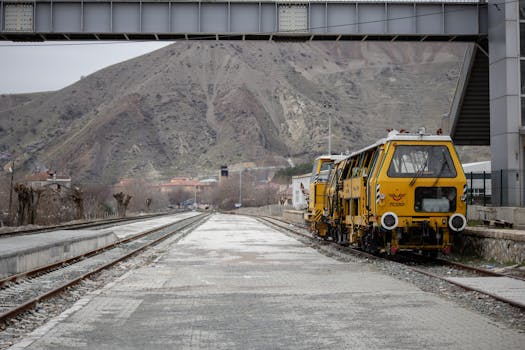
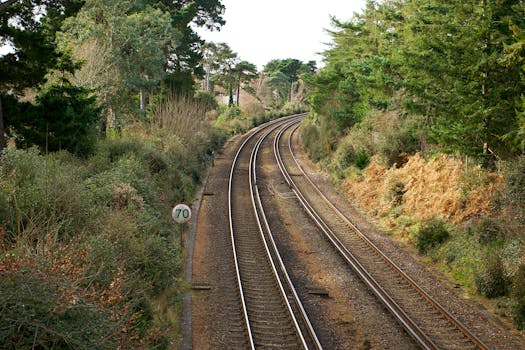
Imagine a world where trains safely carry people and goods across the country every day. That's where a Railway Engineer comes in They are like the super-smart builders and fixers of everything to do with trains and tracks. They design how new railway lines will be laid out, making sure they are straight and strong enough for fast trains. They also work on the signals that tell trains when to stop and go, and the special electrical systems that power some trains. Its a very important job because they help make sure trains run smoothly and safely, helping millions of people get to where they need to be. Railway Engineers also spend time thinking about how to make things better. They might look at old railway bridges and figure out how to make them stronger, or design new stations that are easier for everyone to use. Sometimes they work on special projects, like making trains go even faster or building new high-speed lines. They use their clever brains to solve problems and make sure our railways are modern and reliable. It's a job where you get to see your designs become real, big things that help everyone.

Railway Engineer

Flag Media

Please select a reason for flagging this content.

📊 Statistics

Starting Salary

A new Railway Engineer in the UK might earn around 25000 to 30000 pounds a year.

Experienced Salary

With more experience, a Railway Engineer can earn between 35000 and 60000 pounds a year, and even more for very senior roles.

Job Openings

There are usually hundreds of job openings for Railway Engineers and related roles across the UK each year, as new trains and tracks are always being built or fixed.

🚀 Careers in this path

Flag Media

Please select a reason for flagging this content.

Train Driver

Imagine being the person who drives the big, fast trains! You'd learn all about how trains work and where they need to go, making sure everyone gets to their destination safely. It's a very important job!

Flag Media

Please select a reason for flagging this content.

Track Inspector

You'd be like a detective for the railway tracks. Your job would be to walk along the tracks, looking carefully for anything that might be broken or out of place, to make sure the trains can run smoothly and safely every day.

Flag Media

Please select a reason for flagging this content.

Signal Controller

This is a bit like playing with a giant train set, but for real trains! You'd be in a special room, watching screens and pressing buttons to change the railway signals, telling trains when it's safe to go, stop, or change tracks. It's a job all about helping trains move around properly.

Learning About Trains

Be a Train Spotter

Start by watching trains! Notice how they look, how they move, and what different parts they have. You can visit train stations or watch videos online.

Pay attention to different types of trains, like passenger trains that carry people, and freight trains that carry goods. You might see different colours, shapes, and sizes. Look at the wheels, the carriages, and the engine at the front. Think about how many wheels there are or how long the train is. This helps you start thinking like an engineer, noticing details.

Play with Train Sets

Playing with toy trains and building tracks is a super fun way to understand how trains work and how tracks fit together.

When you build a train set, you're learning about layouts, curves, and making sure the track is smooth so the train doesn't fall off. You can experiment with different bridge designs for your toy trains or try to make the track go up and down. This helps you understand important ideas like design, stability, and problem-solving, which are all part of being a railway engineer.

Read Train Books

There are lots of amazing books about trains, tracks, and the people who build them. Reading can teach you new words and exciting facts.

Look for books that show you how trains are built, what's inside them, or how tracks are laid down. You might learn about famous engineers who designed incredible bridges or tunnels for trains. Reading these books is like getting a secret peek into the world of railway engineering and can spark your imagination about what you could build one day.

Building Strong Foundations

Do Well in Maths and Science

Learning maths helps you understand measurements and shapes, and science helps you understand how things work, like gravity and materials.

In school, paying attention in maths when you're learning about numbers, shapes, and how to measure things is very important. For science, understanding how different materials behave, like why some are strong and some are bendy, or how electricity makes things move, will be super helpful. These subjects are the building blocks for understanding how to design safe and strong railways.

Join a STEM Club

STEM clubs (Science, Technology, Engineering, Maths) are brilliant places to do fun projects and experiments related to building and creating things.

Many schools or local community centres have STEM clubs. Here, you might get to build small models, do experiments that show how bridges work, or even learn some simple computer coding. These activities are hands-on and let you try out being an engineer in a mini way, helping you decide if you really love solving problems and building things.

Visit a Science Museum

Science museums often have cool exhibits about engineering, trains, and how the world works. It's a fun day out and you'll learn loads!

Look for parts of the museum that show how bridges are built, how engines work, or even historical trains. Many museums have interactive displays where you can push buttons, pull levers, or build your own structures. This helps you see real-life examples of the engineering principles you're learning about and can make learning even more exciting.

Future Steps & Training

Explore Apprenticeships

When you're older, you could do an apprenticeship where you learn on the job and go to college at the same time. It's a great way to become an engineer!

Apprenticeships are like getting paid to learn! You would work with experienced railway engineers, learning how to build and maintain tracks, signals, or bridges, and also study for qualifications in engineering. This gives you lots of practical experience and a good understanding of what the job is really like, preparing you for a career in railway engineering.

Go to University

Another path is to go to university to study engineering. You'd learn all the advanced science and maths needed to design big railway projects.

At university, you can study different types of engineering, like Civil Engineering (for building tracks and bridges) or Electrical Engineering (for signals and power). You'll learn from expert professors and work on exciting projects. A university degree can open doors to designing new high-speed rail lines or innovative railway technology, becoming a leader in the field.

Always Keep Learning

Even when you're a grown-up engineer, new things are always being invented. You'll keep learning to build even better and safer railways.

The world of railways is always changing, with new technologies like faster trains, smarter signals, and more eco-friendly materials. As a railway engineer, you'll go on training courses and read up on new developments to make sure your skills are always up to date. This means your job will always be interesting and you'll keep helping to make train travel amazing for everyone.

🎬 Useful Videos

🎯 View Apprenticeships

Explore relevant apprenticeships that can help you kickstart your career in Railway Engineer. Apprenticeships offer hands-on experience and training while earning a wage.

Career Progressions

This page showcases various career options and the pathways to reach them. Each career listed here shares transferable skills and knowledge, making it easier for individuals to transition between them.

Your current career is highlighted to help you see how it fits into the broader landscape of potential career choices. By clicking on any career, you can learn more about it, including the training and education required to pursue it.

Remember, progressing in your career often involves further learning and training. This page provides insights into future career options as well as those that can lead up to your current one.

These career progression decisions are informed by comparing the skills and knowledge needed for different occupations, along with data on how people move between them. Explore the possibilities and discover the exciting journey ahead in your career!

Advanced Careers

Sample Qualifications

A Railway Engineer primarily designs, constructs, and maintains railway infrastructure, including tracks, bridges, and tunnels, which falls directly under the remit of Civil Engineering.

How to become

You can get into this job through:

  • a university course
  • a college course
  • an apprenticeship
  • working towards this role

University

You can do a foundation degree, higher national diploma or degree in civil engineering.

Many universities specialise in particular areas of civil engineering, like:

  • transport engineering
  • environmental engineering
  • coastal and maritime engineering

You can search for accredited courses through the Institution of Civil Engineers. Some courses include a work placement, which can be useful for making industry contacts to help you find work after university.

You can also do further study for a postgraduate master's qualification in civil engineering, if you've got a degree in a related subject like maths, science or geology.

Entry requirements

You'll usually need:

  • 2 or 3 A levels, or equivalent, including maths and a science for a degree
  • a degree in a relevant subject for postgraduate study

More Information

College

You could take a course at college, which might help you to get work as a trainee civil engineer, or to apply for further study at university.

Subjects include:

  • civil engineering
  • maths, physics or geography
  • construction and the built environment

Entry requirements

Entry requirements for these courses vary.

More Information

Apprenticeship

You can apply to do a Civil Engineer Level 6 Degree Apprenticeship with an engineering or construction company.

This takes around 5 years to complete.

Entry requirements

You'll usually need:

  • 4 or 5 GCSEs at grades 9 to 4 (A* to C) and A levels, or equivalent, for a higher or degree apprenticeship

More Information

Work

You could work as a civil engineering technician and study on the job for a degree or apprenticeship.

You'll usually need 5 GCSEs at grades 9 to 4 (A* to C), or equivalent, including English, maths and science. Employers may also look for 1 or 2 A levels, or equivalent qualifications.

More Information

Professional and industry bodies

You can join the Institution of Civil Engineers (ICE) for professional development opportunities and to make industry contacts.

Further information

You can learn more about how to become a civil engineer from the Institution of Civil Engineers (ICE).

Interested in More Career Paths?

Explore other careers or use our AI to discover personalised paths based on your interests.

Stay connected

Join our newsletter to stay up to date on features and releases

Address
Developing Experts Limited
Exchange Street Buildings
35-37 Exchange Street
Norwich
NR2 1DP
UK

Phone
01603 273515

Email
[email protected]

Copyright 2026 Developing Experts, All rights reserved.