




Creating Career Path...

Finding Further Careers...

Industrial Engineer

View this career for different education levels:

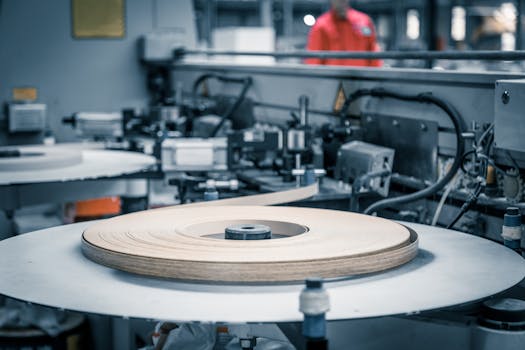
Imagine you have a really big toy factory, and you want to make sure all the toys are made as quickly and efficiently as possible, using the right amount of materials and making sure everything runs smoothly. That is pretty much what an Industrial Engineer does, but for real companies! They look at how things are done in businesses, whether it is making products, providing services, or even just how people work together in an office. Their main goal is to find ways to make things better, faster, safer, and cheaper. Industrial Engineers use a lot of clever thinking and problem-solving skills. They might study a factory production line to see if there is any wasted time or movement, or they might design a new way for customers to get their parcels delivered. They are like detectives for efficiency, always looking for clues to improve processes and systems. This career involves a lot of maths, logic, and working with people to understand how things work and how they can be made even better.

Industrial Engineer

Flag Media

Please select a reason for flagging this content.

📊 Statistics

Average Starting Salary

For new Industrial Engineers in the UK, typical starting salaries can be around 25,000 to 30,000 pounds per year, though this can vary by company and location.

Experienced Salary Range

With a few years of experience, Industrial Engineers in the UK can expect to earn between 35,000 and 60,000 pounds annually. Highly experienced professionals in senior roles might earn even more.

Job Market Growth

The demand for Industrial Engineers in the UK is generally stable, with a consistent need for professionals who can help businesses operate more effectively. There are usually hundreds of open positions advertised across the country at any given time.

🚀 Careers in this path

Flag Media

Please select a reason for flagging this content.

Production Engineer

Imagine you're designing a new toy factory! A Production Engineer figures out the best way to make things, making sure everything runs smoothly and efficiently, like a well-oiled machine, to create products from start to finish.

Flag Media

Please select a reason for flagging this content.

Logistics and Supply Chain Planner

Think about how your favourite crisps get from the factory to your local shop. A Logistics and Supply Chain Planner organises how products are stored, moved, and delivered, making sure they arrive at the right place at the right time, without getting lost!

Flag Media

Please select a reason for flagging this content.

Process Improvement Analyst

Do you like finding quicker and better ways to do things? A Process Improvement Analyst looks at how businesses do their tasks and suggests smart ways to make them faster, easier, or less wasteful, like finding a shortcut in a maze.

Build Your Foundations

Excel in Maths and Science

Focus on your maths and science subjects at school, as they are super important for engineering. These subjects teach you how to think logically and solve problems.

To be an Industrial Engineer, you'll need a strong grasp of maths (like algebra, geometry, and eventually calculus) and sciences (especially physics and possibly chemistry). These subjects help you understand how systems work and how to measure and improve them. Try to get good grades in these areas and participate in any related clubs or activities at school.

Explore Problem-Solving

Look for opportunities to solve problems, big or small! This could be designing a better way to organise your school bag or helping your family plan a trip more efficiently.

Industrial engineering is all about finding better ways to do things. Start by looking around you and identifying areas that could be improved. Maybe your local shop could arrange their items more clearly, or your school lunch queue could be faster. Thinking about these everyday problems and how you might solve them is a great way to start developing an engineer's mindset.

Get Creative with Tech

Learn about different technologies and how they can be used. This could be coding, using design software, or even just understanding how apps work to make life easier.

Many Industrial Engineers use technology to design systems, analyse data, and create simulations. Getting comfortable with computers, learning basic coding (like Python or Scratch), or even playing around with design software can give you a head start. Understanding how technology can make processes more efficient is a valuable skill for this career.

Secondary School Choices

Choose Relevant GCSEs

When you pick your GCSE subjects, make sure to choose ones that will help you for engineering, like Design & Technology, Computer Science, and of course, Maths and Science.

For GCSEs, definitely keep up with Maths and at least two science subjects (often Physics, Chemistry, and Biology are offered as separate sciences or combined science). Design & Technology, Computer Science, and even subjects like Business Studies can also be really useful as they help you think about systems and efficiency. Aim for strong passes in these subjects.

Consider A-Levels or BTECs

After GCSEs, you'll want to pick A-Levels or a BTEC in subjects that lead to an engineering degree at university.

For A-Levels, the most important subjects are Maths and Physics. Further Maths, Chemistry, and Design & Technology can also be very beneficial. If you prefer a more vocational route, a BTEC National Extended Diploma in Engineering or Applied Science could be an excellent choice, as these courses often include practical elements and are accepted by many universities.

Join STEM Clubs

Get involved in any science, technology, engineering, and maths (STEM) clubs or projects at your school. This is a great way to meet like-minded people and learn more.

Schools often have clubs for robotics, coding, engineering challenges, or science fairs. Participating in these can give you hands-on experience, help you understand real-world applications of your studies, and show universities and future employers your passion for the field. You might even find mentors or make new friends who share your interests.

Higher Education & Experience

Go to University

The most common way to become an Industrial Engineer is by studying for a degree in Industrial Engineering, General Engineering, or a related field at university.

Look for universities that offer Bachelor's degrees (BEng or MEng) in Industrial Engineering, Manufacturing Engineering, Systems Engineering, or a broader Engineering degree with options to specialise. Research different university courses, read prospectuses, and attend open days to find a programme that excites you and has good industry links. Entry requirements will typically be based on your A-Level (or equivalent) grades.

Gain Work Experience

While you're studying, try to get some work experience, like an internship or a summer job, in an engineering or manufacturing company.

Practical experience is incredibly valuable. Many engineering degrees offer 'sandwich year' placements where you work in industry for a year. If your course doesn't, look for summer internships or voluntary work with companies that focus on efficiency, manufacturing, logistics, or operations. This experience will help you understand what the job is really like and build your network.

Join Professional Bodies

Once you're at university or starting your career, consider joining professional organisations like the Institution of Engineering and Technology (IET).

Professional bodies offer great opportunities for networking, mentorship, and continued learning. They often have student memberships that provide access to resources, events, and job boards. Being part of such an institution can help you stay updated with industry trends, gain professional recognition (like Chartership later in your career), and connect with experienced engineers.

🎬 Useful Videos

🎯 View Apprenticeships

Explore relevant apprenticeships that can help you kickstart your career in Industrial Engineer. Apprenticeships offer hands-on experience and training while earning a wage.

Career Progressions

This page showcases various career options and the pathways to reach them. Each career listed here shares transferable skills and knowledge, making it easier for individuals to transition between them.

Your current career is highlighted to help you see how it fits into the broader landscape of potential career choices. By clicking on any career, you can learn more about it, including the training and education required to pursue it.

Remember, progressing in your career often involves further learning and training. This page provides insights into future career options as well as those that can lead up to your current one.

These career progression decisions are informed by comparing the skills and knowledge needed for different occupations, along with data on how people move between them. Explore the possibilities and discover the exciting journey ahead in your career!

Sample Qualifications

Industrial engineers often focus on improving processes and systems, which aligns with the design and development of new products or processes to enhance efficiency and productivity within an organisation.

How to become

You can get into this job through:

  • a university course
  • an apprenticeship
  • applying directly

University

You can take a foundation degree, higher national diploma or degree course. 

Subjects include:

  • engineering product design
  • industrial design
  • computer-aided design engineering
  • engineering design and manufacture
  • materials science
  • maths and physics

Mechanical, electrical and civil engineering qualifications might also be accepted by employers.

Courses accredited by the Institution of Engineering Designers (IED) may help your career development later on.

Entry requirements

You'll usually need:

  • 1 or 2 A levels, or equivalent, for a foundation degree or higher national diploma
  • 2 or 3 A levels, or equivalent, including maths

More Information

Apprenticeship

You might be able to apply for a Product Design and Development Engineer, or Robotics Engineer, Level 6 Degree Apprenticeship.

This can take around 4 and a half years to complete.

Entry requirements

You'll usually need:

  • 4 or 5 GCSEs at grades 9 to 4 (A* to C) and A levels, or equivalent, for a degree apprenticeship

More Information

Direct Application

You could apply directly for design and development engineer roles.

You'll need experience and qualifications in a particular branch of engineering, for example:

  • mechanical
  • aerospace
  • energy
  • automotive
  • manufacturing

More Information

Further information

You can find out more about engineering careers and training from the Institution of Engineering Designers (IED) and Neon.

Interested in More Career Paths?

Explore other careers or use our AI to discover personalised paths based on your interests.

Stay connected

Join our newsletter to stay up to date on features and releases

Address
Developing Experts Limited
Exchange Street Buildings
35-37 Exchange Street
Norwich
NR2 1DP
UK

Phone
01603 273515

Email
[email protected]

Copyright 2026 Developing Experts, All rights reserved.
