




Creating Career Path...

Finding Further Careers...

Industrial Engineer

View this career for different education levels:

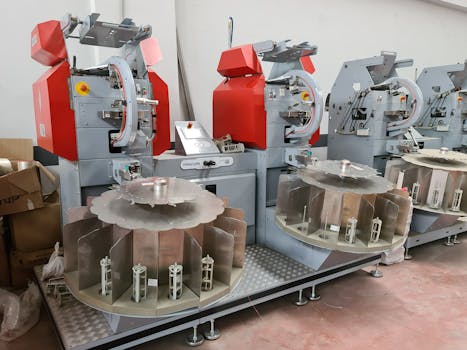
Imagine you are building a toy factory. An Industrial Engineer is like a super-smart planner who helps make sure everything in that factory works super smoothly and quickly, without wasting anything. They look at how things are made, from the very first step to the last, and figure out clever ways to make it even better. This might mean arranging machines in a better order, finding faster ways to move materials, or even making sure workers have the best tools to do their job easily and safely. They use their brains to solve puzzles about how to make things well, whether it's toys, cars, or even delivering parcels. Industrial Engineers dont just work in factories though. They can help any kind of business that wants to be better at what they do. This could be helping hospitals run more smoothly so patients dont wait as long, or helping shops arrange their shelves so customers can find what they need easily. They are like detectives looking for ways to improve how things work, making sure fewer things go wrong and everything runs like a well-oiled machine. It's a job all about making things more efficient, which means getting more done with less effort and less waste.

Industrial Engineer

Flag Media

Please select a reason for flagging this content.

📊 Statistics

Starting Salary

A new Industrial Engineer in the UK can expect to earn around 25,000 to 30,000 pounds a year.

Experienced Salary

With a few years of experience, Industrial Engineers in the UK can earn between 35,000 and 55,000 pounds a year, and very experienced ones even more.

Job Growth

The demand for Industrial Engineers in the UK is quite steady, as businesses always want to find better ways to do things.

🚀 Careers in this path

Flag Media

Please select a reason for flagging this content.

Factory Process Helper

Imagine a big toy factory. A Factory Process Helper helps make sure all the robots and machines are lined up perfectly to build the toys as quickly and cleverly as possible. They think about the best order for everything to happen.

Flag Media

Please select a reason for flagging this content.

Toy Assembly Line Designer

If you love building LEGO, this is like building a super-duper LEGO kit for a whole factory! A Toy Assembly Line Designer figures out the best way to arrange all the steps, like adding wheels or painting, so that toys are made easily and without any wobbles.

Flag Media

Please select a reason for flagging this content.

Games Room Organiser

Think about your playroom or school hall. A Games Room Organiser helps decide the best place for all the games and toys, so everyone can find what they need quickly and play without bumping into each other. They make sure everything runs smoothly and is fair!

Learning About How Things Work

Be Curious About Everything

Industrial Engineers love to ask 'why' and 'how'. Start by observing how things work around you.

Look at how your toys are organised, or how your parents prepare dinner. Think about if there's a quicker or tidier way to do it. Could you make your bedroom tidier faster? What about making sure all the LEGO bricks are in the right box so you can find them easily next time? This kind of thinking helps you see ways to make things better.

Play with Building Blocks and Puzzles

Building things and solving puzzles helps you understand how different parts fit together.

Playing with LEGO, K'nex, or even jigsaw puzzles is a great way to start. It teaches you about putting things in order, following instructions, and how different pieces contribute to a whole picture. This skill is really important for an Industrial Engineer who needs to see how all the parts of a big system work together.

Visit a Factory or Workshop

Seeing how things are made in real life can be very exciting and educational.

Ask your grown-ups if you can visit a place where things are made, like a local bakery, a car garage, or even a craft workshop. Watch how people work and how the machines help them. Think about what order things happen in. Are there any steps that seem tricky or slow? This gives you a peek into the world an Industrial Engineer works in.

Developing Problem-Solving Skills

Learn Maths and Science

Maths helps you measure and count, and science helps you understand how things behave.

At school, pay special attention in your maths lessons when you learn about numbers, shapes, and patterns. In science, learn about how different materials work and why things move the way they do. These subjects give you the tools to understand problems and find solutions, just like a detective uses clues to solve a mystery.

Practice Being Organised

Keeping your own things tidy and organised is a great skill for an Industrial Engineer.

Try to keep your school bag, desk, and room tidy. Think about the best place for each item so you can find it quickly when you need it. An Industrial Engineer organises big systems, so being good at organising your own smaller world is a fantastic start. It helps you see how making things neat and logical saves time and effort.

Work on Team Projects

Industrial Engineers often work with other people to solve big problems.

When you have group projects at school, try to work well with your friends. Listen to their ideas, share your own, and help each other. Learning to communicate and cooperate is very important because an Industrial Engineer doesn't usually work alone; they work with many people to make things better.

Exploring Engineering Further

Read Books About Engineering

There are lots of fun books that can show you what engineers do.

Look for books in your school library or a bookshop that talk about how buildings are made, how cars work, or how robots are put together. These books can spark your imagination and show you all the exciting things engineers create and improve, helping you decide if this is the right path for you.

Attend Science Fairs or Workshops

These events are a brilliant way to see science and engineering in action.

Ask your teachers or grown-ups if there are any science fairs, engineering workshops, or 'maker' events nearby. You might get to build a simple robot, learn about circuits, or see amazing experiments. These hands-on experiences are really fun and can show you what it's like to think and act like an engineer.

Talk to an Engineer

If you know someone who is an engineer, ask them about their job!

Do you have an auntie, uncle, or family friend who works as an engineer? Ask them what they do every day, what they like about their job, and what challenges they face. Hearing from a real engineer can give you a fantastic idea of what the job is truly like and inspire you even more.

🎬 Useful Videos

🎯 View Apprenticeships

Explore relevant apprenticeships that can help you kickstart your career in Industrial Engineer. Apprenticeships offer hands-on experience and training while earning a wage.

Career Progressions

This page showcases various career options and the pathways to reach them. Each career listed here shares transferable skills and knowledge, making it easier for individuals to transition between them.

Your current career is highlighted to help you see how it fits into the broader landscape of potential career choices. By clicking on any career, you can learn more about it, including the training and education required to pursue it.

Remember, progressing in your career often involves further learning and training. This page provides insights into future career options as well as those that can lead up to your current one.

These career progression decisions are informed by comparing the skills and knowledge needed for different occupations, along with data on how people move between them. Explore the possibilities and discover the exciting journey ahead in your career!

Sample Qualifications

Industrial engineers often focus on improving processes and systems, which involves designing and developing new methods, workflows, and production systems. This role aligns most closely with the broader 'Design and development engineer' given the options, as industrial engineering encompasses elements of system design and process development.

How to become

You can get into this job through:

  • a university course
  • an apprenticeship
  • applying directly

University

You can take a foundation degree, higher national diploma or degree course. 

Subjects include:

  • engineering product design
  • industrial design
  • computer-aided design engineering
  • engineering design and manufacture
  • materials science
  • maths and physics

Mechanical, electrical and civil engineering qualifications might also be accepted by employers.

Courses accredited by the Institution of Engineering Designers (IED) may help your career development later on.

Entry requirements

You'll usually need:

  • 1 or 2 A levels, or equivalent, for a foundation degree or higher national diploma
  • 2 or 3 A levels, or equivalent, including maths

More Information

Apprenticeship

You might be able to apply for a Product Design and Development Engineer, or Robotics Engineer, Level 6 Degree Apprenticeship.

This can take around 4 and a half years to complete.

Entry requirements

You'll usually need:

  • 4 or 5 GCSEs at grades 9 to 4 (A* to C) and A levels, or equivalent, for a degree apprenticeship

More Information

Direct Application

You could apply directly for design and development engineer roles.

You'll need experience and qualifications in a particular branch of engineering, for example:

  • mechanical
  • aerospace
  • energy
  • automotive
  • manufacturing

More Information

Further information

You can find out more about engineering careers and training from the Institution of Engineering Designers (IED) and Neon.

Interested in More Career Paths?

Explore other careers or use our AI to discover personalised paths based on your interests.

Stay connected

Join our newsletter to stay up to date on features and releases

Address
Developing Experts Limited
Exchange Street Buildings
35-37 Exchange Street
Norwich
NR2 1DP
UK

Phone
01603 273515

Email
[email protected]

Copyright 2026 Developing Experts, All rights reserved.
