




Creating Career Path...

Finding Further Careers...

Scientist

View this career for different education levels:

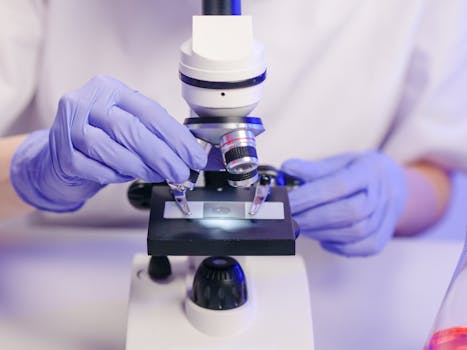
A Scientist in the UK is involved in conducting research, experiments, and analysis to advance knowledge and solve practical problems in a specific field. This often entails designing experimental protocols, collecting and interpreting data, and presenting findings through reports, papers, or presentations. Depending on the specialism, you might work in a laboratory setting, in the field, or using computational models. The work requires a strong analytical mind, meticulous attention to detail, and a commitment to rigorous scientific methodology. Scientists contribute to a wide array of sectors, from developing new medicines and sustainable technologies to understanding climate change and improving food production. It is a career that demands continuous learning and adaptation to new technologies and discoveries, offering intellectual challenge and the potential for significant societal impact.

Scientist

Flag Media

Please select a reason for flagging this content.

📊 Statistics

Average Starting Salary

For an entry-level Scientist in the UK, starting salaries typically range from 24,000 to 30,000 pounds per year. With experience, this can rise significantly.

Experienced Salary Range

Experienced Scientists, particularly those in senior or principal roles, can earn between 40,000 and 70,000 pounds annually. Highly specialised fields or leadership positions might see salaries exceeding 80,000 pounds.

Job Market Overview

The UK's science sector is robust, with significant demand in areas like pharmaceuticals, biotechnology, environmental science, and data science. While exact real-time numbers fluctuate, there are consistently thousands of active job postings for scientists across various specialisms at any given time, indicating a healthy and diverse job market.

🚀 Careers in this path

Flag Media

Please select a reason for flagging this content.

Research Assistant Biomedical Sciences

Work in a university or pharmaceutical company laboratory, supporting senior scientists in studies related to human health and disease. You'll gain hands-on experience with lab techniques, data analysis, and report writing, often focusing on a specific area like oncology, neuroscience, or infectious diseases.

Flag Media

Please select a reason for flagging this content.

Environmental Consultant Entry Level

Help organisations assess and manage their impact on the environment. You might conduct site investigations, collect samples, analyse data, and prepare reports on issues like soil contamination, water quality, or air pollution, advising clients on how to comply with UK environmental regulations.

Flag Media

Please select a reason for flagging this content.

Data Scientist Junior

Apply your scientific thinking to large datasets in various industries, from finance to retail or healthcare. You'll use statistical methods and programming skills to identify patterns, make predictions, and extract valuable insights, helping businesses make data-driven decisions.

Foundation and Education

A-Levels or Equivalent

Choose subjects that will build a strong foundation for a science degree at university. Focus on core sciences and mathematics.

To pursue a career as a scientist, you'll typically need strong grades in A-Levels such as Biology, Chemistry, Physics, and Mathematics. Some universities might also accept other related subjects like Computer Science or Further Maths. Check specific university entry requirements for the science degree you are interested in, as these can vary significantly. Aim for top grades to increase your chances of securing a place at a reputable institution.

Undergraduate Degree

Obtain a Bachelor's degree (BSc) in a relevant scientific discipline. This is a critical step for developing core scientific knowledge and laboratory skills.

Enroll in a three or four-year BSc programme in a specific scientific field such as Biology, Chemistry, Physics, Biochemistry, Biomedical Science, Environmental Science, or a related discipline. Look for courses that offer practical laboratory experience, research projects, and opportunities for industrial placements. A strong academic record at this stage is crucial, especially if you plan to pursue postgraduate studies.

Gain Research Experience

Seek opportunities to get hands-on experience in a research setting, which is invaluable for a scientific career.

During your undergraduate degree, look for summer research internships, industrial placements, or volunteer opportunities in university labs, research institutes, or companies. This experience will help you understand the day-to-day life of a scientist, develop practical laboratory techniques, learn to analyse data, and build a network within the scientific community. These experiences are highly valued by future employers and postgraduate admissions committees.

Advanced Specialisation

Postgraduate Degree (MSc/MRes)

Consider a Master's degree to deepen your knowledge and specialise in a particular area of science, enhancing your career prospects.

A one-year Master's degree (MSc or MRes) can be beneficial for specialising in a particular field, gaining advanced research skills, and improving your employability. An MRes (Master of Research) often has a stronger research project component, which can be particularly useful if you're considering a PhD. Research the different programmes available and choose one that aligns with your specific scientific interests and career goals.

Doctorate (PhD)

For many research-focused scientist roles, a PhD is often a prerequisite. This involves conducting original research over several years.

A PhD is a doctoral degree that typically takes three to four years to complete in the UK. It involves undertaking a substantial original research project under supervision, culminating in a thesis and viva voce examination. A PhD is essential for most academic research positions, senior roles in industrial R&D, and some specialized government science roles. It demonstrates advanced analytical thinking, problem-solving skills, and the ability to conduct independent research. Look for funded PhD opportunities, which often come with a stipend.

Postdoctoral Research

After your PhD, gaining postdoctoral experience is a common path to further develop research independence and leadership skills.

A postdoctoral research position, often referred to as a 'postdoc', is a temporary research appointment typically lasting between one and five years. It allows you to lead your own projects, write grant applications, supervise junior researchers, and publish your findings in scientific journals. This stage is crucial for building your publication record, expanding your network, and demonstrating your capability to conduct independent, high-quality research, which is vital for securing more permanent scientific roles.

Career Development and Impact

Publish and Present Research

Disseminate your findings through peer-reviewed publications and presentations at conferences to establish your expertise.

Publishing your research in reputable scientific journals is fundamental to a scientific career. It validates your work, contributes to the collective body of scientific knowledge, and enhances your professional reputation. Presenting your work at national and international conferences allows you to share your findings, receive feedback, network with peers, and stay updated on the latest developments in your field. A strong publication record is key for career progression in academia and industry.

Network and Collaborate

Build a strong professional network and seek collaborative opportunities to broaden your scientific horizons and impact.

Attending conferences, workshops, and seminars provides excellent opportunities to meet other scientists, potential collaborators, and mentors. Building a robust professional network can lead to new research ideas, funding opportunities, and career advancements. Collaborative projects are increasingly common in science, allowing you to combine expertise with others to tackle more complex research questions and achieve greater impact.

Continuous Learning and Specialisation

Stay current with scientific advancements and consider further specialisation or interdisciplinary training.

The scientific landscape is constantly evolving. Commit to continuous professional development through reading scientific literature, attending advanced training courses, and learning new techniques or software. You might also consider specialising further in a niche area or developing interdisciplinary skills, such as bioinformatics for a biologist or materials science for a chemist. This ongoing learning ensures your skills remain relevant and competitive in the job market, opening doors to new research avenues and leadership roles.

🎬 Useful Videos

🎯 View Apprenticeships

Explore relevant apprenticeships that can help you kickstart your career in Scientist. Apprenticeships offer hands-on experience and training while earning a wage.

Career Progressions

This page showcases various career options and the pathways to reach them. Each career listed here shares transferable skills and knowledge, making it easier for individuals to transition between them.

Your current career is highlighted to help you see how it fits into the broader landscape of potential career choices. By clicking on any career, you can learn more about it, including the training and education required to pursue it.

Remember, progressing in your career often involves further learning and training. This page provides insights into future career options as well as those that can lead up to your current one.

These career progression decisions are informed by comparing the skills and knowledge needed for different occupations, along with data on how people move between them. Explore the possibilities and discover the exciting journey ahead in your career!

Sample Qualifications

A 'Scientist' is a broad term for someone conducting scientific research. 'Research scientist' is the most encompassing and direct match, as it explicitly describes the primary function of a scientist across various disciplines without narrowing it down to a specific field like clinical, data, or consumer science, or a particular scientific role like a biochemist or meteorologist.

How to become

You can get into this job through:

  • a university course
  • an apprenticeship
  • working towards this role

University

You usually need a first or 2:1 (upper second class) degree in a science subject to become a research scientist. Most research scientists continue to study for a postgraduate qualification like a PhD.

You could study on an integrated postgraduate master's course. These courses include independent research and are designed to lead directly on to a PhD.

Entry requirements

You'll usually need:

  • 2 or 3 A levels, or equivalent, including a science, for a degree
  • a degree in a relevant subject for postgraduate study

More Information

Apprenticeship

You could apply to do a degree apprenticeship if you want to work in a particular field of scientific research.

Apprenticeships include:

  • Scientist Level 6
  • Biomedical Scientist Level 6
  • Nuclear Scientist Level 6
  • Materials Science Technologist Level 6
  • Clinical Scientist Level 7

You could also do a Research Scientist Level 7 Apprenticeship, which is equivalent to postgraduate study.

These apprenticeships can take between 3 and 5 years to complete.

Entry requirements

To get onto an apprenticeship, you'll find it useful to have:

  • 4 or 5 GCSEs at grades 9 to 4 (A* to C) and A levels, or equivalent, for a degree apprenticeship

More Information

Work

It may be possible to start as a research assistant or graduate industrial scientist. You would usually need to study part time for a PhD while you work.

UK Research and Innovation and industrial companies sometimes offer studentships. This would give you the opportunity to do a PhD while getting practical research experience.

More Information

Career tips

It may improve your chances of finding work if you've got work experience in a research department, or your degree included a placement in a research environment.

As a graduate, you could look for postgraduate training opportunities offered through Knowledge Transfer Partnerships (KTP). In a KTP you would get the opportunity to run a research project together with an organisation and a university or research body.

Further information

You can get advice about research careers from the Science Council and professional bodies for particular scientific fields, such as:

Interested in More Career Paths?

Explore other careers or use our AI to discover personalised paths based on your interests.

Stay connected

Join our newsletter to stay up to date on features and releases

Address
Developing Experts Limited
Exchange Street Buildings
35-37 Exchange Street
Norwich
NR2 1DP
UK

Phone
01603 273515

Email
[email protected]

Copyright 2026 Developing Experts, All rights reserved.
