


Creating Career Path...

Finding Further Careers...

Scientist

View this career for different education levels:

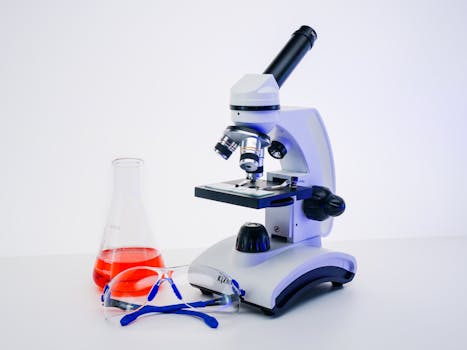
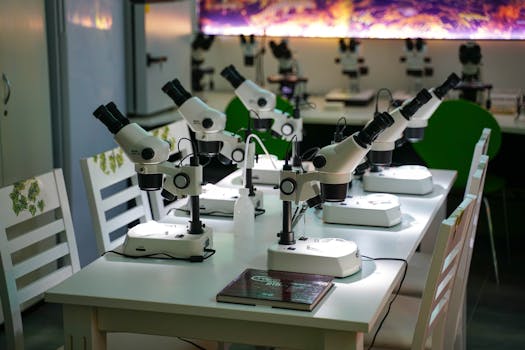
Being a scientist means you get to explore the world around us and try to understand how things work. You might spend your days in a lab, wearing a white coat and safety goggles, conducting experiments. This could involve looking at tiny cells under a microscope, mixing chemicals to see what happens, or using powerful computers to analyse data. Scientists ask lots of questions and then design ways to find the answers. They could be working on finding cures for diseases, developing new eco-friendly materials, understanding space, or even figuring out how to make our food taste better and last longer. It is a job that requires a lot of curiosity, careful planning, and patience, because not every experiment works the first time! There are many different types of scientists. Some are biologists who study living things, from animals to plants and even bacteria. Others are chemists who investigate materials and their properties, or physicists who explore energy, forces, and the structure of the universe. Whatever their specialisation, scientists are always trying to discover new knowledge and use it to solve problems, invent new things, or simply help us understand our world better. It is a really exciting career if you love to learn, explore, and have a natural curiosity about how everything fits together.

Scientist

Flag Media

Please select a reason for flagging this content.

📊 Statistics

Average Starting Salary

For a graduate scientist in the UK, you might expect to start on a salary of around 25,000 to 30,000 pounds per year, depending on the field and location.

Experienced Scientist Salary

With a few years of experience, scientists in the UK can earn between 35,000 and 50,000 pounds. Highly experienced or specialised scientists, like those in senior research roles, can earn 60,000 pounds or more annually.

Job Outlook

The science and research sector in the UK is quite broad, offering many opportunities. While specific numbers vary by specialism (like biology, chemistry, physics), there's a steady demand for skilled scientists across various industries, from healthcare to technology.

🚀 Careers in this path

Flag Media

Please select a reason for flagging this content.

Biomedical Scientist

This scientist works in hospitals and labs, using microscopes and tests to understand diseases and help doctors diagnose patients. You'd be like a detective, but for medical mysteries!

Flag Media

Please select a reason for flagging this content.

Environmental Scientist

An environmental scientist studies the Earth and how living things interact with it. They might work to protect animals, clean up pollution, or find ways to make our planet healthier for everyone.

Flag Media

Please select a reason for flagging this content.

Food Scientist

This scientist helps make our food safe and tasty! They might invent new snacks, improve recipes, or figure out how to keep food fresh for longer, ensuring what we eat is good for us.

Build a Strong Foundation

Ace Your Science and Maths

Focus on your science subjects (like Biology, Chemistry, Physics) and Maths in school. These subjects are super important for understanding how the world works.

Doing well in these subjects now will make it much easier when you get to college or university. Try to get good grades, and if you find something tricky, ask your teachers for help. You could also read extra books or watch documentaries about science topics you find interesting.

Get Curious with Experiments

Try doing simple science experiments at home or join a school science club. This is a fun way to learn how to investigate and discover things.

There are lots of safe and easy experiments you can do, like making a volcano with baking soda and vinegar, or growing crystals. Science clubs often do bigger, more exciting projects and you can learn how to use different equipment. It's all about trying things out and seeing what happens!

Explore Different Science Fields

Science is a huge area! Learn about different types, like biology (studying living things), chemistry (how things are made), or physics (how energy and forces work).

Watch science documentaries, read books, or visit science museums to see what excites you most. Do you love animals and plants? Maybe biology is for you! Are you fascinated by explosions and reactions? Chemistry might be your thing! Understanding the different fields helps you think about what kind of scientist you'd like to be.

Further Your Education

Choose A-Levels or Equivalent

When you're older, pick A-levels or other qualifications that include science subjects, like Biology, Chemistry, Physics, or Maths. These are usually needed for university.

Most universities will want you to have at least two science A-levels (or equivalent qualifications like BTECs) to study a science degree. Maths is also highly recommended. Talk to your teachers and careers advisor about the best choices for the type of science you're interested in.

Go to University

Study for a university degree (like a Bachelor's degree) in a science subject that you love, such as Chemistry, Biology, Physics, or Environmental Science.

A science degree is usually 3 or 4 years long and gives you a deep understanding of your chosen field. You'll learn from experts, do lots of practical work in labs, and develop critical thinking skills. Research different universities and courses to find one that's a good fit for you.

Consider a Postgraduate Degree

Many scientists go on to do more studying after their first degree, like a Master's or a PhD, to become specialists in their area.

A Master's degree (MSc) usually takes 1-2 years and lets you specialise further. A PhD is a research degree, often lasting 3-4 years, where you carry out your own original research project. Having a PhD is often essential for senior research roles in science and becoming an expert in your field.

Gain Experience & Start Your Career

Get Work Experience

Try to get some experience working in a science lab, a hospital, or an environmental organisation during your holidays or as part of your studies.

Work experience is really valuable because it shows you what it's like to work in a real science environment. It also helps you make connections with people who are already working as scientists. Even if it's just helping out for a week, it can give you a great insight and make your CV stand out.

Look for Entry-Level Jobs

After your degree, you can apply for jobs like 'Laboratory Assistant', 'Research Technician', or 'Junior Scientist' to start your career.

These roles are a fantastic way to get your foot in the door. You'll work alongside more experienced scientists, learn new techniques, and gain valuable practical skills. It's a chance to put everything you've learned into practice and find out what kind of science you enjoy working on most.

Never Stop Learning and Developing

Science is always changing! Keep learning new things, reading scientific papers, and maybe even join professional science groups.

Attending conferences, taking short courses, and networking with other scientists will help you stay up-to-date with new discoveries and technologies. Many scientists also join professional bodies like the Royal Society of Biology, Royal Society of Chemistry, or Institute of Physics, which offer support, training, and opportunities to connect with others in your field.

🎬 Useful Videos

🎯 View Apprenticeships

Explore relevant apprenticeships that can help you kickstart your career in Scientist. Apprenticeships offer hands-on experience and training while earning a wage.

Career Progressions

This page showcases various career options and the pathways to reach them. Each career listed here shares transferable skills and knowledge, making it easier for individuals to transition between them.

Your current career is highlighted to help you see how it fits into the broader landscape of potential career choices. By clicking on any career, you can learn more about it, including the training and education required to pursue it.

Remember, progressing in your career often involves further learning and training. This page provides insights into future career options as well as those that can lead up to your current one.

These career progression decisions are informed by comparing the skills and knowledge needed for different occupations, along with data on how people move between them. Explore the possibilities and discover the exciting journey ahead in your career!

Sample Qualifications

The term 'Scientist' is broad, and 'Research scientist' is the most general official title amongst the options that encompasses a wide range of scientific disciplines focused on investigation and discovery, without specifying a particular field like clinical, data, or consumer science.

How to become

You can get into this job through:

  • a university course
  • an apprenticeship
  • working towards this role

University

You usually need a first or 2:1 (upper second class) degree in a science subject to become a research scientist. Most research scientists continue to study for a postgraduate qualification like a PhD.

You could study on an integrated postgraduate master's course. These courses include independent research and are designed to lead directly on to a PhD.

Entry requirements

You'll usually need:

  • 2 or 3 A levels, or equivalent, including a science, for a degree
  • a degree in a relevant subject for postgraduate study

More Information

Apprenticeship

You could apply to do a degree apprenticeship if you want to work in a particular field of scientific research.

Apprenticeships include:

  • Scientist Level 6
  • Biomedical Scientist Level 6
  • Nuclear Scientist Level 6
  • Materials Science Technologist Level 6
  • Clinical Scientist Level 7

You could also do a Research Scientist Level 7 Apprenticeship, which is equivalent to postgraduate study.

These apprenticeships can take between 3 and 5 years to complete.

Entry requirements

To get onto an apprenticeship, you'll find it useful to have:

  • 4 or 5 GCSEs at grades 9 to 4 (A* to C) and A levels, or equivalent, for a degree apprenticeship

More Information

Work

It may be possible to start as a research assistant or graduate industrial scientist. You would usually need to study part time for a PhD while you work.

UK Research and Innovation and industrial companies sometimes offer studentships. This would give you the opportunity to do a PhD while getting practical research experience.

More Information

Career tips

It may improve your chances of finding work if you've got work experience in a research department, or your degree included a placement in a research environment.

As a graduate, you could look for postgraduate training opportunities offered through Knowledge Transfer Partnerships (KTP). In a KTP you would get the opportunity to run a research project together with an organisation and a university or research body.

Further information

You can get advice about research careers from the Science Council and professional bodies for particular scientific fields, such as:

Interested in More Career Paths?

Explore other careers or use our AI to discover personalised paths based on your interests.

Stay connected

Join our newsletter to stay up to date on features and releases

Address
Developing Experts Limited
Exchange Street Buildings
35-37 Exchange Street
Norwich
NR2 1DP
UK

Phone
01603 273515

Email
[email protected]

Copyright 2026 Developing Experts, All rights reserved.
