



Creating Career Path...

Finding Further Careers...

Air Quality Analyst

View this career for different education levels:

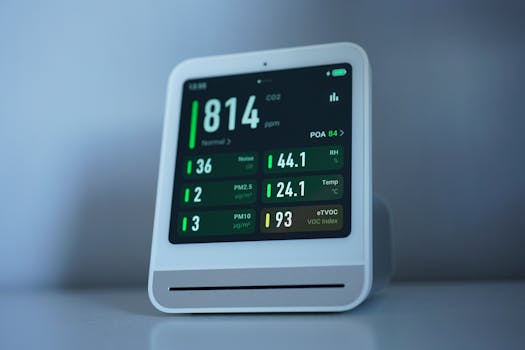
An Air Quality Analyst in the UK plays a crucial role in understanding, monitoring, and mitigating atmospheric pollution. This involves collecting and interpreting data on various pollutants, often using specialised equipment and modelling software. You'd be involved in fieldwork, laboratory analysis, and report writing, assessing the impact of industrial emissions, transport, and other sources on air quality. Your work might inform policy decisions, advise businesses on environmental compliance, or contribute to public health initiatives by identifying areas of concern and proposing solutions. It requires a strong scientific background, often in environmental science, chemistry, or a related engineering discipline, coupled with excellent analytical and communication skills. Your day-to-day tasks could include deploying air quality monitoring stations, analysing samples for particulate matter, nitrogen oxides, and volatile organic compounds, and using advanced software to model pollution dispersion. You'd then translate complex scientific data into clear, actionable reports for clients, regulatory bodies, or the public. This career is vital for ensuring breathable air, protecting ecosystems, and helping the UK meet its ambitious environmental targets. You'll need to stay updated with UK and European environmental legislation, such as the Environmental Permitting Regulations and the National Air Quality Strategy, to provide accurate and compliant advice.

Air Quality Analyst

Flag Media

Please select a reason for flagging this content.

📊 Statistics

Typical Starting Salary

For an Air Quality Analyst in the UK, a starting salary typically ranges from 22,000 to 28,000 pounds per year. With experience, this can rise significantly.

Experienced Professional Salary

Experienced Air Quality Analysts in the UK can expect to earn between 35,000 and 50,000 pounds annually, with senior or specialist roles potentially exceeding 60,000 pounds.

Job Growth Outlook

The environmental sector, including air quality, is experiencing steady growth in the UK due to increasing regulatory focus and public awareness. While specific numbers for 'Air Quality Analyst' roles can vary, the broader environmental consulting and monitoring field is projected to grow by approximately 5-7% over the next five years, indicating a healthy demand for these skills.

🚀 Careers in this path

Flag Media

Please select a reason for flagging this content.

Environmental Consultant specialising in Air Quality

An Environmental Consultant specialising in Air Quality advises businesses and local authorities on how to comply with environmental regulations related to air pollution. This involves conducting impact assessments for new developments, developing air quality management plans, and proposing mitigation strategies. It's a client-facing role often involving site visits and report writing.

Flag Media

Please select a reason for flagging this content.

Air Pollution Control Engineer

An Air Pollution Control Engineer designs, develops, and implements systems and technologies to monitor and control air pollution from industrial sources, vehicle emissions, or other contributors. This could involve working on exhaust systems, filtration units, or developing cleaner industrial processes. It's a more technical, engineering-focused role.

Flag Media

Please select a reason for flagging this content.

Public Health Air Quality Officer

A Public Health Air Quality Officer works within a local council or public health body to monitor and report on local air quality data. They assess the health impacts of air pollution on communities, develop public awareness campaigns, and contribute to policy recommendations aimed at improving public health through better air quality. This role has a strong community and policy focus.

Build Your Foundational Knowledge

Complete a Relevant Degree

Obtain a Bachelor's degree in a scientific field that provides a strong understanding of environmental science, chemistry, physics, or engineering.

Most entry-level Air Quality Analyst roles require a degree in Environmental Science, Chemistry, Physics, Chemical Engineering, or a related discipline. Look for programmes that offer modules in atmospheric science, analytical chemistry, environmental modelling, or data analysis. A strong academic background in quantitative subjects will be highly beneficial.

Gain Specialised Knowledge

Consider a Master's degree or specific modules that focus on air quality management, atmospheric science, or environmental modelling.

While not always mandatory, a Master's degree in Environmental Science, Air Pollution Control, or a related field can significantly enhance your career prospects and open doors to more advanced roles. Alternatively, look for undergraduate programmes that offer specialisations or optional modules directly relevant to air quality, such as atmospheric chemistry, remote sensing, or environmental impact assessment. Online courses or professional development programmes in these areas can also supplement your knowledge.

Develop Practical Skills & Experience

Undertake Internships or Work Experience

Seek out internships, placements, or voluntary work with environmental consultancies, local authorities, or research institutions.

Practical experience is invaluable. Look for opportunities to work with organisations involved in environmental monitoring, pollution control, or impact assessments. This could involve assisting with fieldwork, laboratory analysis, data interpretation, or report writing. Websites like Gradcracker, TARGETjobs, or individual company career pages are good places to start looking for placements. Networking at university career fairs can also reveal hidden opportunities.

Master Data Analysis Tools

Become proficient in statistical software, GIS (Geographic Information Systems), and environmental modelling packages.

Air Quality Analysts spend a significant amount of time collecting, processing, and interpreting complex datasets. Proficiency in tools like R, Python, Excel for statistical analysis, and GIS software (e.g., ArcGIS, QGIS) for spatial data visualisation is crucial. Familiarity with specific air dispersion models (e.g., ADMS, AERMOD) used to predict pollutant concentrations would also be a significant advantage. Many universities offer workshops or modules in these areas, and online courses are readily available.

Network Professionally

Attend industry events, join professional bodies, and connect with professionals in the environmental sector.

Building a professional network can lead to job opportunities, mentorship, and insights into the industry. Consider joining organisations such as the Institute of Air Quality Management (IAQM), the Institution of Environmental Sciences (IES), or the Chartered Institution of Water and Environmental Management (CIWEM). Attend their webinars, conferences, and local events. LinkedIn is also a powerful tool for connecting with professionals and learning about current trends and job openings.

Secure Your First Role

Tailor Your CV and Cover Letter

Highlight your relevant academic achievements, practical experience, and technical skills for each job application.

When applying for roles, ensure your CV clearly articulates your understanding of environmental principles, your proficiency with analytical tools, and any hands-on experience you've gained. Customise your cover letter to directly address the requirements of the job description, demonstrating how your skills and qualifications align with what the employer is looking for. Provide specific examples of projects or tasks where you've applied relevant knowledge.

Prepare for Technical Interviews

Be ready to discuss environmental regulations, air quality monitoring techniques, and your problem-solving approach.

Interviews for Air Quality Analyst roles often involve technical questions. Review key environmental legislation (e.g., UK Air Quality Strategy, EU Directives), different types of air pollutants, monitoring equipment (e.g., passive samplers, continuous analysers), and data interpretation methods. Be prepared to discuss case studies or scenarios, demonstrating your analytical thinking and ability to apply your knowledge to real-world problems. Practice articulating your thought process clearly.

Consider Entry-Level Positions

Look for Junior Air Quality Analyst, Environmental Assistant, or Graduate Scientist roles as a starting point.

Your first role might be an entry-level position where you assist senior analysts with data collection, quality assurance, report drafting, and equipment maintenance. These roles are crucial for gaining hands-on experience and understanding the day-to-day operations. Don't be afraid to start in a supportive role; it provides a strong foundation for future progression. Look for opportunities with environmental consultancies, local government departments, or regulatory bodies like the Environment Agency.

Continuous Professional Development

Stay Updated with Legislation and Technology

Regularly review new environmental regulations, monitoring technologies, and data analysis methodologies.

The field of air quality is constantly evolving due to new research, technological advancements, and changes in environmental policy. Subscribe to industry newsletters, follow relevant government bodies (e.g., DEFRA, Environment Agency), and participate in workshops or webinars to keep your knowledge current. Understanding the latest advancements in sensor technology, satellite monitoring, and AI-driven data analysis will be key to long-term success.

Pursue Professional Accreditation

Work towards achieving Chartered status with a relevant professional body to enhance your credibility and career progression.

Becoming a Chartered Environmentalist (CEnv) or a Chartered Scientist (CSci) through organisations like the IES, IAQM, or CIWEM demonstrates a high level of competence and commitment to professional standards. This often involves accumulating several years of professional experience, submitting a portfolio of work, and undergoing an interview. It significantly boosts your professional standing and opens doors to leadership and specialist roles.

🎬 Useful Videos

🎯 View Apprenticeships

Explore relevant apprenticeships that can help you kickstart your career in Air Quality Analyst. Apprenticeships offer hands-on experience and training while earning a wage.

Career Progressions

This page showcases various career options and the pathways to reach them. Each career listed here shares transferable skills and knowledge, making it easier for individuals to transition between them.

Your current career is highlighted to help you see how it fits into the broader landscape of potential career choices. By clicking on any career, you can learn more about it, including the training and education required to pursue it.

Remember, progressing in your career often involves further learning and training. This page provides insights into future career options as well as those that can lead up to your current one.

These career progression decisions are informed by comparing the skills and knowledge needed for different occupations, along with data on how people move between them. Explore the possibilities and discover the exciting journey ahead in your career!

Sample Qualifications

An Air Quality Analyst primarily focuses on monitoring, evaluating, and ensuring adherence to air quality standards, which aligns closely with the responsibilities of a Quality Control Officer who ensures compliance and standards are met within their specific domain.

How to become

You can get into this job through:

  • a university course
  • an apprenticeship
  • applying directly
  • working towards this role
  • specialist courses run by professional bodies

University

You could do a foundation degree, higher national diploma or degree.

Subjects that cover quality control include:

  • production management
  • business and management
  • manufacturing engineering

You may need a degree that is specific to the industry you want to work in, for example:

  • science
  • construction
  • engineering
  • pharmaceuticals

Entry requirements

You'll usually need:

  • 1 or 2 A levels, or equivalent, for a foundation degree or higher national diploma
  • 2 to 3 A levels, or equivalent, for a degree

More Information

Apprenticeship

You could do a Quality Practitioner Level 4 Higher Apprenticeship.

This could take between 1 and 2 years to complete.

Entry requirements

You'll usually need:

  • 4 or 5 GCSEs at grades 9 to 4 (A* to C) and A levels, or equivalent, for a higher or degree apprenticeship

More Information

Work

You could start work as a quality control assistant and move into a quality officer role by training on the job, for example through the Chartered Quality Institute.

Direct Application

You could apply directly for jobs if you have a a experience in quality control.

You'll find job opportunities in any industry or sector that has quality control processes, such as engineering, manufacturing or health and safety .

Other Routes

You could take quality control qualifications through the Chartered Quality Institute, or as part of a leadership course from the Chartered Management Institute.

More Information

Career tips

You may find it helps when applying for jobs in quality control if you have some knowledge of British quality standards and methods.

You can move into management roles once you have gained experience as a quality control officer.

Further information

You can find out more about working in quality control through the Chartered Quality Institute.

Interested in More Career Paths?

Explore other careers or use our AI to discover personalised paths based on your interests.

Stay connected

Join our newsletter to stay up to date on features and releases

Address
Developing Experts Limited
Exchange Street Buildings
35-37 Exchange Street
Norwich
NR2 1DP
UK

Phone
01603 273515

Email
[email protected]

Copyright 2026 Developing Experts, All rights reserved.