


Creating Career Path...

Finding Further Careers...

Air Quality Analyst

View this career for different education levels:

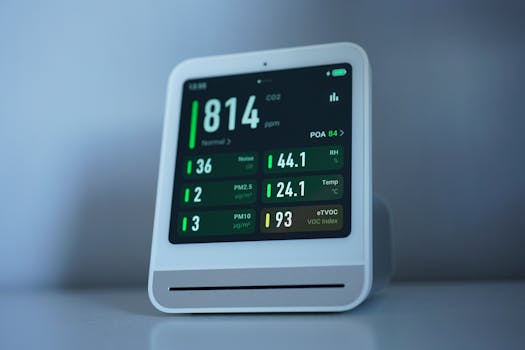
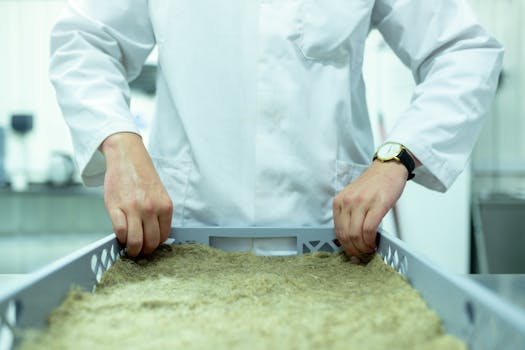
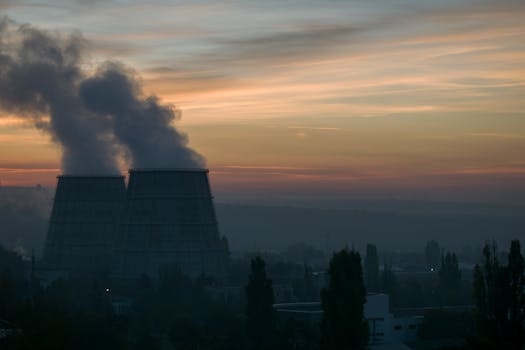
An Air Quality Analyst is like a detective for the air we breathe! Their job involves monitoring, measuring, and understanding the different pollutants in the air across the UK. They use special equipment to collect samples of air from various locations, like busy roads, industrial areas, or even quiet towns. Once they have these samples, they analyse them in a lab to find out what chemicals are present and how much of each there is. They also use computer models to predict how air pollution might spread or change, for example, due to traffic or weather conditions. This information is really important because it helps local councils, the government, and businesses make decisions to improve air quality and protect public health. They might write reports, give presentations, and suggest solutions like cleaner transport options or better ways for factories to operate. Working as an Air Quality Analyst means you'll spend some time outdoors collecting data and setting up monitoring stations, and other time in an office or laboratory analysing data, writing reports, and using computer software. It's a job that combines scientific knowledge with practical problem-solving. You need to be good at science, especially chemistry and maths, and also enjoy working with computers and data. It's a fantastic career if you care about the environment and want to make a real difference to people's health and the world around you by helping to ensure the air we breathe is clean and safe.

Air Quality Analyst

Flag Media

Please select a reason for flagging this content.

📊 Statistics

Salary Range

In the UK, an entry-level Air Quality Analyst might start on around 22,000 to 28,000 pounds per year. With more experience, this can rise to 35,000 to 50,000 pounds or even higher for very senior roles.

Job Growth

The demand for environmental professionals, including Air Quality Analysts, is expected to grow steadily in the UK due to increasing environmental regulations and public awareness. This means there are good opportunities in this field.

Typical Working Hours

Most Air Quality Analysts work a standard full-time week, which is usually around 37-40 hours. Sometimes there might be fieldwork or monitoring that requires working outdoors or occasionally outside normal hours.

🚀 Careers in this path

Flag Media

Please select a reason for flagging this content.

Environmental Monitoring Technician

Imagine you're a detective for the environment! You'd visit different places to check how clean the air is, using special gadgets to measure things like pollution from cars or factories. You'd collect samples and send them to a lab to be tested, helping scientists understand what's happening.

Flag Media

Please select a reason for flagging this content.

Air Quality Data Assistant

If you like computers and numbers, this could be for you! You'd help organise and understand all the information that environmental monitoring technicians collect. You might use spreadsheets or special software to spot patterns and trends in air quality, which helps experts make important decisions.

Flag Media

Please select a reason for flagging this content.

Climate Change Educator for Schools

Do you enjoy sharing what you learn with others? You could work for a charity or local council, visiting schools to teach students about air pollution, climate change, and how we can all help keep our air clean. You might design fun activities and presentations to make learning exciting.

Build Your Foundations

Excel in Science and Maths

Focus on your science subjects (like Chemistry, Physics, Biology) and Maths at school. These subjects are super important for understanding how air works and how to measure things.

At GCSE level (around age 14-16), try to get good grades in Double Science or Triple Science, and Maths. These subjects will give you a strong base for further study. Understanding chemical reactions and data analysis from maths will be key.

Explore Environmental Topics

Read books, watch documentaries, and do projects related to the environment, climate change, and pollution. The more you know, the better!

Join an eco-club at school or start one if there isn't one. Look for opportunities to visit science museums or environmental centres. Understanding global environmental issues like climate change and local air pollution sources will give you context for this career path.

Develop Data Skills

Start learning how to use spreadsheets like Microsoft Excel or Google Sheets. Air Quality Analysts work with lots of data, so being good with numbers is a big plus.

You can find free online tutorials for Excel or Google Sheets. Practice organising data, creating simple charts, and performing basic calculations. These skills will be essential for analysing air quality measurements later on.

Further Your Education

Choose A-Levels Wisely

For your A-Levels (usually age 16-18), pick subjects like Chemistry, Maths, Physics, Biology, Geography, or Environmental Science. These will open doors to university courses.

Chemistry is often highly recommended as it helps understand the chemical composition of air pollutants. Maths is crucial for data analysis and modelling. Many universities will look for at least two science-based A-Levels for relevant degree courses.

Go to University

Study a relevant degree at university. Good choices include Environmental Science, Chemistry, Earth Sciences, Meteorology, or Environmental Engineering.

Look for BSc (Bachelor of Science) degrees that focus on environmental monitoring, atmospheric science, or analytical chemistry. Some universities offer specific modules in air quality management. Research different university courses and their modules to see which aligns best with your interests.

Gain Practical Experience

While at university, try to do an internship or a summer placement with an environmental consultancy, local council, or a research group working on air quality.

Practical experience is invaluable! It allows you to see what the job is really like, learn from professionals, and start building your network. Many degree programmes offer a 'sandwich year' with an industrial placement. This could involve using air quality monitoring equipment or analysing real-world data.

Start Your Career

Apply for Entry-Level Roles

Look for jobs as an 'Environmental Technician', 'Junior Air Quality Consultant', 'Assistant Air Quality Scientist', or 'Graduate Air Quality Analyst'.

These roles are a great way to get started. You'll often work under the supervision of more experienced analysts, learning how to operate equipment, collect samples, and interpret data. Search job boards like LinkedIn, Indeed, and specific environmental recruitment agencies.

Develop Specialist Skills

Learn how to use specific air quality modelling software and advanced data analysis tools. This will make you an expert in the field.

Many organisations use specialist software for dispersion modelling (predicting how pollution spreads) and advanced statistical analysis. Your employer might provide training, or you could look for online courses or professional development workshops. Understanding regulations like the National Ambient Air Quality Objectives is also crucial.

Join Professional Bodies

Become a member of professional organisations like the Institute of Air Quality Management (IAQM) or the Institution of Environmental Sciences (IES).

Joining professional bodies helps you stay updated with industry news, network with other professionals, and access resources for your continuous professional development. They often offer webinars, conferences, and even routes to professional chartership, which can boost your career.

🎬 Useful Videos

🎯 View Apprenticeships

Explore relevant apprenticeships that can help you kickstart your career in Air Quality Analyst. Apprenticeships offer hands-on experience and training while earning a wage.

Career Progressions

This page showcases various career options and the pathways to reach them. Each career listed here shares transferable skills and knowledge, making it easier for individuals to transition between them.

Your current career is highlighted to help you see how it fits into the broader landscape of potential career choices. By clicking on any career, you can learn more about it, including the training and education required to pursue it.

Remember, progressing in your career often involves further learning and training. This page provides insights into future career options as well as those that can lead up to your current one.

These career progression decisions are informed by comparing the skills and knowledge needed for different occupations, along with data on how people move between them. Explore the possibilities and discover the exciting journey ahead in your career!

Sample Qualifications

An Air Quality Analyst's primary role is to monitor, analyse, and ensure that air quality meets specific standards, which aligns closely with the duties of a Quality control officer responsible for maintaining product or environmental standards and identifying deviations.

How to become

You can get into this job through:

  • a university course
  • an apprenticeship
  • applying directly
  • working towards this role
  • specialist courses run by professional bodies

University

You could do a foundation degree, higher national diploma or degree.

Subjects that cover quality control include:

  • production management
  • business and management
  • manufacturing engineering

You may need a degree that is specific to the industry you want to work in, for example:

  • science
  • construction
  • engineering
  • pharmaceuticals

Entry requirements

You'll usually need:

  • 1 or 2 A levels, or equivalent, for a foundation degree or higher national diploma
  • 2 to 3 A levels, or equivalent, for a degree

More Information

Apprenticeship

You could do a Quality Practitioner Level 4 Higher Apprenticeship.

This could take between 1 and 2 years to complete.

Entry requirements

You'll usually need:

  • 4 or 5 GCSEs at grades 9 to 4 (A* to C) and A levels, or equivalent, for a higher or degree apprenticeship

More Information

Work

You could start work as a quality control assistant and move into a quality officer role by training on the job, for example through the Chartered Quality Institute.

Direct Application

You could apply directly for jobs if you have a a experience in quality control.

You'll find job opportunities in any industry or sector that has quality control processes, such as engineering, manufacturing or health and safety .

Other Routes

You could take quality control qualifications through the Chartered Quality Institute, or as part of a leadership course from the Chartered Management Institute.

More Information

Career tips

You may find it helps when applying for jobs in quality control if you have some knowledge of British quality standards and methods.

You can move into management roles once you have gained experience as a quality control officer.

Further information

You can find out more about working in quality control through the Chartered Quality Institute.

Interested in More Career Paths?

Explore other careers or use our AI to discover personalised paths based on your interests.

Stay connected

Join our newsletter to stay up to date on features and releases

Address
Developing Experts Limited
Exchange Street Buildings
35-37 Exchange Street
Norwich
NR2 1DP
UK

Phone
01603 273515

Email
[email protected]

Copyright 2026 Developing Experts, All rights reserved.
