




Creating Career Path...

Finding Further Careers...

Bridge Builder

View this career for different education levels:

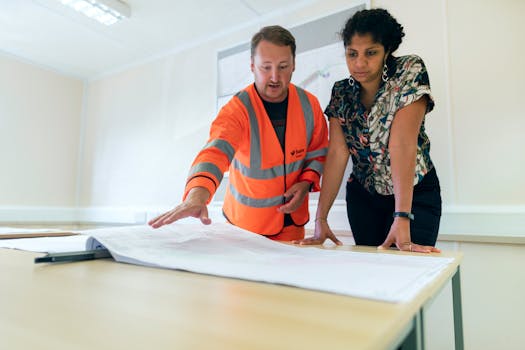
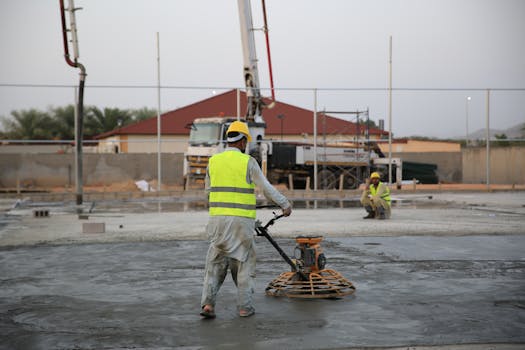
Being a bridge builder means you are a special type of engineer, usually a Civil Engineer, who designs, plans, and oversees the construction of bridges. Imagine helping to create something that connects places, allows people to travel, and moves goods around. It is a huge responsibility, as bridges need to be super strong, safe, and last for a very long time, even in tough weather! You would work with a team of other engineers, architects, and construction workers to make sure the bridge is built correctly from start to finish. This involves lots of problem-solving, using maths and science, and sometimes even visiting the building site to check on progress. Your job would not just be about making sure the bridge stays up; it would also be about thinking how it affects the environment, how it looks, and making sure it is built on time and within budget. You could be working on anything from a small footbridge over a river to a giant road bridge spanning a wide estuary or even railway bridges. It is a very rewarding career because you get to see your designs become real structures that serve communities for generations.

Bridge Builder

Flag Media

Please select a reason for flagging this content.

📊 Statistics

Civil Engineer Salary Range (UK)

For someone starting out as a Civil Engineer, you might expect to earn around 25,000 to 30,000 pounds per year. As you gain more experience and become a senior engineer, this can rise to 40,000 to 60,000 pounds, and even higher for very experienced or management roles.

Number of Civil Engineers in the UK

There are roughly 195,000 Civil Engineers working in the UK. This shows it is a well-established and important career path.

Job Growth Outlook

The engineering sector in the UK, including roles like bridge builders, is expected to grow steadily. Around 174,000 new engineering workers are needed each year in the UK to meet demand and replace those retiring.

🚀 Careers in this path

Flag Media

Please select a reason for flagging this content.

Structural Engineer

Imagine you're designing the skeleton of a bridge! A Structural Engineer works out all the maths and physics to make sure the bridge is super strong and won't fall down, using computers and drawings to plan everything out.

Flag Media

Please select a reason for flagging this content.

Civil Engineer

A Civil Engineer is like the master planner for big projects. They don't just build bridges, but also roads, railways, and even airports! They manage teams and make sure the whole construction project runs smoothly from start to finish.

Flag Media

Please select a reason for flagging this content.

Construction Project Manager

This role is like being the captain of the bridge-building team! A Construction Project Manager organises all the workers, materials, and equipment. They make sure the bridge is built on time and within budget, solving any problems that pop up along the way.

Exploring and Learning

Do Well in School

Focus on subjects like Maths, Physics, and Design & Technology. These subjects teach you important skills for building bridges.

To become a Bridge Builder, a strong foundation in science and mathematics is really important. In Maths, you'll learn about calculations and shapes, which are key for designing structures. Physics helps you understand how forces work on materials, ensuring a bridge won't fall down. Design & Technology lets you get creative and learn about different materials and how things are put together. Try to achieve good grades in these subjects as they will be essential for future studies.

Explore Engineering

Look for clubs, workshops, or online resources related to engineering and construction. This will help you see what the job is really like.

Get involved in activities outside of your regular lessons. Many schools have STEM clubs (Science, Technology, Engineering, and Maths) where you can build models or do experiments. Look for engineering-related events, like open days at universities or science museums. Websites like the Institution of Civil Engineers (ICE) have resources for young people. Watching documentaries about bridge building can also give you a great insight into the challenges and triumphs of these projects.

Develop Key Skills

Practice problem-solving, teamwork, and communication. These are super important for engineers working on big projects.

Bridge building is a team effort. You'll need to work with architects, other engineers, and construction workers, so good communication skills are vital. Problem-solving is at the heart of engineering – you'll constantly face challenges and need to find clever solutions. Try building things with LEGO, K'nex, or even cardboard to practice thinking about structures and how they fit together. These activities help you develop a practical mindset.

Further Education

Choose A-Levels or Equivalent

Select A-Level subjects (or Scottish Highers/BTEC equivalents) that will prepare you for a university degree in engineering.

After your GCSEs, you'll typically need to choose A-Levels or an equivalent qualification like a BTEC Level 3 Extended Diploma in Engineering. The most important A-Level subjects for aspiring Civil Engineers are Maths and Physics. Further Maths, Design & Technology, or Chemistry can also be very beneficial. Aim for strong grades as these will be crucial for university applications. If you're considering a BTEC, make sure it's a course recognised by universities for engineering degrees.

Go to University

Study for a degree in Civil Engineering. This is where you'll learn all the technical knowledge needed to design and build bridges.

A Bachelor's degree (BEng or MEng) in Civil Engineering is the standard route. An MEng (Master of Engineering) is usually a four-year course that's highly recommended as it covers more advanced topics and often leads directly to 'Chartered Engineer' status more quickly after graduation. Look for universities with strong engineering departments and good industry links. During your degree, you'll learn about structural analysis, materials science, geotechnics (the study of soil and rock), and construction methods.

Gain Work Experience

Try to get internships or work placements during your university holidays. This gives you real-world experience and helps you make connections.

Work experience is incredibly valuable. Many university courses offer a 'sandwich year' where you spend a year working in industry. If your course doesn't, try to find summer internships with engineering consultancies or construction companies. Even a few weeks on a construction site or in an engineering office can give you a fantastic insight into the daily life of an engineer, help you apply your theoretical knowledge, and build your professional network before you even graduate.

Starting Your Career

Get a Graduate Job

Apply for graduate schemes or entry-level roles in civil engineering firms, focusing on structural or bridge design.

After university, most graduates join an engineering consultancy or a construction company as a 'Graduate Civil Engineer'. Many larger firms offer structured graduate schemes which provide training, mentoring, and support towards becoming a Chartered Engineer. This is where you'll start applying your university knowledge to real-world projects, learning from experienced engineers, and developing specialist skills in bridge design and construction.

Become a Chartered Engineer

Work towards becoming a 'Chartered Engineer' (CEng) with the Institution of Civil Engineers (ICE). This is a highly respected professional qualification.

Becoming a Chartered Engineer is a key milestone in a professional engineering career in the UK. It involves demonstrating that you have the required knowledge, understanding, and professional competence. This typically takes around 4-5 years after your MEng degree (or longer with a BEng) and involves a period of structured training and professional development, often supervised by a mentor within your company, followed by a professional review and interview with the ICE. This qualification shows you are a competent and ethical engineer.

Specialise in Bridges

As you gain experience, you can choose to specialise more deeply in bridge design, construction, or maintenance.

Once you have a few years of general civil engineering experience and are working towards or have achieved Chartered status, you can start to focus more specifically on bridge projects. This might involve working on new bridge designs, assessing the safety of existing bridges, overseeing their construction, or managing their maintenance and repair. You can join specialist groups within the ICE focused on structures or bridges to further your expertise and network with other bridge builders.

🎬 Useful Videos

🎯 View Apprenticeships

Explore relevant apprenticeships that can help you kickstart your career in Bridge Builder. Apprenticeships offer hands-on experience and training while earning a wage.

Career Progressions

This page showcases various career options and the pathways to reach them. Each career listed here shares transferable skills and knowledge, making it easier for individuals to transition between them.

Your current career is highlighted to help you see how it fits into the broader landscape of potential career choices. By clicking on any career, you can learn more about it, including the training and education required to pursue it.

Remember, progressing in your career often involves further learning and training. This page provides insights into future career options as well as those that can lead up to your current one.

These career progression decisions are informed by comparing the skills and knowledge needed for different occupations, along with data on how people move between them. Explore the possibilities and discover the exciting journey ahead in your career!

Sample Qualifications

A Bridge Builder primarily designs, plans, and oversees the construction of bridges, which are key responsibilities of a Civil Engineer. The other options are either too specific, related to materials, or focus on inspection/maintenance rather than the full scope of building a bridge.

How to become

You can get into this job through:

  • a university course
  • a college course
  • an apprenticeship
  • working towards this role

University

You can do a foundation degree, higher national diploma or degree in civil engineering.

Many universities specialise in particular areas of civil engineering, like:

  • transport engineering
  • environmental engineering
  • coastal and maritime engineering

You can search for accredited courses through the Institution of Civil Engineers. Some courses include a work placement, which can be useful for making industry contacts to help you find work after university.

You can also do further study for a postgraduate master's qualification in civil engineering, if you've got a degree in a related subject like maths, science or geology.

Entry requirements

You'll usually need:

  • 2 or 3 A levels, or equivalent, including maths and a science for a degree
  • a degree in a relevant subject for postgraduate study

More Information

College

You could take a course at college, which might help you to get work as a trainee civil engineer, or to apply for further study at university.

Subjects include:

  • civil engineering
  • maths, physics or geography
  • construction and the built environment

Entry requirements

Entry requirements for these courses vary.

More Information

Apprenticeship

You can apply to do a Civil Engineer Level 6 Degree Apprenticeship with an engineering or construction company.

This takes around 5 years to complete.

Entry requirements

You'll usually need:

  • 4 or 5 GCSEs at grades 9 to 4 (A* to C) and A levels, or equivalent, for a higher or degree apprenticeship

More Information

Work

You could work as a civil engineering technician and study on the job for a degree or apprenticeship.

You'll usually need 5 GCSEs at grades 9 to 4 (A* to C), or equivalent, including English, maths and science. Employers may also look for 1 or 2 A levels, or equivalent qualifications.

More Information

Professional and industry bodies

You can join the Institution of Civil Engineers (ICE) for professional development opportunities and to make industry contacts.

Further information

You can learn more about how to become a civil engineer from the Institution of Civil Engineers (ICE).

Interested in More Career Paths?

Explore other careers or use our AI to discover personalised paths based on your interests.

Stay connected

Join our newsletter to stay up to date on features and releases

Address
Developing Experts Limited
Exchange Street Buildings
35-37 Exchange Street
Norwich
NR2 1DP
UK

Phone
01603 273515

Email
[email protected]

Copyright 2026 Developing Experts, All rights reserved.
