Creating Career Path...

Finding Further Careers...

Pilot

View this career for different education levels:

A pilot in the UK is responsible for operating aircraft safely and efficiently, whether for commercial airlines, private charters, or freight transport. Duties include preparing flight plans, ensuring aircraft safety checks, communicating with air traffic control, and managing the crew and passengers during flights. Becoming a pilot requires rigorous training, including both theoretical study and practical flying hours, leading to qualifications such as a Private Pilot Licence (PPL) and then an Airline Transport Pilot Licence (ATPL). The role demands excellent decision-making skills, technical knowledge, and the ability to remain calm under pressure. Pilots often travel internationally, work irregular hours, and must maintain ongoing medical and competency checks throughout their careers.

Pilot

Flag Media

Please select a reason for flagging this content.

📊 Statistics

Average Salary

Commercial airline pilots in the UK typically earn between £40,000 and £150,000 per year, depending on experience and airline.

Job Openings

There are approximately 10,000 commercial pilots currently employed in the UK, with around 500 new roles advertised annually.

Training Duration

It usually takes 18 to 24 months to complete the required training and obtain an Airline Transport Pilot Licence (ATPL) in the UK.

🚀 Careers in this path

Flag Media

Please select a reason for flagging this content.

Commercial Airline Pilot

Operate passenger aircraft for commercial airlines, ensuring safe and efficient flights between airports.

Flag Media

Please select a reason for flagging this content.

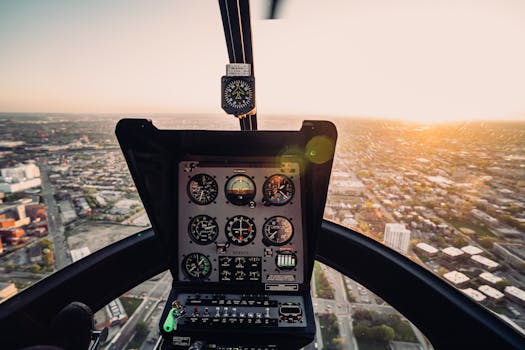
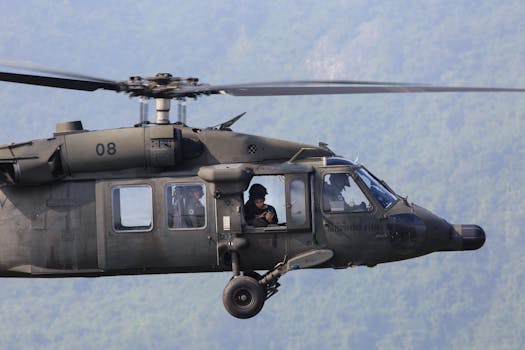
Helicopter Pilot

Fly helicopters for purposes such as search and rescue, aerial surveys, or emergency medical services.

Flag Media

Please select a reason for flagging this content.

Flight Instructor

Teach aspiring pilots the theory and practical skills needed to obtain their pilot licences.

Research and Meet Entry Requirements

Understand the Role and Pathways

Learn about the different types of pilot roles and the qualifications you will need.

There are several types of pilots, including commercial airline pilots, private pilots, and military pilots. Most commercial pilots in the UK start with a Private Pilot Licence (PPL) before progressing to a Commercial Pilot Licence (CPL) or an Airline Transport Pilot Licence (ATPL). Research airlines and training providers to understand their specific entry requirements.

Meet Educational and Medical Standards

Ensure you meet the minimum educational qualifications and can pass a Class 1 medical examination.

Most flight schools and airlines require at least five GCSEs at grades 4 to 9 including Maths, English, and Science. Some may also ask for A-levels or equivalent qualifications. All commercial pilots must pass a rigorous Class 1 medical exam conducted by a Civil Aviation Authority (CAA) approved doctor, assessing your vision, hearing, and overall health.

Undertake Flight Training

Enrol in an Approved Flight School

Apply to a CAA-approved flight training organisation for structured training.

Choose between an integrated course, which is a full-time programme with no experience needed, or a modular course, which is more flexible and allows training around other commitments. Training generally takes 18 to 24 months full-time and includes ground school, simulator work, and actual flying hours. Compare costs and locations, as training can be expensive.

Complete Required Flying Hours and Exams

Accumulate flight experience and pass theoretical and practical examinations.

You must log a minimum number of flying hours for each licence. For the CPL, this is typically at least 150 flying hours, and for the ATPL, 1,500 flying hours are needed to become a captain. You will also need to pass several theoretical exams covering aviation law, navigation, meteorology, and flight planning, as well as practical flying assessments.

Gain Licences and Build Experience

Obtain the Relevant Licence

Apply for your CPL or ATPL upon completing training and passing all exams.

After passing all the required exams and flight tests, you can apply to the CAA for your CPL or frozen ATPL. A 'frozen' ATPL means you have passed the theory exams and hold a CPL, but need more flying hours to become a captain and 'unfreeze' your ATPL.

Apply for Pilot Positions

Search and apply for junior pilot roles such as First Officer with airlines or charter companies.

Most pilots start as First Officers or co-pilots, gaining experience and further flight hours. Building your experience may involve working for regional airlines, flying cargo, or even instructing. Career progression typically leads to Senior First Officer, then Captain roles. Continued professional development and type ratings (training on specific aircraft types) are essential.

🎯 View Apprenticeships

Explore relevant apprenticeships that can help you kickstart your career in Pilot. Apprenticeships offer hands-on experience and training while earning a wage.

Career Progressions

This page showcases various career options and the pathways to reach them. Each career listed here shares transferable skills and knowledge, making it easier for individuals to transition between them.

Your current career is highlighted to help you see how it fits into the broader landscape of potential career choices. By clicking on any career, you can learn more about it, including the training and education required to pursue it.

Remember, progressing in your career often involves further learning and training. This page provides insights into future career options as well as those that can lead up to your current one.

These career progression decisions are informed by comparing the skills and knowledge needed for different occupations, along with data on how people move between them. Explore the possibilities and discover the exciting journey ahead in your career!

Sample Qualifications

An airline pilot shares most similar qualifications and responsibilities with a pilot, as both require advanced flying skills, comprehensive knowledge of aviation regulations, and certifications. They operate aircrafts in commercial settings, often adhering to strict safety protocols and navigating complex airspace.

How to become

You can get into this job through:

  • a university course
  • applying directly
  • a trainee scheme
  • specialist courses run by private training organisations

University

You could do a university degree which includes pilot studies.

Your university degree will:

  • include commercial pilot training with an approved flight training organisation
  • lead to a 'frozen' Air Transport Pilot Licence (ATPL) which allows you to work as a co-pilot and build up the necessary flying hours to become a captain

Medical certificates

You'll need to have a minimum of a Class 2 medical certificate before you start a course.

You'll then need to apply for the higher level Class 1 medical certificate during your course to get your Commercial Pilot Licence. You could choose to apply for the Class 1 medical certificate before you start your course.

Fees and funding

As well as standard university fees, you'll need to fund the flight training part of your course. Your university can advise you about this.

Entry requirements

You'll usually need:

  • 4 or 5 GCSEs at grades 9 to 4 (A* to C), or equivalent, including English and maths
  • 2 to 3 A levels, or equivalent, for a degree

More Information

Direct Application

If you have flying experience in the armed forces, you could apply directly to the Civil Aviation Authority's Military Accreditation Scheme to become a commercial pilot.

Other Routes

You could apply to join a pilot training programme with a passenger airline.

Private flying school

You could also train with a private flying school to get your Commercial Pilot Licence. Courses can take at least a year and 6 months of full time study.

You can find details about flight training schools from the Civil Aviation Authority (CAA).

More Information

Career tips

Pilot training is expensive so research which route is best for you and your circumstances. 

You can also research scholarships to see if you can get any financial support with your training.

Pilot salaries can vary widely, depending on the size of the airline, your rank, how long you've flown for, and company bonus schemes and allowances.

Further information

You can find out more about training to become a pilot through Flying Start and the British Airline Pilots' Association (BALPA).

Interested in More Career Paths?

Explore other careers or use our AI to discover personalised paths based on your interests.

Stay connected

Join our newsletter to stay up to date on features and releases

Address
Developing Experts Limited
Exchange Street Buildings
35-37 Exchange Street
Norwich
NR2 1DP
UK

Phone
01603 273515

Email
[email protected]

Copyright 2025 Developing Experts, All rights reserved.