Creating Career Path...

Finding Further Careers...

Paramedic

View this career for different education levels:

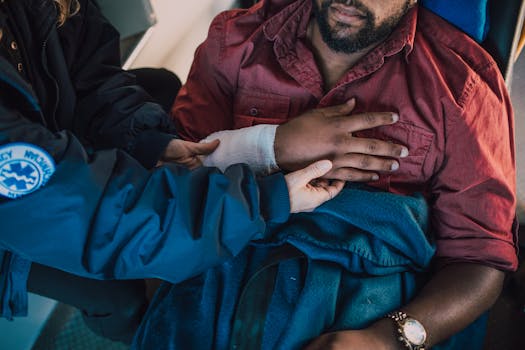
Paramedics are highly trained healthcare professionals who provide emergency medical care to people who are injured or suddenly unwell, typically before they reach hospital. They work mainly for ambulance services, responding to 999 calls in a wide variety of situations such as road accidents, heart attacks, and other medical emergencies. The role involves assessing patients, providing life-saving treatment, and transporting patients safely to hospital if needed. Paramedics often work in teams, sometimes alongside police or fire services, and need to remain calm under pressure, make quick decisions, and communicate effectively with patients and other healthcare professionals. The job can be physically and emotionally demanding but is also highly rewarding for those who want to make a real difference in their community.

Paramedic

Flag Media

Please select a reason for flagging this content.

📊 Statistics

Average Starting Salary

Newly qualified paramedics in the UK can expect to earn between £28,407 and £34,581 per year on Band 6 of the NHS Agenda for Change pay scale.

Number of Paramedics

There are approximately 31,000 registered paramedics working in the UK as of 2023.

Projected Job Growth

The demand for paramedics is expected to grow by around 6 percent by 2030, due to an ageing population and increased healthcare needs.

🚀 Careers in this path

Flag Media

Please select a reason for flagging this content.

Critical Care Paramedic

A paramedic who specialises in providing advanced care to patients with life-threatening conditions, often working as part of an air ambulance or rapid response team.

Flag Media

Please select a reason for flagging this content.

Hazardous Area Response Team Paramedic

A paramedic trained to operate in dangerous environments such as chemical spills, major accidents, or terrorist incidents, delivering emergency care in challenging situations.

Paediatric Emergency Paramedic

A paramedic who focuses on providing emergency medical care to babies, children, and young people, often working closely with children's hospitals and specialist teams.

Achieve Relevant Qualifications

Meet Entry Requirements

Ensure you have the necessary GCSEs, typically including English, Maths, and Science at grade 4 or above.

Most paramedic science university courses and apprenticeship schemes require you to have at least five GCSEs at grades 4 or above, including English language, Maths, and usually a Science subject. Check the entry requirements of the specific universities or employers you are interested in.

Complete A Levels or Equivalent

Study A Levels or equivalent qualifications, such as BTECs, focusing on health, science, or public services subjects.

While subjects like Biology or Health and Social Care are helpful, many universities accept a range of A Levels or equivalent qualifications. Some ambulance services may also offer entry-level roles such as Emergency Care Assistant, which can be a stepping stone to paramedic training.

Gain Professional Training

Study Paramedic Science

Apply for and complete a BSc (Hons) degree in Paramedic Science or an approved paramedic degree apprenticeship.

Paramedic training in the UK is now typically achieved through a university degree course in Paramedic Science, which lasts three years full-time. Alternatively, degree apprenticeships allow you to earn while you learn, combining work with study. Courses include practical placements with ambulance services.

Register with the HCPC

Gain registration with the Health and Care Professions Council (HCPC) in order to work as a qualified paramedic.

After completing your degree or approved apprenticeship, you must register with the Health and Care Professions Council (HCPC). This ensures you meet the professional standards required to practise as a paramedic in the UK.

Develop Experience and Specialise

Start Working as a Paramedic

Begin your career with an NHS ambulance trust or private provider, responding to emergency calls and providing patient care.

Once registered, you will work as a newly qualified paramedic, usually as part of a team with other emergency care professionals. Your responsibilities will include assessing situations, delivering emergency care, and transporting patients safely.

Pursue Further Training and Specialisation

Develop your skills through on-the-job experience and further study, specialising in areas such as critical care or advanced practice.

Many paramedics go on to specialise in areas like critical care, hazardous area response, or management. You may also consider further academic study, such as a postgraduate qualification, or progress into teaching or leadership roles within the ambulance service.

🎯 View Apprenticeships

Explore relevant apprenticeships that can help you kickstart your career in Paramedic. Apprenticeships offer hands-on experience and training while earning a wage.

Career Progressions

This page showcases various career options and the pathways to reach them. Each career listed here shares transferable skills and knowledge, making it easier for individuals to transition between them.

Your current career is highlighted to help you see how it fits into the broader landscape of potential career choices. By clicking on any career, you can learn more about it, including the training and education required to pursue it.

Remember, progressing in your career often involves further learning and training. This page provides insights into future career options as well as those that can lead up to your current one.

These career progression decisions are informed by comparing the skills and knowledge needed for different occupations, along with data on how people move between them. Explore the possibilities and discover the exciting journey ahead in your career!

Sample Qualifications

How to become

You can get into this work through:

  • a university course
  • an apprenticeship
  • working towards this role
  • a trainee scheme

University

You'll need to do a paramedic science degree approved by the Health and Care Professions Council.

Full-time courses usually take 3 years.

You may be able to get extra student financial support through the NHS Learning Support Fund.

Entry requirements

You'll usually need:

  • 2 or 3 A levels, or equivalent, including a science, for a degree

More Information

Apprenticeship

You could apply to do a Paramedic Level 6 Degree Apprenticeship.

This takes 3 years to complete and is a mix of on-the-job training and classroom learning.

Entry requirements

You'll usually need:

  • 4 or 5 GCSEs at grades 9 to 4 (A* to C) and A levels, or equivalent, for a degree apprenticeship

More Information

Work

You could start as an ambulance care assistant or an emergency medical technician, also known as an associate ambulance practitioner (AAP).

With experience you could apply for a place on a paramedic training scheme. You would need to check the application and entry requirements with individual ambulance service trusts.

Volunteering

Entry to paramedic courses is very competitive and it may help you if you have some relevant experience or training. You could:

  • volunteer as a first responder with a charity or social enterprise, like St John Ambulance
  • volunteer with an NHS ambulance trust
  • work at a residential care home or day care centre
  • get a first aid certificate
  • work in an office-based job for an ambulance service

You can find more information on how to get relevant healthcare work experience from Health Careers

Other Routes

You could apply for a training scheme as a student paramedic with an ambulance service. You would study for a university paramedic qualification while working at the same time.

More Information

Registration

Career tips

When applying for degree courses or apprenticeships, you'll be expected to show an understanding of how NHS values apply in your work.

Professional and industry bodies

You can join the College of Paramedics and get access to courses, conferences and workshops to keep your skills up to date. You can also swap ideas with colleagues in the profession.

Further information

You can find out more about becoming a paramedic from the College of Paramedics and Health Careers.

Interested in More Career Paths?

Explore other careers or use our AI to discover personalised paths based on your interests.

Stay connected

Join our newsletter to stay up to date on features and releases

Address
Developing Experts Limited
Exchange Street Buildings
35-37 Exchange Street
Norwich
NR2 1DP
UK

Phone
01603 273515

Email
[email protected]

Copyright 2025 Developing Experts, All rights reserved.
