

Creating Career Path...

Finding Further Careers...

Paramedic

View this career for different education levels:

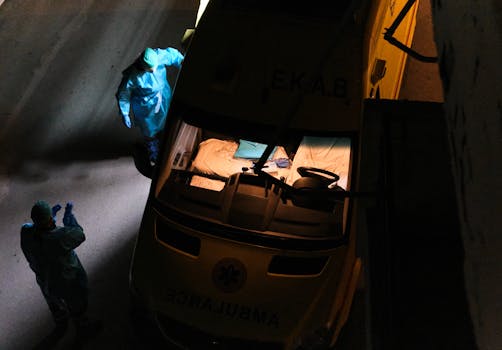
Paramedics are vital members of the emergency services who respond to 999 calls and provide life-saving medical care at the scene of accidents, emergencies, and other incidents. Their work involves assessing patients, delivering urgent treatments, and transporting patients to hospitals while continuing care en route. Paramedics use advanced medical equipment and must make quick decisions under pressure. The role requires strong communication skills, resilience, and the ability to remain calm in challenging situations. Paramedics are usually employed by NHS ambulance services, but there are also opportunities in private healthcare, event medical teams, and air ambulance units.

Paramedic

Flag Media

Please select a reason for flagging this content.

📊 Statistics

Average Starting Salary

The average starting salary for a newly qualified paramedic in the UK is around £28,407 per year, according to the NHS Agenda for Change pay scale.

Workforce Size

There are approximately 26,000 registered paramedics working across the UK, as reported by the Health and Care Professions Council (HCPC) in 2023.

Typical Working Hours

Paramedics commonly work 37.5 hours per week, often including nights, weekends, and bank holidays due to the nature of emergency services.

🚀 Careers in this path

Flag Media

Please select a reason for flagging this content.

Hazardous Area Response Team Paramedic

Specialises in providing emergency care in high-risk environments such as major accidents, chemical spills, or confined spaces.

Flag Media

Please select a reason for flagging this content.

Air Ambulance Paramedic

Works as part of a helicopter or fixed-wing aircraft crew, delivering life-saving care to patients in remote or hard-to-reach locations.

Critical Care Paramedic

Provides advanced care to seriously ill or injured patients, often working alongside doctors and nurses in specialist ambulance teams or hospital emergency departments.

Achieve Entry Qualifications

Complete GCSEs or Equivalent

Obtain at least 5 GCSEs at grades 4 to 9, including English, Maths, and Science.

Most university paramedic science courses require GCSEs in English, Maths, and Science as a minimum. If you do not have these qualifications, you might need to study for them at a local college or through adult learning providers.

Study for A Levels or Level 3 Equivalent

Take A Levels (including a science subject) or a Level 3 Extended Diploma in Health and Social Care.

Most universities expect at least one science A Level, such as Biology, or an equivalent Level 3 qualification. BTECs in Health and Social Care or Public Services are also widely accepted. Check entry requirements for the paramedic science courses you are considering.

Gain Paramedic Training

Apply for a Paramedic Science Degree

Apply for an approved paramedic science degree at a university or through a degree apprenticeship.

Paramedic science degrees are typically three years full time. Some NHS trusts offer degree apprenticeships where you can earn while you learn. All courses must be approved by the Health and Care Professions Council (HCPC) to allow you to register as a paramedic.

Complete Placements and Practical Training

Undertake clinical placements in ambulance services, hospitals, and sometimes other settings.

Placements are a vital part of your training, giving you hands-on experience with real patients and under supervision. You will learn to use emergency equipment, assess patients, and provide life-saving care in a range of situations.

Register and Start Working

Register with the HCPC

Register as a paramedic with the Health and Care Professions Council.

You must be registered with the HCPC to legally practise as a paramedic in the UK. Registration ensures you meet the professional standards required for the role.

Apply for Paramedic Roles

Apply for paramedic jobs with NHS ambulance trusts or private providers.

Most paramedics work for NHS ambulance services, but there are also opportunities with private ambulance companies, in event medical cover, or in other emergency response organisations. There are options for further specialisation after gaining experience.

🎯 View Apprenticeships

Explore relevant apprenticeships that can help you kickstart your career in Paramedic. Apprenticeships offer hands-on experience and training while earning a wage.

Career Progressions

This page showcases various career options and the pathways to reach them. Each career listed here shares transferable skills and knowledge, making it easier for individuals to transition between them.

Your current career is highlighted to help you see how it fits into the broader landscape of potential career choices. By clicking on any career, you can learn more about it, including the training and education required to pursue it.

Remember, progressing in your career often involves further learning and training. This page provides insights into future career options as well as those that can lead up to your current one.

These career progression decisions are informed by comparing the skills and knowledge needed for different occupations, along with data on how people move between them. Explore the possibilities and discover the exciting journey ahead in your career!

Sample Qualifications

How to become

You can get into this work through:

  • a university course
  • an apprenticeship
  • working towards this role
  • a trainee scheme

University

You'll need to do a paramedic science degree approved by the Health and Care Professions Council.

Full-time courses usually take 3 years.

You may be able to get extra student financial support through the NHS Learning Support Fund.

Entry requirements

You'll usually need:

  • 2 or 3 A levels, or equivalent, including a science, for a degree

More Information

Apprenticeship

You could apply to do a Paramedic Level 6 Degree Apprenticeship.

This takes 3 years to complete and is a mix of on-the-job training and classroom learning.

Entry requirements

You'll usually need:

  • 4 or 5 GCSEs at grades 9 to 4 (A* to C) and A levels, or equivalent, for a degree apprenticeship

More Information

Work

You could start as an ambulance care assistant or an emergency medical technician, also known as an associate ambulance practitioner (AAP).

With experience you could apply for a place on a paramedic training scheme. You would need to check the application and entry requirements with individual ambulance service trusts.

Volunteering

Entry to paramedic courses is very competitive and it may help you if you have some relevant experience or training. You could:

  • volunteer as a first responder with a charity or social enterprise, like St John Ambulance
  • volunteer with an NHS ambulance trust
  • work at a residential care home or day care centre
  • get a first aid certificate
  • work in an office-based job for an ambulance service

You can find more information on how to get relevant healthcare work experience from Health Careers

Other Routes

You could apply for a training scheme as a student paramedic with an ambulance service. You would study for a university paramedic qualification while working at the same time.

More Information

Registration

Career tips

When applying for degree courses or apprenticeships, you'll be expected to show an understanding of how NHS values apply in your work.

Professional and industry bodies

You can join the College of Paramedics and get access to courses, conferences and workshops to keep your skills up to date. You can also swap ideas with colleagues in the profession.

Further information

You can find out more about becoming a paramedic from the College of Paramedics and Health Careers.

Interested in More Career Paths?

Explore other careers or use our AI to discover personalised paths based on your interests.

Stay connected

Join our newsletter to stay up to date on features and releases

Address
Developing Experts Limited
Exchange Street Buildings
35-37 Exchange Street
Norwich
NR2 1DP
UK

Phone
01603 273515

Email
[email protected]

Copyright 2025 Developing Experts, All rights reserved.
