




Creating Career Path...

Finding Further Careers...

Author

View this career for different education levels:

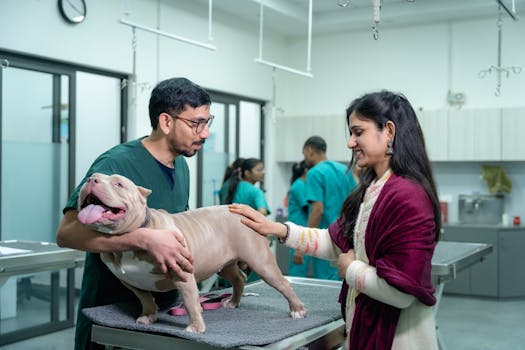
Being a veterinary surgeon in the UK is an exciting and demanding job where you get to help animals every day. You diagnose and treat illnesses in pets like dogs, cats, and hamsters, as well as larger animals such as horses and farm animals like cows and sheep. This involves performing operations, giving vaccinations, providing dental care, and advising owners on how to keep their animals healthy and happy. You need to be very good at science, especially biology, and have a strong desire to care for animals. It is a long journey to become a vet, usually involving a five or six-year university degree, but it is very rewarding. A typical day for a vet can be very varied. You might start by seeing several animals for check-ups or minor ailments, then move on to performing surgery, such as neutering or fixing a broken bone. You will also spend time talking to animal owners, explaining diagnoses, treatment plans, and giving advice. Sometimes you might need to make difficult decisions or help animals at the end of their lives, which requires a lot of empathy and communication skills. Vets often work in clinics, but some might travel to farms or stables, or even work in zoos or research. It is a career that requires continuous learning to stay up-to-date with the latest treatments and technologies.

Author

Flag Media

Please select a reason for flagging this content.

📊 Statistics

Starting Salary

For newly qualified vets in the UK, the starting salary is usually around 28,000 to 32,000 pounds per year.

Experienced Salary

With more experience, a veterinary surgeon in the UK can expect to earn between 45,000 and 70,000 pounds annually. Those in specialist roles or leadership positions can earn even more.

Job Openings

There is a consistent demand for veterinary surgeons across the UK, with hundreds of job openings available each year in various settings, from small animal practices to farm animal care.

🚀 Careers in this path

Flag Media

Please select a reason for flagging this content.

Childrens Book Author

Writes exciting stories and characters especially for children to read and enjoy.

Flag Media

Please select a reason for flagging this content.

Copywriter

Writes clear and persuasive words for advertisements, websites, or brochures to help sell products or services.

Flag Media

Please select a reason for flagging this content.

Journalist

Researches and writes news stories or features for newspapers, magazines, or websites, telling people what is happening.

Build Your Foundations

Ace Your School Subjects

Focus on subjects like Science (especially Biology), Maths, and English at school. These are really important for understanding how animals work and for communicating clearly.

To become a Veterinary Nurse, having good grades in GCSEs (or Scottish National 4/5s) is a great starting point. Aim for passes in Science, Maths, and English as these are often required for further study. Showing you can understand scientific concepts and communicate well will be a big advantage. Try to engage in class and ask questions to deepen your understanding of these core subjects.

Gain Animal Experience

Try to get some experience working with animals, even if it's just helping out at a local animal shelter, farm, or pet shop.

Volunteering is an excellent way to gain experience. Look for opportunities at local animal rescue centres, stables, kennels, or even a local farm. Any experience showing you are comfortable and responsible around animals will be helpful. This also shows your dedication and helps you learn if working with animals is truly what you love. Keep a record of your experiences, as this will be useful later on.

Explore Local Vet Practices

See if you can arrange to visit a local veterinary practice for a day or even just an hour to see what a Veterinary Nurse does.

Many vet practices are happy to have enthusiastic young people visit to learn more about the profession. It might be called 'work experience' or 'shadowing'. This is a fantastic way to see first-hand what a vet nurse's day looks like, from assisting in surgery to comforting animals and talking to owners. It will give you a real insight into the daily tasks and challenges of the job and help you decide if it's the right path for you.

Further Your Education

Choose Your Path: College or University

There are two main ways to qualify as a Veterinary Nurse in the UK: a college course (Level 3 Diploma) or a university degree (Foundation Degree or BSc Honours Degree).

For a college course (Level 3 Diploma in Veterinary Nursing), you'll typically need 4-5 GCSEs at grades 9-4 (A*-C), including English, Maths, and Science. This path often involves an apprenticeship where you learn on the job in a vet practice. For a university degree (Foundation or BSc), you'll usually need A-Levels (or Scottish Highers) in subjects like Biology, plus GCSEs. Both routes lead to becoming a Registered Veterinary Nurse (RVN). Research different courses and their entry requirements to see which suits you best.

Apply for Approved Courses

Once you know which path you want to take, apply to colleges or universities that offer veterinary nursing programmes approved by the Royal College of Veterinary Surgeons (RCVS).

The RCVS is the governing body for veterinary professions in the UK, and it's essential that your qualification is approved by them for you to register as a Veterinary Nurse. Their website lists all approved courses and institutions. Start looking into application processes early, especially for university (UCAS applications). Make sure you meet the entry requirements and prepare a strong personal statement or application showcasing your passion for animal welfare and any relevant experience you have.

Complete Your Training

Work hard on your studies and practical placements. You'll learn about animal anatomy, diseases, nursing care, and how to assist vets in many procedures.

During your course, you'll spend a lot of time learning both theory in the classroom and practical skills in a real veterinary practice. You'll learn how to administer medications, prepare animals for surgery, monitor them during and after operations, take X-rays, perform lab tests, and provide emergency care. You'll also learn about animal behaviour, nutrition, and how to communicate effectively with pet owners. This hands-on experience is vital for developing the skills you'll need as a qualified nurse.

Become a Professional

Register with the RCVS

After successfully completing your qualification, you must register with the Royal College of Veterinary Surgeons (RCVS) to become a Registered Veterinary Nurse (RVN).

Registration with the RCVS is a legal requirement to practise as a Veterinary Nurse in the UK. Once registered, you'll be able to use the post-nominal letters 'RVN', which signifies you are a qualified and regulated professional. This demonstrates to employers and the public that you meet the high standards required for the profession. The RCVS also provides a code of professional conduct that all RVNs must adhere to, ensuring ethical and competent practice.

Start Your Career

Look for job openings in veterinary practices, animal hospitals, or even specialist clinics. Your journey as an RVN truly begins!

Once you're a registered RVN, you can start applying for jobs. Many newly qualified RVNs begin in general practice, where they gain broad experience with different animals and cases. You might also find opportunities in referral hospitals, emergency clinics, universities, or even charities. Be open to different environments and learning new skills. Networking during your placements can often lead to your first job, so always make a good impression!

Keep Learning and Growing

Veterinary nursing is a field where you never stop learning! Continue to develop your skills and knowledge throughout your career.

The RCVS requires RVNs to undertake Continuing Professional Development (CPD) every year. This means attending courses, workshops, or webinars to keep your skills up-to-date and learn about new techniques and treatments. You could specialise in areas like anaesthesia, critical care, surgical nursing, or even exotic animal nursing. There are also opportunities to advance into management roles, teaching, or becoming a clinical coach for student veterinary nurses. The more you learn, the more valuable you become!

🎬 Useful Videos

🎯 View Apprenticeships

Explore relevant apprenticeships that can help you kickstart your career in Author. Apprenticeships offer hands-on experience and training while earning a wage.

Career Progressions

No career progressions found for Author

Sample Qualifications

An Author is fundamentally a person who writes books, articles, or other literary works. From the given options, 'Writer' is the most direct and encompassing job title that describes the core activity and profession of an Author.

How to become

You can get into this job through:

  • a university course
  • volunteering
  • applying directly
  • specialist training or self-teaching

University

You'll need a high level of writing skill and talent to be successful. To develop your skills, you could study for a foundation degree, higher national diploma or degree in a subject, such as:

  • creative writing
  • communication and media
  • English language or literature
  • creative and professional writing
  • journalism

You could also do a postgraduate writing course to get into this career.

To work as a technical author, you'll usually need a higher education qualification in the subject you want to write about, for example engineering, technology or healthcare.

Entry requirements

You'll usually need:

  • 1 or 2 A levels, or equivalent, for a foundation degree or higher national diploma
  • 2 to 3 A levels, or equivalent, for a degree
  • a degree in any subject for a postgraduate course

More Information

Volunteering

You can do several things to develop your writing skills and learn more about the world of publishing. These include:

  • joining writers' groups in person or online
  • entering writing competitions
  • blogging on websites

Direct Application

You may be able to apply directly for technical writing jobs in industries, such as engineering, computing or scientific research, if you've got the relevant background and qualifications.

Experience in journalism could also help you to get into areas like travel or broadcast writing.

Other Routes

You could work in TV or radio as a scriptwriter. BBC Writers and Channel 4 Talent Schemes have information, advice and workshops on writing and submitting scripts.

You may be able to publish and sell your work without formal training or qualifications, if you're exceptionally talented and have original ideas. A literary agent may be able to help you with this.

More Information

Career tips

You'll need:

  • creative ideas that will sell
  • good research skills
  • the ability to express ideas in a style suited to your intended audience

You'll also need to have confidence in your writing, be able to accept criticism and remain positive.

You'll need a portfolio of your work to show to employers and commissioning editors.

Further information

You'll find more advice about careers in writing through the National Association of Writers Groups.

The Poetry Society and Writers & Artists have more details on writing competitions.

Writers & Artists also has industry advice on being a writer and submitting work for publishing or self-publishing. It publishes the Writers’ and Artists’ Yearbook, which has information on literary agents, publishers, newspapers and magazines.

You can get information about a career in technical writing from the Institute of Scientific and Technical Communicators.

Interested in More Career Paths?

Explore other careers or use our AI to discover personalised paths based on your interests.

Stay connected

Join our newsletter to stay up to date on features and releases

Address
Developing Experts Limited
Exchange Street Buildings
35-37 Exchange Street
Norwich
NR2 1DP
UK

Phone
01603 273515

Email
[email protected]

Copyright 2026 Developing Experts, All rights reserved.
