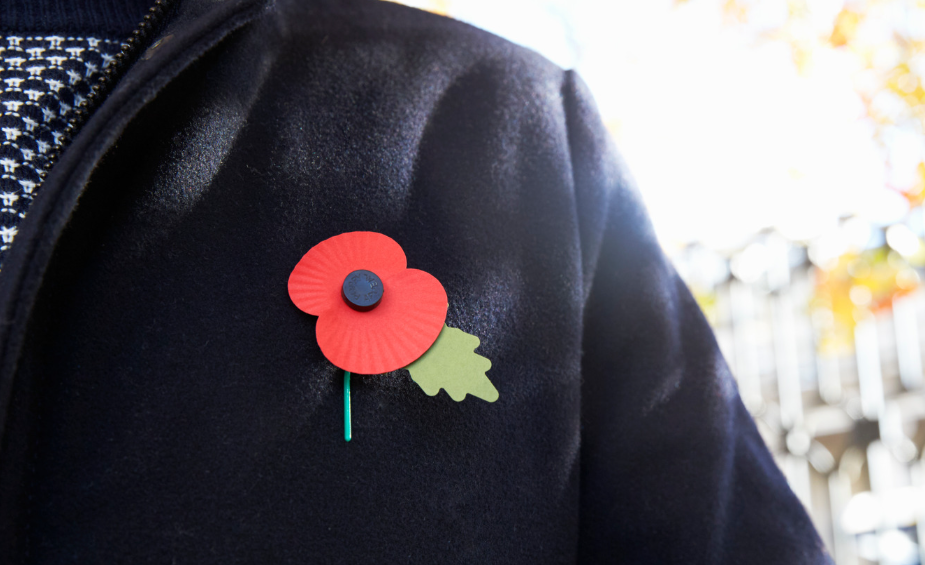
This blog explains the origins of Remembrance Day and the poppy, with practical ideas for marking the day in primary schools and guidance on handling difficult conversations with pupils, including those from armed forces families and those affected by current conflicts.

Estimated read time: 6 minutes
At eleven o'clock on 11th November, much of the United Kingdom falls silent. Shops pause, traffic slows, and in thousands of school halls a few hundred children are asked to stand still and say nothing for two minutes.
For some of them it's the longest silence they've ever been part of. For a few, it's two minutes of thinking about someone in their own family who is serving right now.
Remembrance is one of the few things in the school calendar that asks children to be quiet, to pause and reflect, taking time out of busy school life. The uniqueness of this event makes it powerful, so it's worth preparing for properly.
The armistice that ended the fighting on the Western Front during World War I was signed early in the morning of 11th November 1918, in a railway carriage in a French forest. It came into effect at eleven o'clock that morning, and the guns fell silent.
The first two-minute silence was held a year later, in 1919. It's often said that the first minute is for those who died and the second for those left behind, though that meaning has grown up around the silence rather than being set out at the start.
Remembrance Sunday, which is always the second Sunday in November, developed alongside it, so that communities could gather at memorials at the weekend.
What began as remembrance for one war now stands for all of them. Remembrance Day is for everyone who has died in conflict since 1918 and in conflicts still going on today.
There’s a good piece of science behind why poppies grew on the battlefields in the first place, which many children will find interesting.
Field poppies thrive in churned-up soil. Their seeds can sit dormant in the ground for years, only to germinate when the earth is disturbed. The shelling and digging of the Western Front during World War I turned the fields of northern France and Belgium into exactly the conditions poppies need, and they came up in enormous numbers across ground where almost nothing else grew.
A Canadian army surgeon, John McCrae, noticed them and wrote a poem about it in 1915: "In Flanders fields the poppies blow, between the crosses, row on row." The poem travelled widely, and the poppy became the symbol it is today.
The red poppy is by far the most common, and the money raised supports serving personnel, veterans and their families. Some people, however, choose to wear different colours. Purple poppies remember the animals that served and died in conflict, from horses and dogs to carrier pigeons. White poppies are worn by some people to remember all victims of war, including civilians, and as a statement of commitment to peace. Black poppies mark the contributions of African, Black and Caribbean servicemen and women, whose part in both world wars went unrecognised for a long time.
It's also worth knowing that wearing a poppy is a personal choice, and that some people choose not to. Children sometimes ask, and a straightforward answer works better than an awkward one.
Discussing war and the loss of lives needs careful thought, and it's important to consider how these discussions might impact pupils before remembrance events, rather than during them.
Know who's in the room.
Some of your pupils will have a parent, sibling or close family member serving in the armed forces. For them, Remembrance isn't historical. A quiet word beforehand, and a check-in afterwards will help those children to feel supported and reassured during this period.
Remember that for some children, war isn't in the past at all.
Pupils whose families come from anywhere currently in conflict may have relatives in danger right now. Others may have arrived in the UK because of a war. They don't need to be singled out, and they certainly shouldn't be asked to speak about it, but they do need an adult who has thought about them in advance.
Keep it about people, not sides.
Remembrance works best as an act of remembering human beings. It isn't the place for working out who was right, and any attempt to go there with current conflicts should be avoided.
Be honest at the right level.
Children can handle the fact that people died; they just don't need graphic detail. Equally, don't tidy it up so much that it becomes a story about brave adventures. Remembrance is not a celebration.
Let them ask.
Children ask direct questions about war, and about whether it could happen here. It's fine to say you don't know. It's also fine to say that a lot of adults work very hard to stop these things from happening.
Tell families in advance.
A brief message home about what you'll be covering gives parents the chance to prepare their child, or to tell you something you need to know.
Remembrance makes more sense to children who know something about what they're remembering.
Our Year 6 World War II unit covers the causes and course of the war, life on the home front, evacuation and the experiences of people living through it. Remembrance isn’t a topic to teach for the sake of it, but the history behind it is worth proper time. Pupils who have studied it tend to bring far better questions to a Remembrance assembly, because they understand something of what the silence is about.
You can see our full primary history curriculum here.
If you're new to Developing Experts, you can explore all our science, geography and history units with a free two-week trial. Simply visit www.developingexperts.com to sign up today.
Address
Developing Experts Limited
Exchange Street Buildings
35-37 Exchange Street
Norwich
NR2 1DP
UK
Phone
01603 273515
Email
[email protected]
Copyright 2026 Developing Experts, All rights reserved.

Unlock expert-designed lessons, resources, and assessments tailored for educators. No credit card required.
Claim Your Free Trial →We use cookies to enhance your browsing experience and analyze our traffic. Learn more.