This blog introduces Anti-Bullying Week 2026 and its Break the Silence theme, showing how our free KS1 wellbeing unit with Togetherness helps young children name their feelings and ask for help, alongside practical activities and guidance for primary schools.

Estimated read time: 6 minutes
Some children may not talk openly about feeling left out at playtime. They might become quieter at lunchtime, spend more time near the classroom at break, or perhaps complain of a tummy ache on a Monday morning. These changes can sometimes be small or difficult to spot, and it may take time before a child feels ready to share what's been happening.
Helping children speak up sooner is the focus of this year's Anti-Bullying Week. It's also something even our youngest pupils can start learning before they really know what bullying is.
Anti-Bullying Week runs from 16th to 20th November 2026, and this year's theme is 'Break the Silence'. It asks children, young people and adults across the UK to start talking about bullying, to speak up, to listen and to act together.
The theme was shaped by more than 200 children and young people. Many of them talked about the silence that surrounds bullying and how hard it can be to ask for help. Anti-Bullying Week is now one of the largest children's wellbeing campaigns in the UK, reaching an estimated 8 million children and young people and over 80% of schools each year.
The message for adults is simple. Children are being asked to speak, so the adults around them need to be ready to listen, support and do something about what they hear.
Millions of children experience bullying every year, and many never tell anyone. They stay quiet when it's happening to them, when they see it happening to someone else, and sometimes when they feel pulled into it themselves.
The reasons are often more basic than we expect. Younger children may not have the words for what they're feeling, or may not realise that the knot in their stomach is worry. Some think nobody will believe them, or that telling will make it worse. Others simply don't know which adult to go to, or what to say when they get there.
Bullying also looks different now. It happens face to face, online and through new technologies, which means some of it takes place where adults can't see it. That makes a child's willingness to speak up more important than ever.
Most of these barriers can be lowered in the classroom. Children who can name a feeling, recognise when it's getting too big, and know exactly who they would tell are far more likely to speak when it matters.
Breaking the silence is a skill, and like any skill, it needs teaching and practice. That's the thinking behind our free Key Stage 1 Wellbeing unit, created with Togetherness, an NHS emotional health team based at University Hospitals Birmingham NHS Foundation Trust.
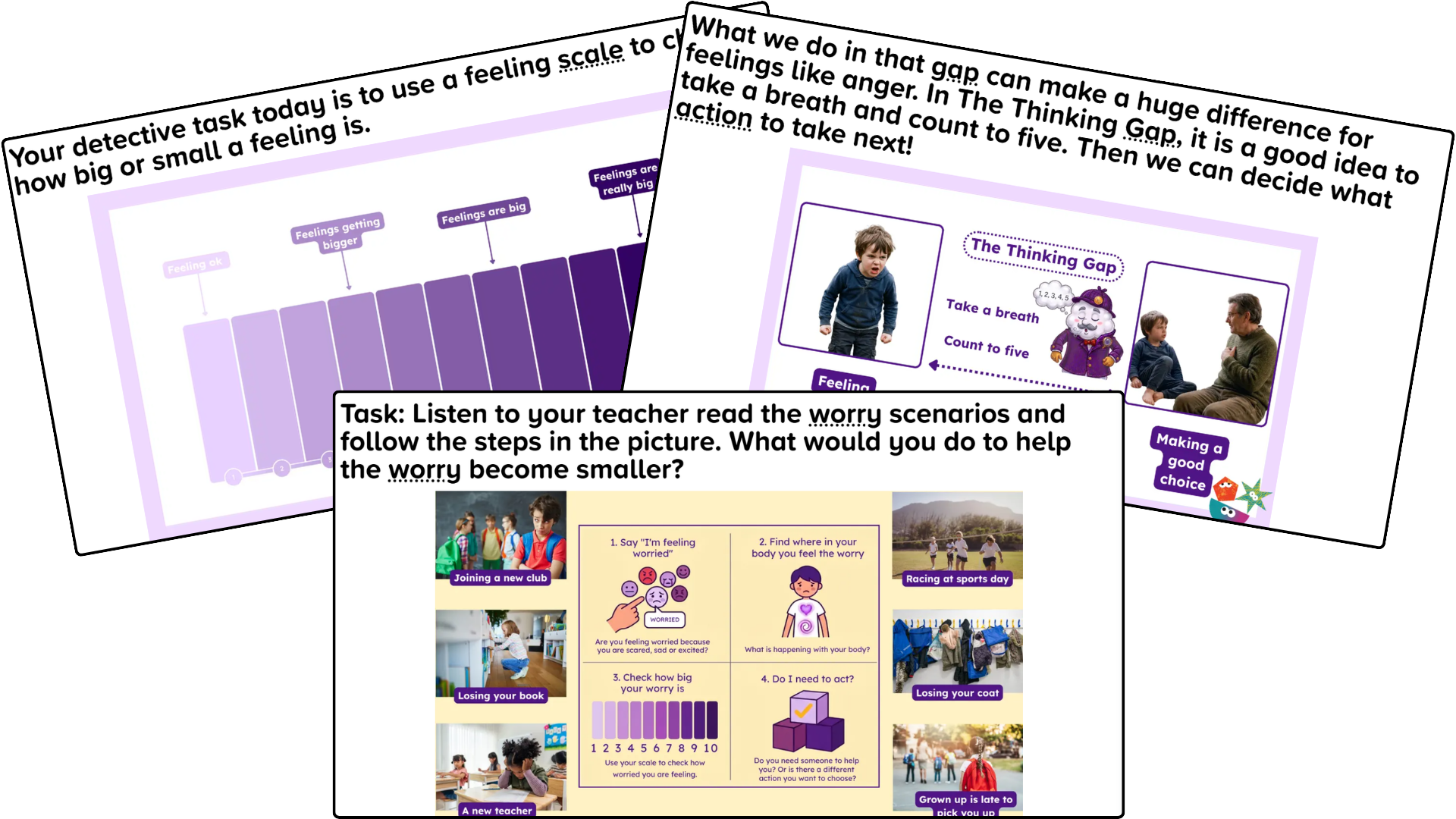
The six lessons were written by Dr Hazel Douglas MBE, Consultant Clinical Psychologist and Child Psychotherapist, and built into an interactive unit by our team of primary teachers. Children become Emotion Detectives, learning to name a feeling, notice it in their body, judge how big it is and take it to someone who can help.
While the unit isn't about bullying directly, what it does is give young children the foundations they need to tell someone when something is wrong, which is exactly what 'Break the Silence' is asking for. Several lessons support this message in Anti-Bullying Week especially well:
Children learn that feelings can grow bigger or smaller, like the volume on a TV, and track how a character's feelings change when someone helps them. They then choose their own special person and practise asking: "Can you help me with this big feeling?"
If you only teach one lesson from the unit this week, make it this one.
Children discover the Thinking Gap between feeling something and deciding what to do. Pausing, breathing and counting to five gives them a moment to choose a better response. That pause is so important, not just for the child who feels like lashing out, but also for the child who feels pulled into joining in.
Worry is often the feeling that keeps children quiet. This lesson treats it as normal and sometimes useful, teaches a simple four-step routine, and ends with children identifying a special person they can go to for support.
The full unit, including emotion fans, the feelings scale, worry scenarios, a strategies poster and Emotion Detective certificates, is free for every teacher in our unit library.
Here are some more ideas to support your school's Anti-Bullying Week, whether you have ten minutes or five days:
Many of these activities are also good oracy practice. With the curriculum review putting more weight on speaking and listening across every subject, a week built around communication is time well spent.
A week about breaking the silence will, quite rightly, lead some children to tell you things. It's worth thinking about that before the week starts.
Be ready to listen. A child may pick a busy moment, like the end of the day or the middle of a maths lesson. If you can't talk then, tell them you've heard and agree a time later that day. Then keep to it.
Thank them for telling you. Children who speak up and get a lukewarm response often decide not to bother next time. Whatever they share, let them know it was the right thing to do.
Follow your school's procedures. Some disclosures will need passing on, so check you know the process and who your safeguarding lead is.
Think about the child who can't name a trusted adult. The Teacher Mastery guidance in our wellbeing unit flags this. Some children genuinely struggle to think of anyone, and they need quiet, extra support rather than attention in front of the class.
Remember the children on both sides. Some pupils will recognise their own behaviour during the week. Keep the focus on actions and choices, so that every child can see a way to do better.
Tell families. A short message home about the week's theme gives parents a chance to keep the conversation going and to share anything you need to know.
When people come together, speak openly and choose kindness, bullying loses its power. For a five-year-old, that starts with one sentence and one adult they trust enough to say it to. Anti-Bullying Week is a good time to make sure every child in your class has both.
Our KS1 Wellbeing unit is free for every teacher. If you're new to Developing Experts, you can also explore our full Science, Geography and History curricula with a free two-week trial. Simply visit www.developingexperts.com to sign up today.
Address
Developing Experts Limited
Exchange Street Buildings
35-37 Exchange Street
Norwich
NR2 1DP
UK
Phone
01603 273515
Email
[email protected]
Copyright 2026 Developing Experts, All rights reserved.

Unlock expert-designed lessons, resources, and assessments tailored for educators. No credit card required.
Claim Your Free Trial →We use cookies to enhance your browsing experience and analyze our traffic. Learn more.