Why are required practicals so important, and what do students really need to know? This article explores how DE can support teachers to get the most out of practical work, including how to convert students' classroom experiments into written exam marks.

If you ask most science teachers what part of the GCSE specification keeps them up at night, required practicals come up more than you might expect. Developing Experts’ new KS4 Science curriculum is just around the corner and we know the importance of getting these practicals right to bridge the gap between what students learn in the lab, and what students actually need to demonstrate in a GCSE exam. Making these links is more achievable than it might seem.
Why required practicals matter
Required practicals are not just a tick-box exercise. Practical skills are assessed throughout written papers. AQA’s specification states that at least 15% of marks across the GCSE science papers will relate to practical skills. This means that students who engage well with practicals are already heading into the exam with an advantage.
More importantly, practicals allow students to think and work scientifically. Practicals encourage students to question, to observe and to draw conclusions. As well as developing technical lab skills, their thinking patterns are being challenged and developed. This allows students to face unseen practical questions confidently and successfully. For example, students may know the definition of an independent variable - but can they identify one in an unseen practical scenario?
Using practicals as exam technique lessons
All practicals in all classrooms can be an opportunity to develop those scientific thinking skills that will be then tested in the written papers.
In any practical lesson, ask students to articulate:
Students armed with these questions, having considered them when conducting a real experiment, are in a better position to tackle them when faced with a hypothetical situation in a written exam.
How can DE help?
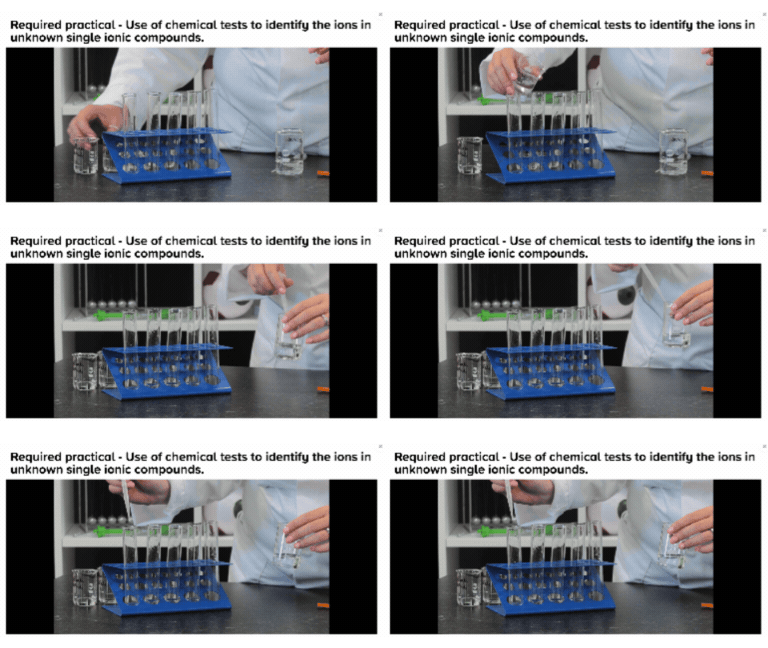
At Developing Experts, every required practical in our new KS4 Science curriculum comes with a video walkthrough, teacher guidance, and follow-up questions to help students interpret their findings and practise the thinking that earns them marks in the written papers. Students can also watch DE’s videos before the lesson so they can arrive with some base knowledge and a familiarity with the methods and questioning expected. This can free-up lesson time for more thinking and doing, rather than explaining! Our walk-through videos of required practicals can also act as CPD for non-specialist or early career teachers, building confidence and subject knowledge.
If you’re new to Developing Experts, you can explore all our content - including our new KS4 curriculum - with a free two-week trial. Simply visit www.developingexperts.com to sign up today - it’s quick, easy and free.
Address
Developing Experts Limited
Exchange Street Buildings
35-37 Exchange Street
Norwich
NR2 1DP
UK
Phone
01603 273515
Email
[email protected]
Copyright 2026 Developing Experts, All rights reserved.

Unlock expert-designed lessons, resources, and assessments tailored for educators. No credit card required.
Claim Your Free Trial →We use cookies to enhance your browsing experience and analyze our traffic. Learn more.

